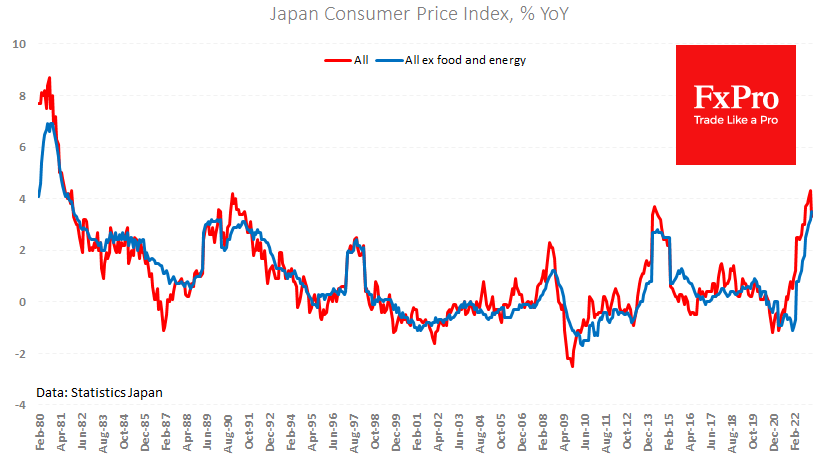
The Bank of Japan has reported in its latest analysis that the country's core inflation rate may face greater upward pressures than previously anticipated due to rising oil prices and the weakening of the yen. The bank confirmed that companies have become more proactive in increasing prices, which could significantly influence public inflation expectations.
These statements come at a sensitive time as the Bank of Japan closely monitors the impact of rising oil prices on the domestic economy. The bank indicated that the recent surge in oil prices could lead to increased inflation expectations among the public, potentially contributing to a rise in the core inflation rate.
Details of the Event
In a working paper published by the bank, factors influencing core inflation were analyzed. Core inflation refers to price increases driven by domestic demand rather than external factors. The bank noted that corporate behavior regarding pricing has changed, making inflation more susceptible to the effects of the yen's depreciation.
The bank also warned of inflationary pressures that may arise from the yen's weakness, as this leads to increased import costs. It emphasized that even temporary factors could affect inflation expectations, pointing out that the ongoing rise in food prices could exert sustained pressure on overall inflation.
Background & Context
Over the past few years, Japan has experienced fluctuations in inflation rates, having concluded a massive stimulus program that lasted a decade in 2024. The central bank raised short-term interest rates based on its belief that Japan is on the verge of achieving a sustainable inflation target of 2%.
Historically, Japan has suffered from prolonged economic stagnation, leading it to rely on flexible monetary policies to support growth. However, changes in global prices, particularly oil prices, can significantly impact the Japanese economy, which heavily depends on imports.
Impact & Consequences
Analysts predict that increasing inflationary pressures will pose new challenges for the Bank of Japan, which may need to adopt more stringent measures in its monetary policy. This shift in monetary policy reflects growing concerns about price stability in the country.
Moreover, rising inflation could affect citizens' purchasing power, potentially leading to a decline in domestic consumption, a key driver of economic growth in Japan. Therefore, any sustained increase in prices could hinder the economic recovery that the government is striving for.
Regional Significance
Arab countries are directly affected by fluctuations in oil prices, as the region is one of the largest oil producers in the world. Consequently, rising oil prices may lead to increased revenues in some countries, while causing economic pressures in others that rely on imports.
Additionally, the yen's weakness may impact trade between Japan and Arab countries, as it could alter the prices of imported and exported goods. Therefore, it is crucial for Arab nations to closely monitor these developments, as they may influence their economic and trade strategies.