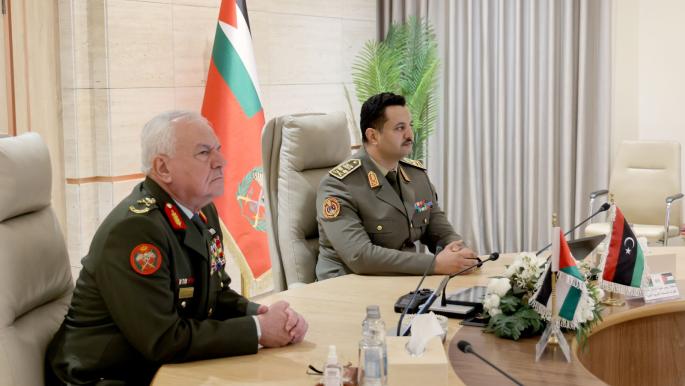
In a move reflecting the depth of military relations between Jordan and Libya, Major General Yousef Ahmed Al-Hunaiti, the Chief of the Jordanian Armed Forces, and Major General Mohamed Al-Haddad, the Chief of the General Staff of the Libyan Armed Forces, signed a new agreement aimed at enhancing military cooperation and exchanging expertise between the armed forces of both countries.
This agreement comes at a sensitive time when the region is witnessing increasing security challenges, necessitating enhanced cooperation among Arab countries to face these challenges. The agreement was signed during an official visit by a Libyan delegation to Jordan, where discussions were held on ways to strengthen military cooperation and exchange information and expertise between the two sides.
Details of the Agreement
The agreement includes several key areas, such as joint training and intelligence sharing, in addition to cooperation in arms and military technologies. It was also agreed to organize joint workshops to enhance the military capabilities of both parties.
In his statements, Al-Hunaiti emphasized that this agreement represents an important step toward enhancing security and stability in the region, highlighting the significance of military cooperation in addressing the security challenges faced by Arab countries.
Background & Context
Historically, Jordanian-Libyan relations have experienced numerous fluctuations; however, recent years have seen a noticeable improvement in cooperation between the two countries, particularly in military and security fields. This cooperation comes amid tense security situations in some neighboring countries, which necessitates enhanced coordination among Arab states.
Furthermore, this agreement is part of Jordan's efforts to strengthen its role as a supporter of regional security, having previously concluded similar agreements with other countries in the region, reflecting its commitment to enhancing Arab cooperation in defense and security matters.
Impact & Consequences
This agreement is expected to contribute to enhancing the military capabilities of both Jordan and Libya, reflecting the importance of Arab cooperation in addressing security challenges. Additionally, this collaboration may open new avenues for cooperation among other Arab countries, thereby strengthening regional security.
Moreover, this step could lead to improved relations between Jordan and other countries in the region, as it may serve as a model for enhancing military cooperation among Arab nations.
Regional Significance
This agreement is considered a positive step in enhancing Arab military cooperation, contributing to building strategic partnerships among Arab countries to address common challenges. Military cooperation between Jordan and Libya may encourage other nations to strengthen their military ties, contributing to achieving security and stability in the region.
In conclusion, this agreement represents an important step toward enhancing military cooperation between Jordan and Libya, reflecting the commitment of Arab countries to strengthen their defensive capabilities and collaborate in addressing increasing security challenges.