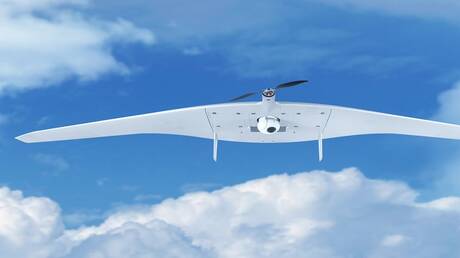
Kalashnikov, the Russian company, has introduced an advanced optical navigation system for its Skat 350M drone, marking a significant step in enhancing the aircraft's ability to perform its missions with greater precision. This new system aims to improve control accuracy and positioning during flight, thereby increasing the effectiveness of military and civilian operations alike.
The Skat 350M is considered one of Kalashnikov's most notable drones, distinguished by its capability to execute multiple missions, including reconnaissance and surveillance. With the addition of the optical navigation system, the company seeks to overcome challenges faced by traditional navigation systems, such as electronic jamming that may affect positioning accuracy.
Details of the New Navigation System
The new navigation system relies on advanced technologies that enable the drone to determine its location with high precision, even in conditions where GPS systems may be subject to jamming or interference. This innovation reflects modern trends in the drone manufacturing industry, where there is an increasing demand for more reliable and secure systems amidst rising threats.
The Skat 350M can now operate more efficiently in complex environments, making it a preferred choice for numerous military and reconnaissance operations. This development also underscores Kalashnikov's commitment to providing advanced technology that meets the growing market needs for drones.
Background & Context
This move comes amid a growing reliance on drones in military operations worldwide. These aircraft have proven their effectiveness in various recent conflicts, prompting nations to invest in developing new technologies to enhance their performance. Kalashnikov is known as one of the leading companies in this field, consistently striving to deliver innovative solutions that meet market demands.
In recent years, the drone industry has witnessed significant advancements, with these aircraft being utilized in various fields, including reconnaissance, attack, and even relief operations. As security threats increase, it has become essential to develop navigation systems that are more accurate and reliable.
Impact & Consequences
The introduction of the optical navigation system for the Skat 350M may alter the balance of power in numerous conflicts, as it could provide forces using this drone with a strategic advantage over their adversaries. The ability to operate in complex environments without relying on traditional GPS systems may enhance the effectiveness of military operations.
Furthermore, this innovation could encourage other countries to develop similar systems, potentially leading to an arms race in the drone sector. These developments may also impact defense and security strategies in many nations, especially those facing increasing security threats.
Regional Significance
In the Arab region, where tensions and conflicts are on the rise, drones like the Skat 350M could be vital tools in future conflicts. Arab nations seeking to enhance their military capabilities may find these drones to be a strategic option for improving their defensive capabilities.
The use of these drones in military operations could also change the nature of conflicts in the region, as they can provide real-time accurate information, thereby enhancing the effectiveness of military operations and reducing casualties.
In conclusion, Kalashnikov's development of the optical navigation system for its Skat 350M drone represents an important step towards enhancing drone capabilities, which may alter the balance of power in numerous conflicts and reflects modern trends in the defense industry.