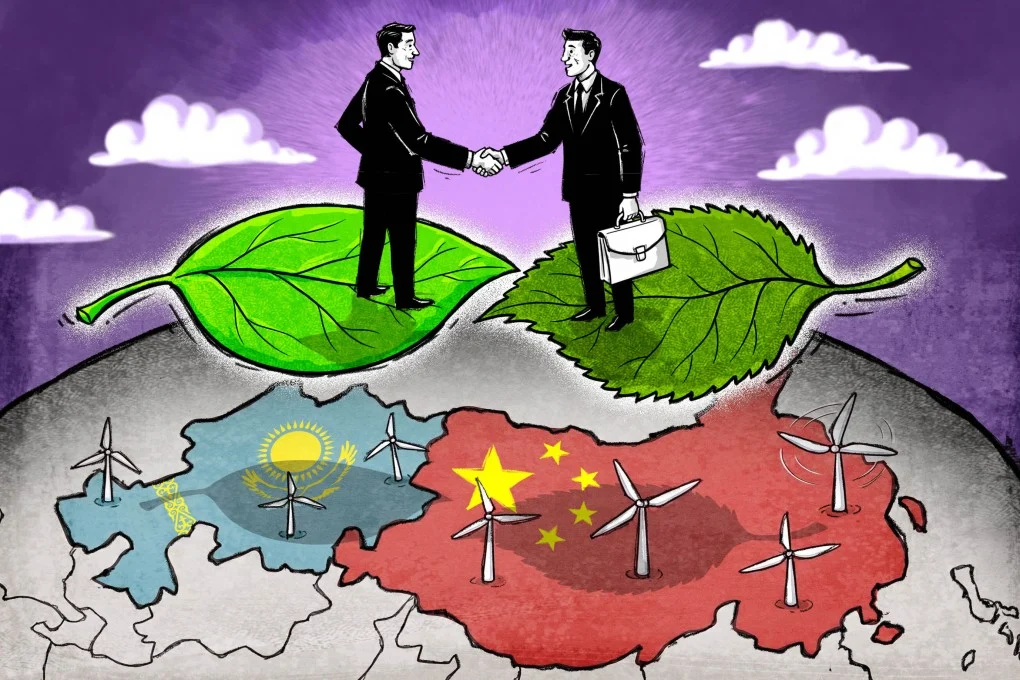
Kazakhstan is increasingly turning to China amid rising geopolitical uncertainty, seeking to leverage Chinese green technology to combat desertification and restore ecosystems. Construction began last month in the Karaganda region, where projects are being implemented to improve the environment and promote sustainability.
Kazakhstan is one of the countries severely affected by climate change, leading to exacerbated desertification issues. Therefore, reliance on Chinese green technology is a strategic step to address these challenges. The Kazakh government aims to enhance cooperation with Beijing in this field, reflecting a shift in the country's economic and political strategies.
Details of the Initiatives
The projects being implemented in Kazakhstan involve the use of advanced technologies from China aimed at reducing carbon emissions and restoring degraded lands. These initiatives are expected to contribute to improved air and water quality, which will have a positive impact on public health.
These steps come at a sensitive time, as pressures are mounting on Kazakhstan to address environmental challenges. Studies have shown that desertification affects more than 80% of the country's land, making the need for effective solutions urgent.
Background & Context
Historically, Kazakhstan was part of the Soviet Union and has undergone significant transformations since gaining independence. With the increasing influence of China in the region, Kazakhstan is seeking to strengthen its relations with Beijing, particularly in technology and investment sectors. Today, China is one of Kazakhstan's largest trading partners, highlighting the importance of this relationship in both regional and international contexts.
Kazakhstan aims to achieve sustainable development goals through cooperation with China, viewing green technology as a fundamental component of these objectives. This collaboration extends beyond environmental aspects to include other areas such as energy and transportation.
Impact & Consequences
This cooperation is expected to have a significant impact on the Kazakh economy. With increasing Chinese investments in green technology projects, these initiatives could create new job opportunities and enhance economic growth. Additionally, environmental improvements will help attract more foreign investments.
On the other hand, this collaboration may face challenges, such as concerns over excessive dependence on China. Therefore, Kazakhstan must balance strengthening its ties with Beijing while maintaining its economic and political independence.
Regional Significance
This cooperation between Kazakhstan and China serves as a model for Arab countries facing similar environmental challenges. Arab nations could benefit from Kazakhstan's experiences in green technology, especially given the climatic challenges the region faces.
Furthermore, enhancing cooperation between Arab countries and China in technology and investment could open new avenues for sustainable development in the region, contributing to achieving both environmental and economic goals.