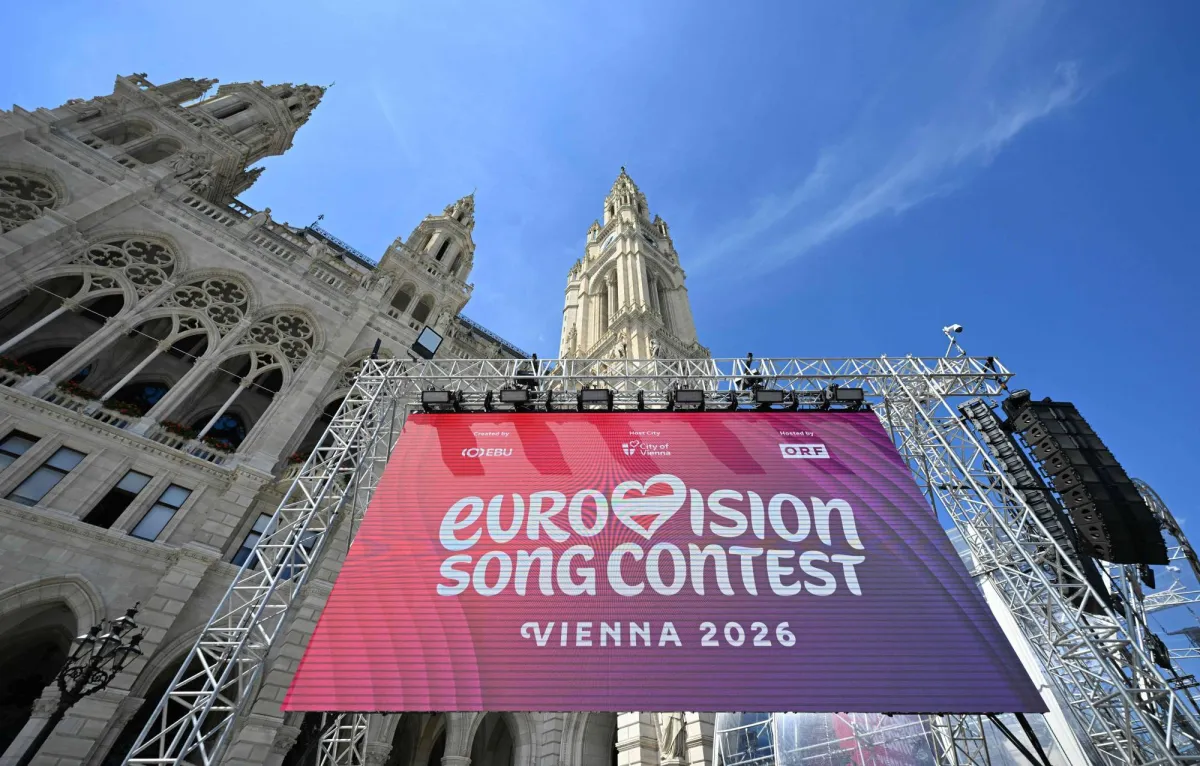
Today (Sunday), the Eurovision Song Contest, one of the most prominent artistic events globally, begins in the Austrian capital, Vienna, continuing until the final show on May 16. This edition features 35 delegations from various countries, despite increasing calls to boycott the event in protest against Israel's participation.
Vienna is preparing to welcome thousands of visitors from around the globe, with the city organizing a series of outdoor events to attract tourists and residents. The red carpet festivities are set to begin in the afternoon, with a turquoise carpet chosen to symbolize a warm welcome for the participating delegations.
Event Details
The opening ceremony is scheduled to start at 14:00 local time (12:00 GMT), marking the 70th edition of the contest, which is expected to draw the largest television audience. Predictions indicate that Finland is the frontrunner for this year's victory, with the duo of Petri Barkonen and Linda Lampenius performing a song that carries high hopes for success.
Countries such as Greece, Denmark, France, and Australia are also competing, with Australian star Delta Goodrem receiving government funding to support her cultural diplomacy. Among the Israeli participants, Noam Beitan stands out with a song that includes a segment in French, adding a unique touch to the competition.
Background & Context
This edition of Eurovision takes place amid tense atmospheres, as broadcasting authorities in several countries, including Spain, Ireland, and Iceland, have announced their withdrawal from participation due to Israel's involvement. More than a thousand artists and musical groups have called for a boycott of the events, reflecting the political and social divide surrounding the contest.
These protests coincide with demonstrations supporting Palestinians and others backing Israel in the streets of Vienna, highlighting the political tensions affecting cultural events. Eurovision is seen as an artistic platform, but it also serves as a venue for expressing political and social opinions.
Impact & Consequences
The calls for boycott illustrate the influence of politics on arts and culture, as art is sometimes viewed as a means to express political stances. These protests may affect the contest's reputation and its future directions, with expectations that upcoming editions will witness further controversy regarding participants.
The withdrawal of some countries could also impact viewership and engagement with the event, presenting organizers with new challenges in managing the festivities under these circumstances.
Regional Significance
The Eurovision contest is an event that captures the interest of the Arab public, with many following its news and details closely. The protests and boycotts may enhance dialogue around political and social issues in the region, contributing to increased awareness of humanitarian concerns.
Ultimately, Eurovision remains an artistic platform, but it also reflects the challenges faced by the arts amid changing political conditions. As the events continue, everyone is eager to see how developments will unfold in the coming days.