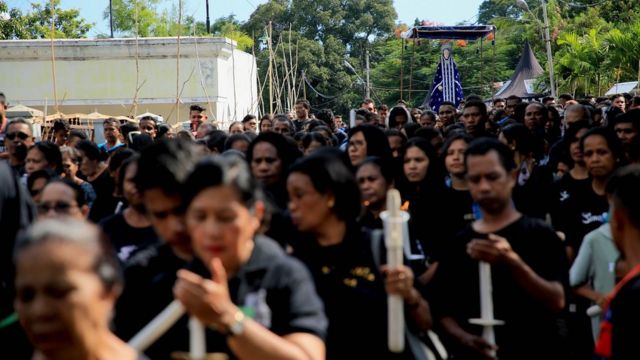
The Indonesian city of Larantika has begun its Semana Santa celebrations, also known as Holy Week, with a unique tradition overseen by King Don Andreas Martinus Diaz Vieira de Godinho. This tradition, known as 'Baka Capella', attracts many visitors and pilgrims who flock to the city to participate in these spiritual rituals.
Semana Santa is considered one of the most important religious events in Indonesia, celebrated in various cities. However, Larantika stands out with its unique traditions that reflect the cultural and religious heritage of the region. During this event, the capella, a place dedicated to prayer and contemplation, is opened, allowing visitors to engage in religious rituals.
Event Details
The Semana Santa celebrations in Larantika include a variety of cultural and religious activities, featuring a grand procession in which both locals and visitors participate. This procession serves as an opportunity to express faith and tradition, showcasing the cultural diversity that Indonesia possesses. King Don Andreas Martinus Diaz Vieira de Godinho plays a pivotal role in organizing these celebrations, being a symbol of the cultural and religious heritage of the area.
The celebrations typically begin in the week leading up to Easter, featuring a series of events that include prayers, music, and traditional dances. This event is an opportunity to strengthen social bonds between locals and visitors, contributing to the enhancement of tourism in the region.
Background & Context
Historically, the roots of Semana Santa celebrations trace back to Christian traditions that spread in Indonesia during the colonial era. Over time, these celebrations have evolved to become an integral part of the cultural identity of the region. King Don Andreas Martinus Diaz Vieira de Godinho is considered one of the prominent figures who has contributed to preserving and promoting these traditions.
Larantika, located on the island of Flores, is one of the areas that strongly retains its cultural and religious traditions. This place is a popular tourist destination, where visitors from around the world come to experience local culture and participate in religious celebrations.
Impact & Consequences
The Semana Santa celebrations in Larantika present an opportunity to enhance tourism in the region, attracting visitors from various cultures and backgrounds. This positive impact on the local economy supports local communities and improves living standards. Furthermore, these celebrations promote cultural understanding among peoples, contributing to building bridges of communication between different cultures.
Moreover, these celebrations serve as a platform to enhance cultural and religious identity, showcasing to the world the rich diversity that Indonesia enjoys. These events can be seen as a model for promoting mutual understanding among different cultures.
Regional Significance
Despite the distance, the Semana Santa celebrations in Larantika highlight the importance of cultural and religious traditions in enhancing identity. Arab countries can benefit from these experiences in fostering mutual understanding among different cultures, as traditions are an essential part of the cultural identity of every nation.
Additionally, promoting cultural and religious tourism can contribute to supporting the local economy in Arab countries, enhancing their status as global tourist destinations. Understanding different cultural traditions helps build a more connected and understanding world.