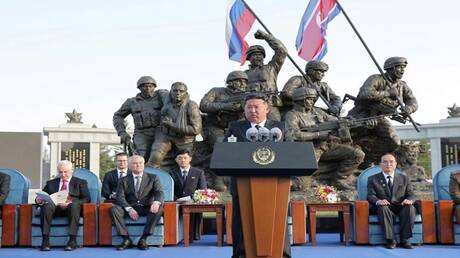
North Korean leader Kim Jong Un commended the sacrifices of the Korean People's Army soldiers during combat operations in Russia's Kursk region, referring to them as 'heroes who sacrificed to uphold great honor.' These statements come at a sensitive time marked by increasing tensions in the area, reflecting the importance of these sacrifices in the context of the ongoing conflict.
Kursk is considered a strategic area, having witnessed decisive battles during World War II. Today, this region serves as a symbol of sacrifice and bravery, which bolsters North Korea's position in reinforcing the loyalty of its soldiers. Kim Jong Un, known for his strong statements, aims through these words to enhance the morale among his forces.
Details of the Event
During his recent visit to army units, Kim emphasized the importance of the sacrifices made by soldiers for their homeland. He stressed the necessity of preserving national honor, asserting that these sacrifices will not be forgotten. He also pointed out that the soldiers who fell in battle serve as role models for future generations.
These remarks come amid escalating military tensions in the region, where neighboring countries are closely monitoring North Korea's movements. The Russian government has expressed interest in military cooperation with Pyongyang, complicating the geopolitical landscape in the area.
Background & Context
Historically, North Korea has relied on fostering national spirit by commemorating the soldiers who sacrificed for the homeland. This strategy is not new; it is part of the North Korean regime's policy to enhance loyalty and belonging among its citizens. Recent years have seen an increase in military activities, reflecting the regime's desire to assert its strength.
Kursk is a symbol of sacrifice in the Russian collective memory, having witnessed fierce battles during World War II. This connection between North Korea's military history and Russia's history reflects Kim Jong Un's attempt to unify military visions between the two countries.
Impact & Consequences
Kim Jong Un's statements underscore the importance of boosting morale among soldiers, which could impact the stability of the regime. As tensions rise, the need to reinforce loyalty and belonging increases. Additionally, these statements may escalate tensions with neighboring countries, particularly in light of growing military threats.
These remarks are likely to affect relations between North Korea and Western countries, as they may be seen as an attempt to challenge international pressures. Furthermore, enhancing national spirit could lead to increased military preparations, raising the likelihood of future conflicts.
Regional Significance
As Arab countries monitor events in North Korea, these statements could have indirect effects. Military tensions in any region can impact regional stability, prompting Arab nations to enhance their national security.
Moreover, the promotion of national spirit in North Korea may serve as a lesson for Arab countries on how to foster loyalty and belonging among their populations, especially amid the political and economic challenges they face.
In conclusion, the sacrifices of soldiers in North Korea remain a central theme in Kim Jong Un's policy, through which he seeks to enhance loyalty and belonging amid rising tensions. These statements also reflect the importance of military history in shaping national identity, making them deeply significant in the current geopolitical context.