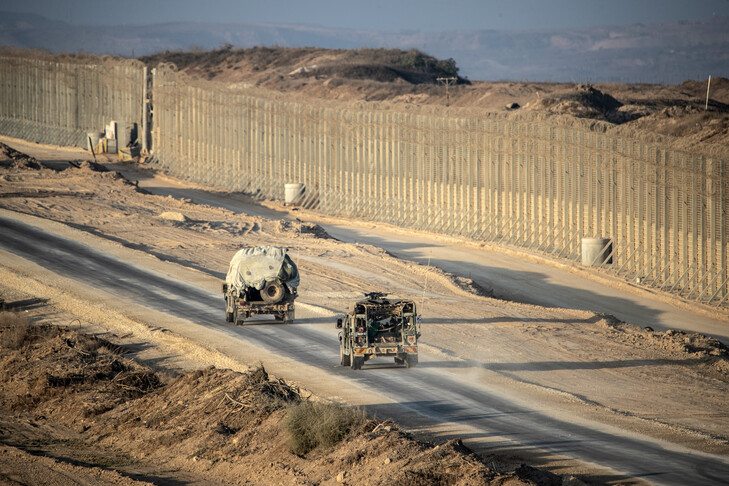
Hezbollah has executed an attack targeting two Israeli tanks in southern Lebanon, asserting that this action was a response to Israel's repeated violations of the ceasefire. The party clarified that these operations are part of its defense of Lebanese territory and the protection of civilians from Israeli assaults.
The attack, which occurred late last night, resulted in the destruction of two Israeli tanks, according to sources from Hezbollah. This incident follows a series of military escalations between the two parties, increasing tensions in the region.
Details of the Attack
In detailing the attack, Hezbollah noted its use of advanced weaponry to target the Israeli tanks, reflecting the evolution of its military capabilities. The party emphasized that these operations are a response to ongoing Israeli assaults, which include airstrikes and ground operations in border areas.
This incident is part of a series of clashes that have occurred in the region in recent months, where tensions between Hezbollah and Israel have been intensifying. Reports have indicated that Israel has conducted military operations in Lebanon, prompting Hezbollah to take military actions to defend its territory.
Background & Context
The roots of the conflict between Hezbollah and Israel date back decades, with the region witnessing numerous wars and disputes. Hezbollah was established in 1982 in response to the Israeli occupation of Lebanon, and since then, it has become a key player in the Lebanese-Israeli conflict.
Impact & Consequences
The ramifications of this attack extend beyond Lebanese borders, potentially leading to a larger escalation in the conflict between Israel and Hezbollah. If military operations continue, we may witness reactions from the international community, particularly from Western nations calling for a de-escalation of tensions in the region.
This escalation could also impact regional security, complicating the situation further. The potential for increased military actions raises concerns about stability in the area and the safety of civilians caught in the crossfire.
Regional Significance
This incident highlights the ongoing volatility in the region, serving as an indicator of rising tensions that could affect regional stability. The international community's response will be crucial in determining the future trajectory of the conflict and whether diplomatic efforts can be reignited to ease the situation.
In conclusion, the recent attack by Hezbollah underscores the fragile state of affairs in southern Lebanon and the broader implications for regional security, as the dynamics between Israel and Hezbollah continue to evolve.