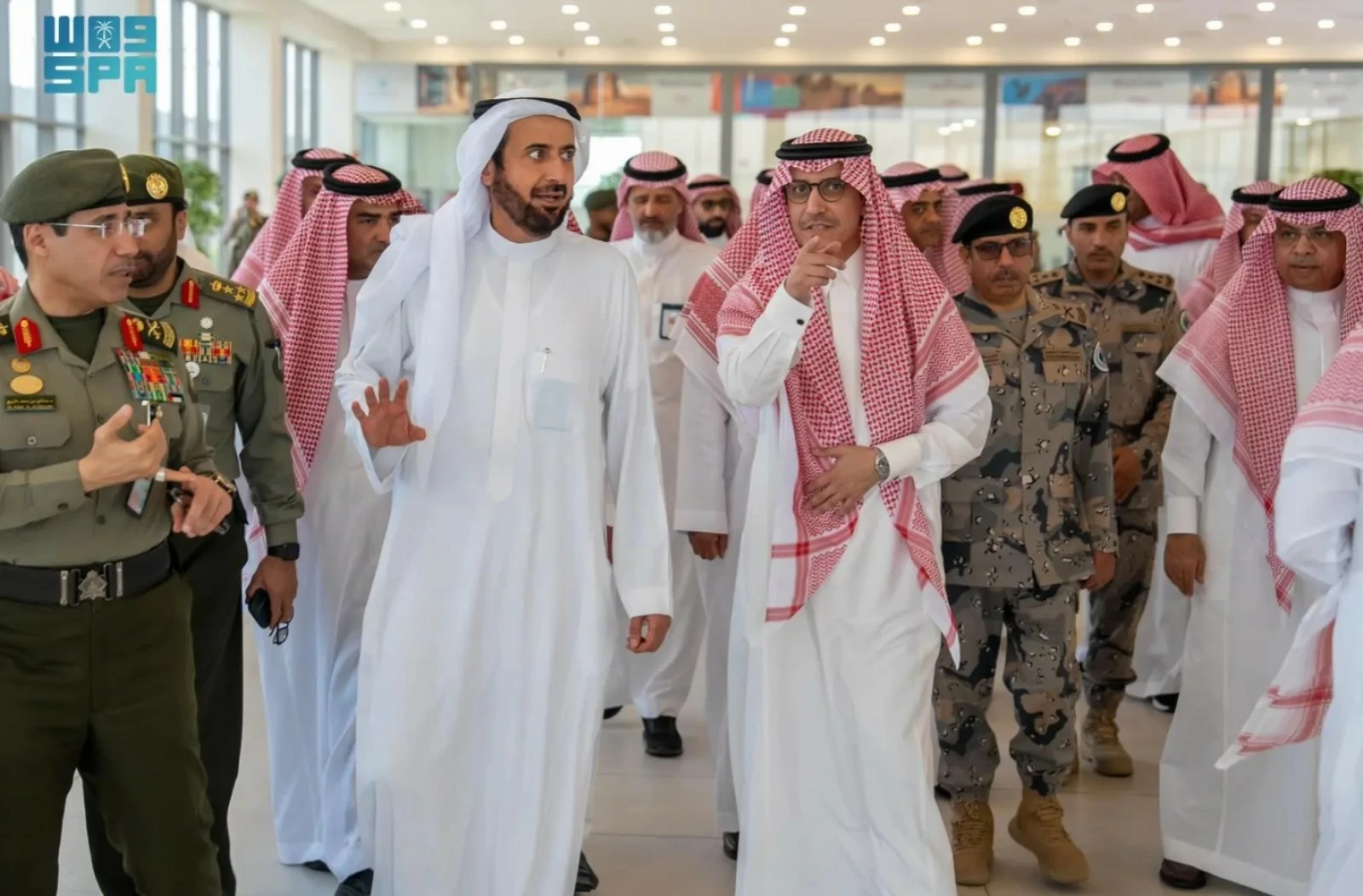
The Minister of Hajj and Umrah, Dr. Tawfiq bin Fawzan Al-Rabiah, along with the President of the General Authority of Civil Aviation, Abdulaziz bin Abdullah Al-Duailej, the Governor of the Zakat, Tax and Customs Authority, Engineer Suhail bin Muhammad Abanami, and the Acting Director General of Passports, Major General Dr. Saleh bin Saad Al-Murabba, inspected the Al-Haditha and Al-Jadidah Arar crossings. This visit was aimed at reviewing the operational readiness and preparations in place to welcome and serve the guests of Allah arriving to perform Hajj through these crossings.
During the visits, officials assessed the level of operational readiness and the services provided at the crossings, monitoring the procedures for receiving pilgrims and ensuring smooth traffic flow. This is to guarantee that services are delivered efficiently and with quality, facilitating the journey of the guests of Allah from the moment they arrive at the Kingdom's borders.
Event Details
During the tour, officials reviewed the available facilities and equipment at the crossings, as well as the coordination mechanisms among the government agencies operating there. This visit reflects the integration of efforts among the relevant authorities and supports the enhancement of preparations during the Hajj season.
These visits are part of the field monitoring efforts regarding the work being done at the land crossings, emphasizing the commitment of the relevant government agencies to enhance readiness and provide accessible services to the guests of Allah, in line with the Kingdom's dedication to serving pilgrims and ensuring everything necessary for their rituals is available smoothly and reassuringly.
Background & Context
Historically, the Kingdom of Saudi Arabia is one of the foremost countries welcoming pilgrims from around the world, with the government taking responsibility for organizing and managing Hajj rituals. As the number of pilgrims increases, the need to improve services and develop infrastructure at land and air crossings becomes more pressing.
The officials' visit to the crossings is part of ongoing efforts to ensure the best services for pilgrims, focusing on enhancing the pilgrim's experience from the moment of arrival until departure.
Impact & Consequences
This visit underscores the Kingdom's commitment to providing high-quality services to pilgrims, enhancing its reputation as a primary destination for Hajj. Additionally, improving services at the crossings contributes to facilitating movement and reducing congestion, positively impacting the pilgrims' experience.
These efforts come at a sensitive time, as the Kingdom aims to restore normal Hajj levels following the COVID-19 pandemic, necessitating intensified efforts to ensure the safety and comfort of pilgrims.
Regional Significance
These preparations signal the Kingdom's capability to organize large-scale events, bolstering its position in the Islamic world. Furthermore, enhancing Hajj services can serve as a model for other countries that host large numbers of visitors.
Ultimately, these efforts reflect the Kingdom's commitment to providing the best services to the guests of Allah, contributing to strengthening ties among Islamic nations and enhancing regional cooperation in religious tourism.