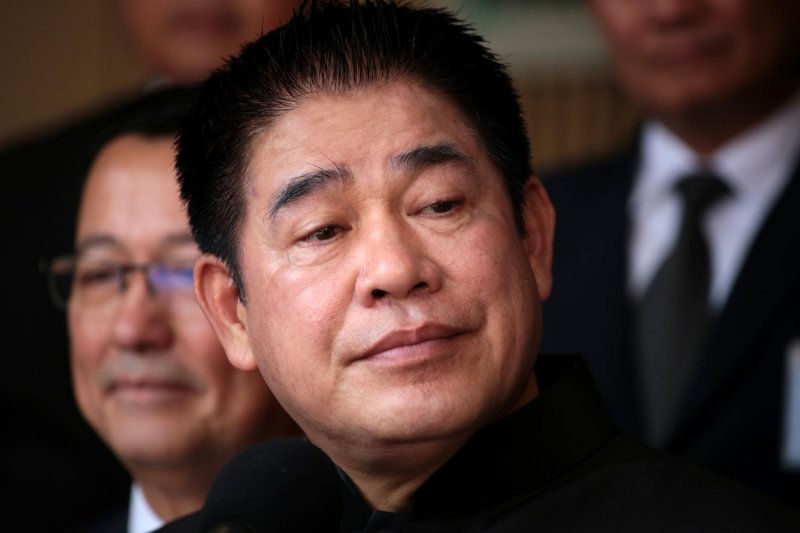
The Klatham Party chose to remain silent during the recent parliamentary vote on the presidency of Anutin Charnveerakul, allowing it to maintain its political influence. This decision, which may seem uncertain at first glance, is actually an expression of a well-thought-out political strategy aimed at not burning bridges with the leader of the Phumjaithai Party, who the party may need in the future.
In the vote held on March 19, Anutin received 293 votes, enabling him to form a new government after his party's victory in the elections held on February 8. However, the Klatham Party's decision to abstain from voting, which accounted for 86 votes, became more intriguing than the supporting votes.
Details of the Event
The Klatham Party, led by Captain Thamanat Prompao, indicated that it would not support Anutin unless it was included in the government coalition. This stance reflects the party's desire to keep its options open, as abstaining from voting allows it to avoid direct conflict with the Phumjaithai Party.
If the Klatham Party had voted against Anutin, it would have positioned itself as part of an opposition bloc. Instead, it chose the middle path, demonstrating that relationships remain negotiable and that the status of the Biu Thai Party in the government is not guaranteed forever.
Background & Context
Historically, Thai politics has seen complex alliances, with dynamics changing rapidly. The Phumjaithai Party's victory with 191 seats in the recent elections placed it in a strong position, while the Biu Thai Party came in third with 74 seats, making it a necessary but weak partner.
The Klatham Party, with its 58 seats, represents an important leverage point in parliament. This situation allows it to negotiate better terms should any changes occur in the government, especially in light of increasing economic crises.
Impact & Consequences
The abstention from voting by the Klatham Party may have far-reaching effects on political alliances in Thailand. The presence of the Klatham Party as an alternative to the Biu Thai Party means that the latter may lose some of its power in determining terms, allowing the Phumjaithai Party to remind the Biu Thai Party that there is another bloc of 58 seats in reserve.
If economic crises continue, such as rising fuel prices, pressure on the government may increase, potentially opening the door for the Klatham Party to enter the government from a stronger position.
Regional Significance
Thai politics serves as an example of how political alliances can impact governmental stability, which may provide lessons for Arab countries undergoing political transformations. Amid global economic crises, alliances may shift rapidly, requiring Arab nations to be flexible in their political strategies.
In conclusion, the Klatham Party's decision appears to be a strategic move that could reshape the political landscape in Thailand, highlighting the importance of political alliances in facing crises.