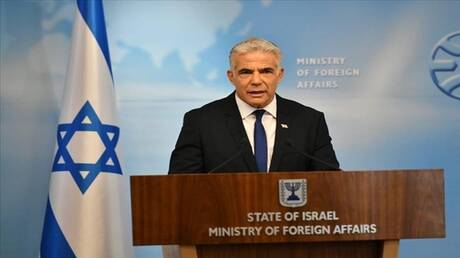
Israeli opposition leader Yair Lapid has criticized Prime Minister Benjamin Netanyahu, pointing to his disregard for the heavy price Israel is paying in the context of changes in the Middle East. Lapid emphasized that Netanyahu's statements about the changing Middle East reflect his arrogance, at a time when the country is suffering from both internal and external challenges.
During a press conference, Lapid noted that the situation in the region has not changed drastically as Netanyahu claims, and there is an urgent need to recognize the challenges facing Israel, including Iranian threats. He stressed the necessity for the government to be more transparent about the military and political costs the country incurs in the ongoing conflict with Iran.
Details of the Event
Lapid's remarks come at a sensitive time, as fears of escalating tensions in the Middle East grow, especially with the ongoing Iranian nuclear program. He pointed out that Israel needs a clear strategy to confront these threats, rather than relying on thoughtless political statements.
Lapid also criticized the current government for its inability to unify the internal front, which increases Israel's vulnerability in facing external challenges. He argued that internal division weakens the country's position in regional and international negotiations.
Background & Context
Historically, Israeli-Iranian relations have seen increasing tensions since the Iranian revolution in 1979, with Israel viewing Iran as an existential threat. These tensions have escalated in recent years with the rise of Iranian military activities in the region, including its support for armed groups in Lebanon and Syria.
In recent years, Israel has attempted to strengthen its alliances with moderate Arab countries to confront the Iranian threat, but these efforts face significant challenges due to internal and external divisions. Moreover, repeated statements from Israeli officials regarding Iranian threats may lead to heightened tensions in the region.
Impact & Consequences
Lapid's statements reflect a growing concern within Israeli society regarding the strategy employed to confront Iran. The potential neglect of the heavy price Israel pays could exacerbate the security and economic conditions in the country.
Furthermore, the continuation of tensions with Iran may affect Israel's relations with Arab countries, as these nations may find themselves compelled to deal with the repercussions of any potential military escalation. Thus, there is an urgent need to adopt a more balanced and realistic policy in addressing regional challenges.
Regional Significance
Lapid's statements serve as an indicator of the tense conditions in the region, as any military escalation between Israel and Iran could have negative repercussions for neighboring Arab countries. Increased tensions could lead to greater instability in the region, impacting the security and economy of Arab nations.
Additionally, internal division in Israel may reflect on relations with Arab countries, which may find it difficult to engage with an unstable government. Therefore, enhancing internal unity in Israel could be a necessary step towards achieving greater stability in the region.
In conclusion, the situation in the Middle East remains complex, requiring all parties to take serious steps towards dialogue and cooperation to achieve peace and stability.