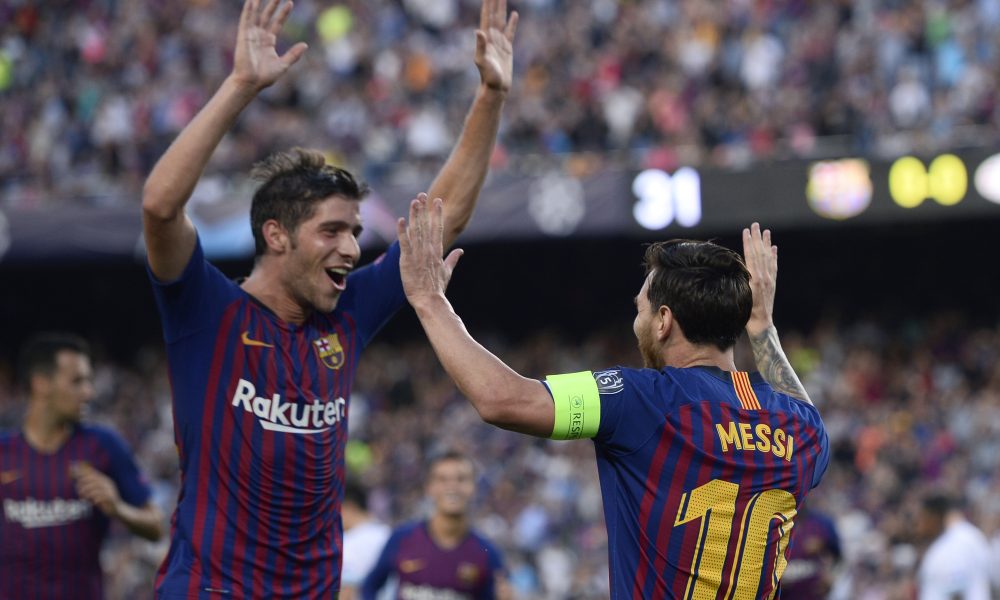
Barcelona's president, Joan Laporta, has defended his decision to part ways with Argentine star Lionel Messi five years ago, asserting that the path taken by the club's management has proven the correctness of his administrative vision through the results achieved during his second term.
Laporta, who was recently elected for a fourth term as president of Barcelona, had launched his election campaign in 2021 based on ensuring Messi's continued presence in the team. However, in August of the same year, he informed the Argentine legend that he did not have a contract with him, leading to his departure from the club.
Details of the Event
In an interview with El País, Laporta explained that he feels vindicated from the criticisms directed at his decision, stating: "I had to make a decision, and I believe I made the right one; the results speak for themselves." He pointed out that the club managed to improve its financial situation and build a competitive team, emphasizing that the time was right for a generational change.
Laporta added: "Leo was nearing the end of his career, and we needed to build a new team. Did I want to build a new team with Leo's help? Yes. We tried, but that was not possible."
Background & Context
Messi's departure from Barcelona was a historic event in the world of football, as Messi is considered one of the greatest players in the history of the game. He moved to Paris Saint-Germain after spending over 20 years at Barcelona, where he achieved numerous titles and individual awards.
Under Laporta's leadership, Barcelona faced many financial and administrative challenges, especially following the COVID-19 pandemic, which significantly impacted sports clubs. The decision to part ways with Messi had a profound effect on the club's fans, who viewed his departure as the end of an era.
Impact & Consequences
The impact of Laporta's decision to part ways with Messi was not limited to Barcelona alone; it also affected the player's own career as he transitioned to Paris Saint-Germain and faced new challenges. Additionally, this decision contributed to the restructuring of the Catalan team, leading to the emergence of new players and achieving positive results in some competitions.
Laporta confirmed that the future relationship between Messi and Barcelona would depend on what the player wants and what the club desires, noting that Messi is a symbol of his generation and deserves special recognition in the future.
Regional Significance
Messi is a global icon in football, with a large fan base in the Arab world. His departure from Barcelona sparked widespread reactions among Arab fans, who consider Messi a part of the history of the Catalan club. Furthermore, Barcelona's success in rebuilding the team may serve as inspiration for Arab clubs seeking to improve their financial and administrative situations.
Ultimately, the question of whether Messi could return to Barcelona remains open, as the relationship between him and Laporta may determine the player's future at the club.