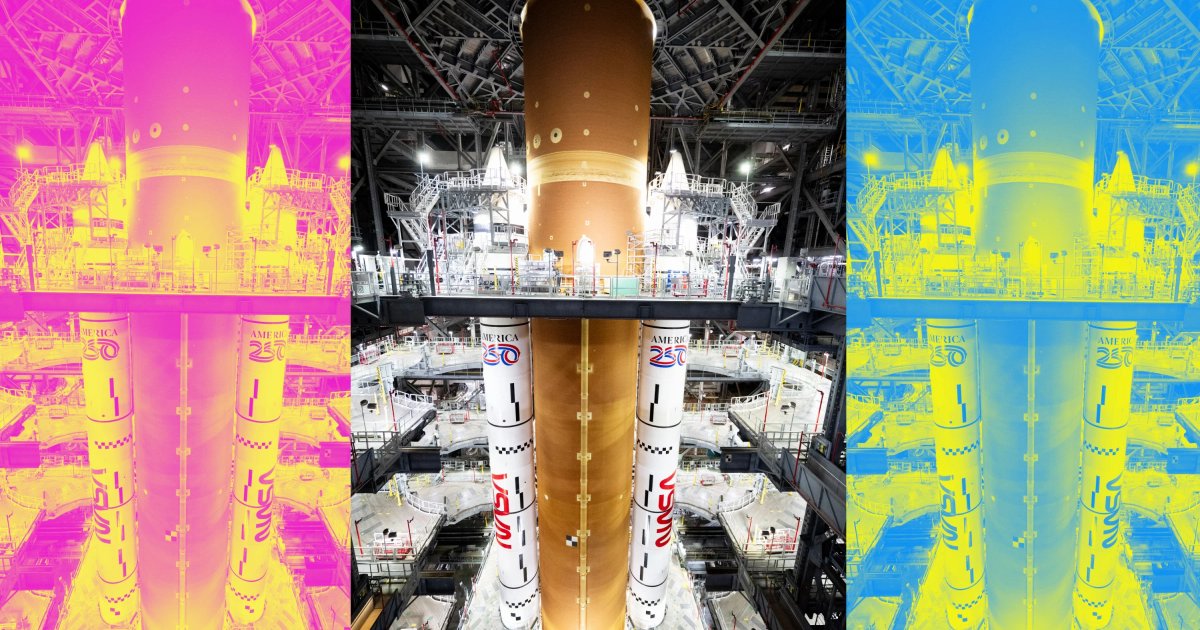
The Artemis 2 mission has successfully launched, sending four astronauts on a historic journey around the Moon, marking a significant step toward returning to the lunar surface. The mission, which departed from the Kennedy Space Center in Florida, aims to test spacecraft systems ahead of future missions.
The mission includes astronauts from various nationalities, carefully selected to ensure its success. The journey is expected to last for 10 days, during which the astronauts will fly around the Moon before returning to Earth. This mission is part of the Artemis program, which aims to return humans to the Moon by 2025.
Event Details
The Artemis 2 mission features many exciting technical aspects, as the spacecraft is equipped with the latest technologies to ensure the safety of the astronauts and the success of the mission. These technologies include advanced life support systems, sophisticated navigation systems, and communication systems that will allow the astronauts to communicate with mission control on Earth.
The journey will take the astronauts on a path around the Moon, enabling them to see the far side of the Moon, which has not been seen by humans for decades. This unique experience will allow them to collect valuable data about the Moon, aiding in the planning of future missions.
Background & Context
The history of space exploration dates back to the mid-20th century, with the first human spaceflight being Yuri Gagarin's journey in 1961. Since then, the world has witnessed numerous developments in space, including the landing of humans on the Moon in 1969 during the Apollo 11 mission.
The Artemis program is part of NASA's efforts to return humans to the Moon, aiming to establish a base on the lunar surface as a first step toward exploring Mars. This mission comes after decades of halting lunar exploration, reflecting the United States' commitment to enhancing its capabilities in space.
Impact & Consequences
The Artemis 2 mission is a vital step in space exploration, contributing to the enhancement of international cooperation in this field. The success of this mission may encourage more countries to invest in their own space programs, potentially leading to increased innovation and technological advancement.
Furthermore, this mission will open doors for more scientific research about the Moon, which could lead to new discoveries that contribute to our understanding of the universe. The success of the mission may also bolster the United States' position as a leading power in space.
Regional Significance
Although the Artemis 2 mission focuses on the Moon, it has potential implications for the Arab region. Many Arab countries have begun developing their own space programs, such as the United Arab Emirates, which launched the Hope Probe to Mars. The success of the Artemis mission may encourage these countries to enhance their investments in space.
Additionally, international cooperation in space could open new avenues for Arab countries, allowing them to participate in joint space projects, thereby enhancing their status on the international stage.
In conclusion, the success of the Artemis 2 mission represents an important step toward space exploration and reflects humanity's commitment to the pursuit of knowledge and progress. This mission is not just a journey to the Moon; it is the beginning of a new chapter in the history of space exploration.