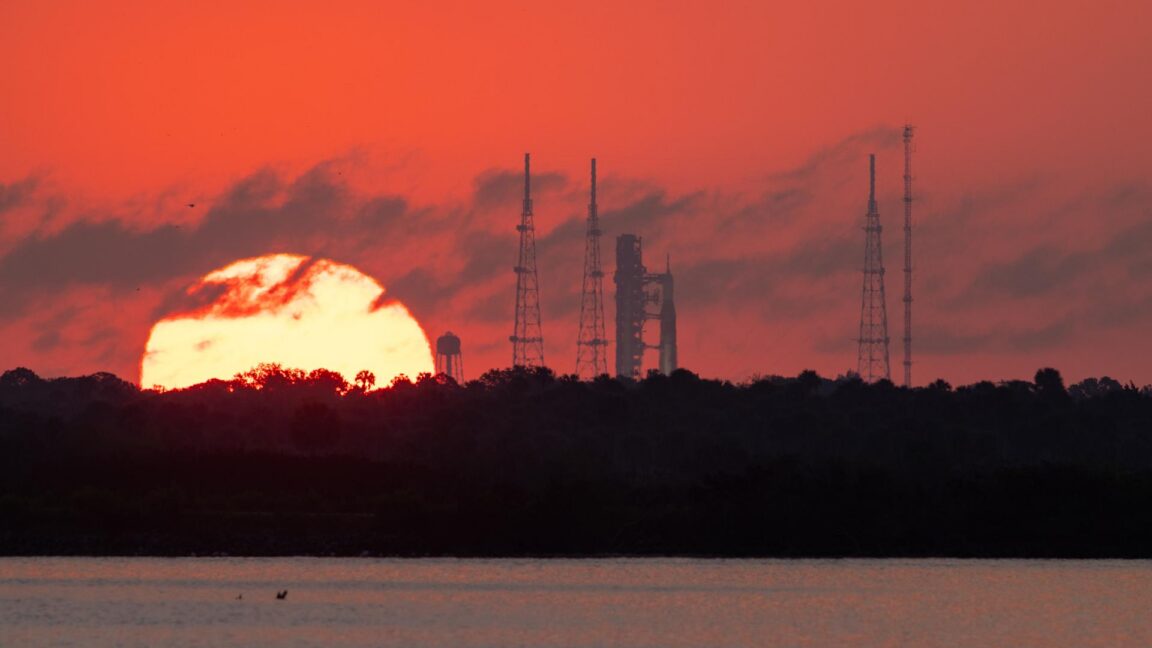
NASA has announced the launch of the Artemis II mission, which represents a new and significant phase in the space exploration program. The mission is set to begin with engine ignition at countdown T-0, allowing the crew to embark on a journey to the Moon that will last several days.
The Artemis II mission is part of a larger plan aimed at returning humans to the Moon by 2024, as NASA seeks to enhance its presence in space and expand the horizons of human exploration. This mission will witness the first crewed flight around the Moon since Apollo 17 in 1972, making it a historic event in the realm of space.
Details of the Event
Artemis II will be the first crewed mission within the Artemis program, where a crew of four astronauts will embark on a journey around the Moon. The mission will include testing the Orion spacecraft systems, which are designed to carry astronauts on long-duration space flights. The journey is expected to take approximately 10 days, during which the crew will fly past the Moon before returning to Earth.
NASA is preparing for this significant event after years of planning and development, with numerous tests conducted on the spacecraft and launch systems. The crew's readiness has also been confirmed, including highly experienced astronauts in the field of space exploration.
Background & Context
The Artemis II mission comes as part of NASA's vision to regain leadership in space exploration after decades of reliance on other space programs. Since the end of the Apollo program, the United States has seen a decline in crewed space activities, but with new challenges emerging in space, such as Mars exploration, it has become essential to refocus on the Moon as a launchpad.
Through the Artemis program, NASA aims to establish a permanent presence on the Moon, enabling scientists to conduct important research on natural resources and technologies necessary for Mars exploration. This mission also represents an opportunity to enhance international cooperation in space, as many countries are involved in developing the technologies required for these missions.
Impact & Consequences
The Artemis II mission is a significant step toward achieving larger goals in space exploration, as it will help develop new technologies that can be utilized in the future. The success of this mission may also enhance opportunities for international collaboration in space, opening new avenues for scientific research and technology.
Moreover, this mission will boost youth interest in science and technology, potentially leading to an increase in the number of engineers and scientists in the future. Space exploration is not just an adventure; it is an investment in the future of humanity.
Regional Significance
As NASA continues its exploration of space, Arab countries have also begun to enhance their space programs. Several Arab nations, such as the United Arab Emirates and Saudi Arabia, have launched space programs aimed at exploring space and developing technology. The success of the Artemis II mission may inspire these countries to continue their investments in space, thereby enhancing their standing on the international stage.
In conclusion, the Artemis II mission represents a milestone in the history of space exploration, opening doors to a bright future for humanity in space. Progress in this field will impact all nations, including Arab countries, which seek to enhance their capabilities in science and technology.