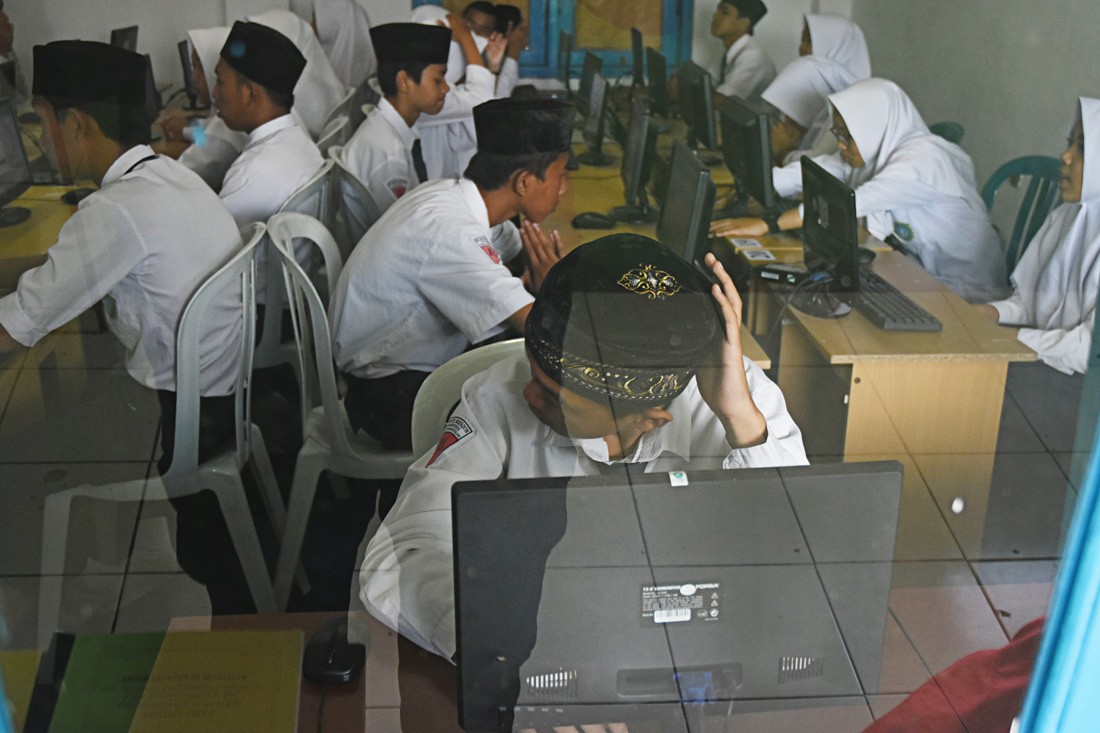
The Indonesian Minister of Education, Abdul Muti, announced that preparations for the Academic Ability Test (TKA) have reached their final stages. This test, considered a significant step in evaluating the level of students in primary and secondary schools, will focus on Indonesian language and mathematics, reflecting the importance of these subjects in the Indonesian educational curriculum.
Speaking in the capital, Jakarta, the minister explained that schools lacking the necessary infrastructure to conduct the test, such as computers, have been provided with a mechanism to ensure their participation. Students will be able to borrow devices from other schools that are not conducting the test.
Details of the Event
Abdul Muti confirmed that the goal of the TKA is to enhance transparency and integrity in student assessments. The slogan "Honesty and Joy" has been adopted as part of the promotional campaign for the test, where the minister warned that any attempt at cheating would lead to the cancellation of the student's or the school's results. He emphasized the importance of providing students with a positive atmosphere during the test to avoid psychological pressures.
Standard Operating Procedures (SOP) have also been issued regarding how the test will be conducted, including monitoring mechanisms and penalties, to ensure transparency in all participating schools. It has been emphasized that the test will not be the decisive factor in determining students' success, alleviating the pressures that students and parents may feel.
Background & Context
Indonesia is one of the largest countries in Southeast Asia, with its educational system encompassing millions of students. In recent years, the country has witnessed significant developments in education, including the introduction of technology in classrooms. The TKA test is part of these efforts to improve the quality of education and assess student performance more accurately.
Historically, Indonesia has faced challenges in its educational system, including resource shortages and disparities in education quality between urban and rural areas. However, the shift towards using technology in education represents a positive step towards achieving equality in educational opportunities.
Impact & Consequences
The TKA test could have a significant impact on Indonesia's education system. By focusing on core subjects such as language and mathematics, this test could help improve the overall level of education. Additionally, the use of technology in assessments may encourage innovation in teaching and evaluation methods.
However, this step must be approached with caution. While emphasizing integrity and transparency is crucial, the psychological pressures that students may face should also be considered. Providing a supportive educational environment can help achieve positive outcomes.
Regional Significance
Indonesia's experience in utilizing technology in education serves as a model for many Arab countries. Many Arab nations face similar challenges in their educational systems, including the need to improve education quality and effectively assess student performance.
Arab countries could benefit from adopting new educational methods, such as using technology in assessments, which may contribute to improving student outcomes and enhancing future success opportunities.
In conclusion, the TKA test represents an important step towards improving Indonesia's education system and reflects the government's commitment to providing high-quality education for all students. The success of this test may open doors to further innovations in the education sector in the region.