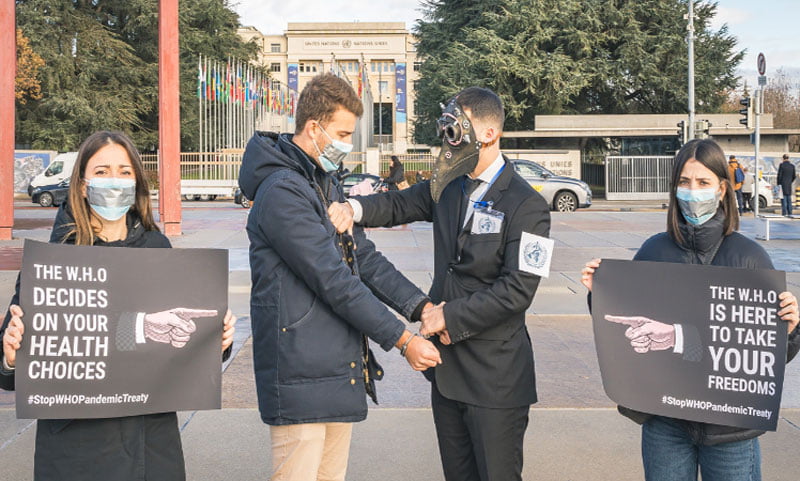
Today, Monday, a new round of negotiations began at the World Health Organization headquarters in Geneva, aiming to complete the essential missing elements of the international agreement to combat pandemics. These negotiations come after more than three years of discussions sparked by the COVID-19 crisis.
The current negotiations focus on the Pathogen Access and Benefit Sharing (PABS) system, which aims to regulate how countries share pathogens that could lead to pandemics, as well as how to share the benefits arising from this, such as vaccines, tests, and treatments.
Details of the Event
The negotiations face significant challenges, with starkly differing positions between wealthy and developing countries. Developing nations, particularly in Africa, express concerns about sharing their viruses without sufficient guarantees for vaccine access in the event of a health crisis. Conversely, some countries question the pharmaceutical industry's ability to contribute to the global agreement without assurances of return on investment.
Silvie Brian, the chief scientist at the World Health Organization, noted that one of the main challenges is integrating genetic data sharing, which has become essential for developing vaccines and treatments. There is also an urgent need to determine how to access health data and tools beyond the scope of pandemics.
Background & Context
In May 2025, WHO member states adopted a historic agreement to combat pandemics, following the COVID-19 crisis that highlighted the urgent need for better global coordination in addressing health crises. This agreement aims to avoid the chaos experienced worldwide during the COVID-19 crisis by improving global coordination, surveillance, and access to vaccines.
However, the PABS system was set aside at that stage of negotiations to finalize the bulk of the agreement. Now, countries have been given a final week to negotiate this system, focusing on obtaining approval during the World Health Assembly starting on May 18.
Impact & Consequences
The PABS system is vital for developing countries, many of which felt neglected during the race for COVID-19 vaccines. Some emerging countries, like South Africa, are demanding technology transfer, while poorer nations primarily focus on access to health products.
Pressure is mounting on wealthy countries, such as Germany, Norway, and Switzerland, which advocate for maintaining anonymous access, complicating the tracking of information related to pathogens. Over 100 NGOs, including Oxfam, have expressed concerns that anonymous access could lead to the exploitation of genetic resources without accountability.
Regional Significance
For Arab countries, these negotiations represent an opportunity to enhance regional and international cooperation in public health. With increasing health challenges, the agreement could improve access to vaccines and treatments in the region, strengthening Arab nations' capacity to face future pandemics.
In conclusion, the negotiations surrounding the PABS system are central to ensuring global health equity and providing necessary protections for developing countries against future pandemics.