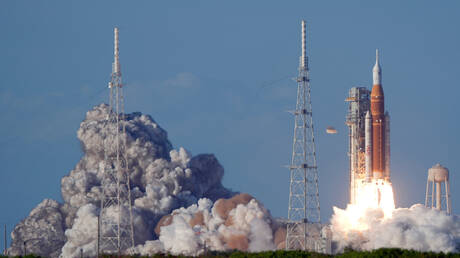
A historic mission launched on Wednesday (local time in Florida), with four astronauts embarking on a journey around the Moon, marking the first manned mission of its kind in over half a century. This mission represents an important step in NASA's efforts to explore space and reflects the technological advancements humanity has achieved in the field of space exploration.
The new mission includes a set of scientific and technological objectives, as the astronauts aim to gather crucial data about the Moon, which could contribute to a better understanding of the solar system's history. Additionally, the mission aims to test new technologies that could be used in future missions to Mars and other celestial bodies.
Event Details
The spacecraft launched from the Kennedy Space Center in Florida, equipped with the latest technologies to ensure the safety of the astronauts and the success of the mission. The four astronauts are part of a diverse team representing various scientific and engineering disciplines. This flight comes 53 years after the last manned mission to the Moon, highlighting the significance of this event in the history of space exploration.
During the mission, the astronauts will fly around the Moon, giving them the opportunity to closely observe its surface and conduct scientific experiments. This step is part of a larger program aimed at returning humans to the Moon by 2025, reflecting NASA's commitment to expanding the boundaries of human knowledge.
Background & Context
The history of lunar exploration dates back to the 1960s when the United States launched the Apollo program, which saw the first human landing on the Moon in 1969. Since then, manned space activities have declined, but recent years have seen a renewed interest in the Moon as a destination for space exploration.
This mission comes at a time of increasing competition among major countries in the field of space, with China and Russia also seeking to enhance their presence in this domain. There is also growing interest from the private sector in space exploration, opening new avenues for cooperation between governments and private companies.
Impact & Consequences
This mission is considered a milestone in the history of space exploration, reflecting technological progress and scientific research. The success of this mission could strengthen the United States' position in the space race and encourage further investments in this field.
Moreover, this mission may open doors for more international cooperation in space exploration, where countries can participate in joint projects aimed at exploring the Moon and Mars. Such cooperation could contribute to enhancing peace and stability on Earth.
Regional Significance
Although Arab countries were not part of this historic event, there are potential impacts on the region. This mission could inspire Arab youth and encourage them to engage in the fields of science, technology, engineering, and mathematics. It could also enhance the importance of scientific research in Arab countries.
Some Arab nations are seeking to develop their own space programs, reflecting their growing interest in the field of space. This mission could serve as a catalyst for those countries to accelerate their efforts in this area and enhance cooperation with global space agencies.
In conclusion, this mission represents an important step towards space exploration, opening new horizons for scientific research and international cooperation. The success of this mission may encourage further investments in the field of space and enhance the importance of science and technology in the Arab world.