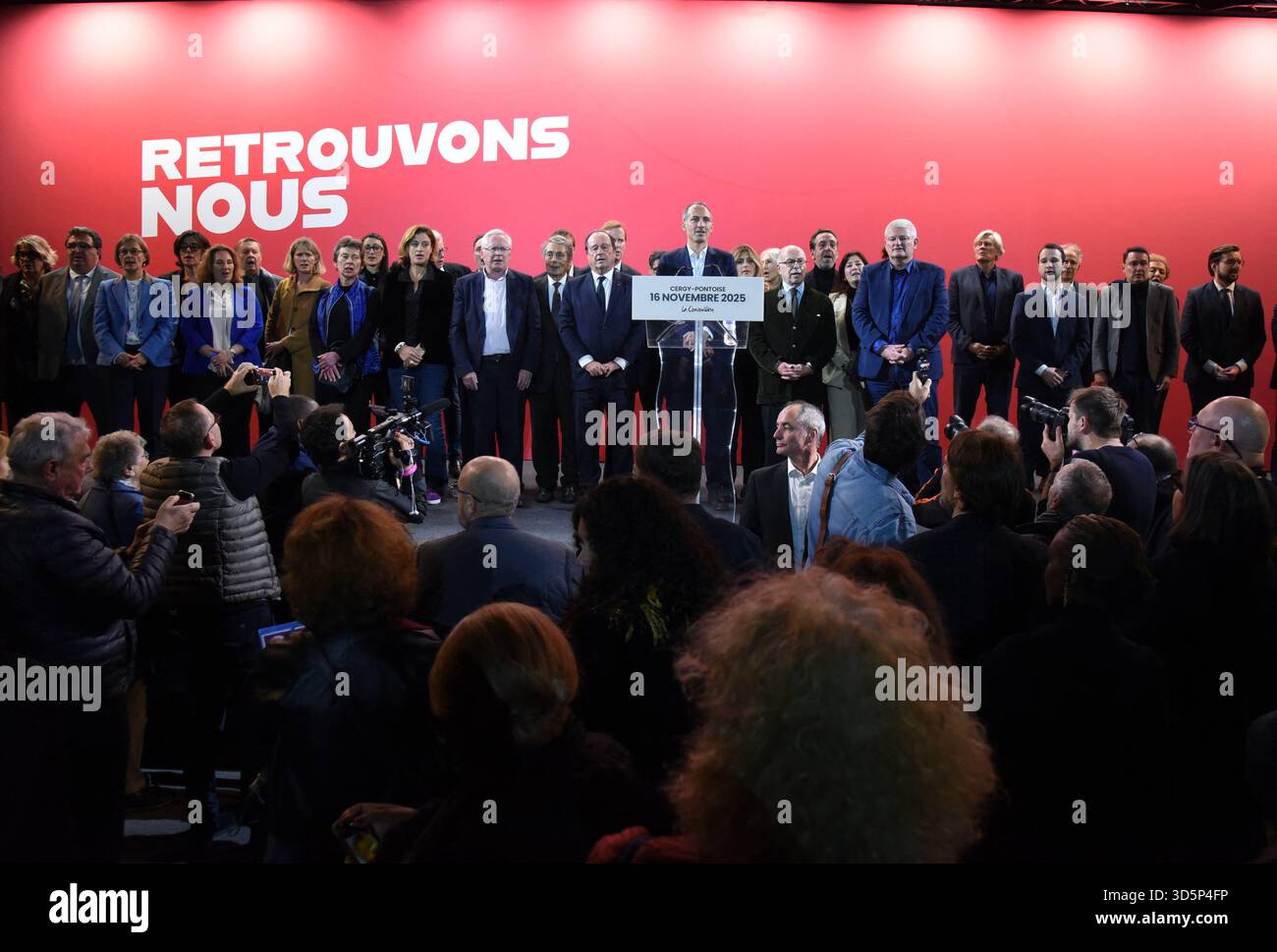
The recent local elections in France have marked the beginning of the race for the presidency in 2027, posing significant challenges for political parties in selecting their candidates. Questions arise regarding the candidate selection process, including the possibility of holding primaries.
With the local elections concluded, political parties in France are seriously contemplating how to choose their candidates for the upcoming presidency. This challenge is pivotal, as parties must make critical decisions about whether to rely on primaries to determine their nominee and what the scope of these elections would be if this decision is made.
Details of the Event
The recent local elections are seen as a starting point for the presidential race, revealing that traditional parties are struggling to regain voters' trust. While the National Rally, led by Marine Le Pen, has made notable gains, the France Unbowed party, led by Jean-Luc Mélenchon, still maintains a strong voter base. In contrast, other parties like the Socialist Party and the Republicans face significant challenges in defining their political identity.
Pressure is mounting on these parties to define their electoral strategies, as selecting the right candidate is crucial in the face of intense competition. Some party leaders have indicated the importance of holding primaries, while others prefer to select their candidate internally.
Background & Context
Historically, France has witnessed numerous political transformations that have influenced the nature of presidential elections. In recent years, the popularity of far-right and far-left parties has surged, leading to significant changes in the political landscape. The previous presidential elections in 2022 saw a notable rise of the National Rally, reflecting a shift in the priorities of French voters.
This election comes in the context of broader economic and social challenges facing France, including issues of immigration, security, and the economy. These issues play a significant role in shaping voters' opinions, increasing the importance of selecting the right candidates.
Impact & Consequences
The upcoming elections represent an opportunity for political parties to reassess their strategies and set their priorities. If parties decide to hold primaries, this could lead to internal divisions, but it may also provide the chance to select candidates with broad public support. Conversely, if parties choose their candidates internally, they may face criticism from voters who desire greater participation in the political process.
The results of these elections will significantly impact the future of French politics and may shape the contours of the next government. Amid the multiple crises facing France, selecting the right candidate will have far-reaching implications for both domestic and foreign policies.
Regional Significance
The French elections are significant not only for the French people but also for Arab countries. France plays a key role in European and global politics, and its relations with Arab states are heavily influenced by the policies adopted by French leaders. If a far-right candidate wins, France's approach to immigration and security issues may change, affecting relations with Arab nations.
Conversely, if traditional parties manage to regain voters' trust, this could lead to greater stability in relations between France and Arab countries, potentially enhancing cooperation in various fields such as economics and security.