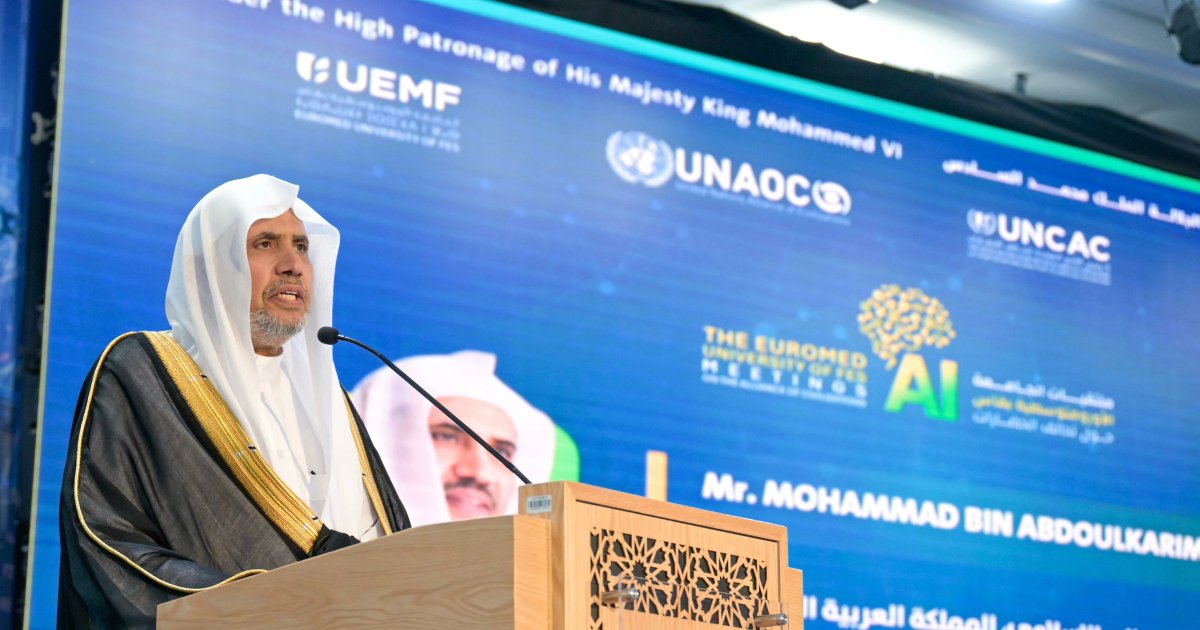
The Euro-Mediterranean University in Fez, Morocco, has inaugurated an international conference titled 'The Future of Human Civilization in the Age of Artificial Intelligence,' featuring prominent global figures, including the UN High Representative for the Alliance of Civilizations, along with numerous academics and thinkers from 75 countries. The conference witnessed attendance exceeding 2,000 individuals, reflecting the significance of the topic at hand.
In his opening speech, Sheikh Dr. Mohammed bin Abdulkarim Al-Issa, Secretary-General of the Muslim World League and President of the Association of Muslim Scholars, highlighted the importance of this conference, which addresses the civilizational and cognitive transformation humanity has experienced throughout the ages. Al-Issa began by affirming that the knowledge revolution in the 16th and 17th centuries marked a fundamental turning point, as human thought transitioned from traditionalism to the experimental scientific method, which was established by Muslim scholars in the 10th and 11th centuries.
Event Details
The conference sessions discussed the impact of artificial intelligence on human civilization and how it can evolve from merely being a tool for information storage to an analyzer and generator of ideas. Al-Issa stressed the necessity for this revolution to be based on unified ethics, ensuring that AI is not used as a tool for spreading hatred or racism.
He also called for the establishment of shared values before developing AI systems, particularly in sensitive areas related to religions and cultures, emphasizing the importance of transparency and accountability in the operations of companies working in this field.
Background & Context
This event comes at a time when reliance on artificial intelligence is increasing across various aspects of life, from education to industry, raising questions about how to steer this development to benefit humanity. The world has witnessed rapid advancements in this field in recent years, necessitating deep discussions about the associated ethics.
Research has shown that artificial intelligence can have both positive and negative effects on societies, requiring leaders and thinkers to devise clear strategies to address these challenges.
Impact & Consequences
The current technological revolution, especially in the field of artificial intelligence, demands a reevaluation of how societies are built. Al-Issa pointed out that the future of human civilization is linked to how we use AI, not the intelligence itself, meaning that the final decision must remain in human hands.
This emphasis on the importance of the distinctions between humans and machines reflects the necessity of preserving human values in the age of advanced technology, where humans must play a central role in guiding these tools to serve society.
Regional Significance
In light of global trends towards artificial intelligence, Arab countries must be part of this global dialogue and strive to establish strategies that align with human values. Such conferences can enhance cooperation between Arab nations and others in this field, bolstering their position on the international stage.
In conclusion, this conference represents an important step towards a deeper understanding of the challenges and opportunities presented by artificial intelligence, reflecting the urgent need to establish an ethical framework that ensures this technology is used to benefit all.