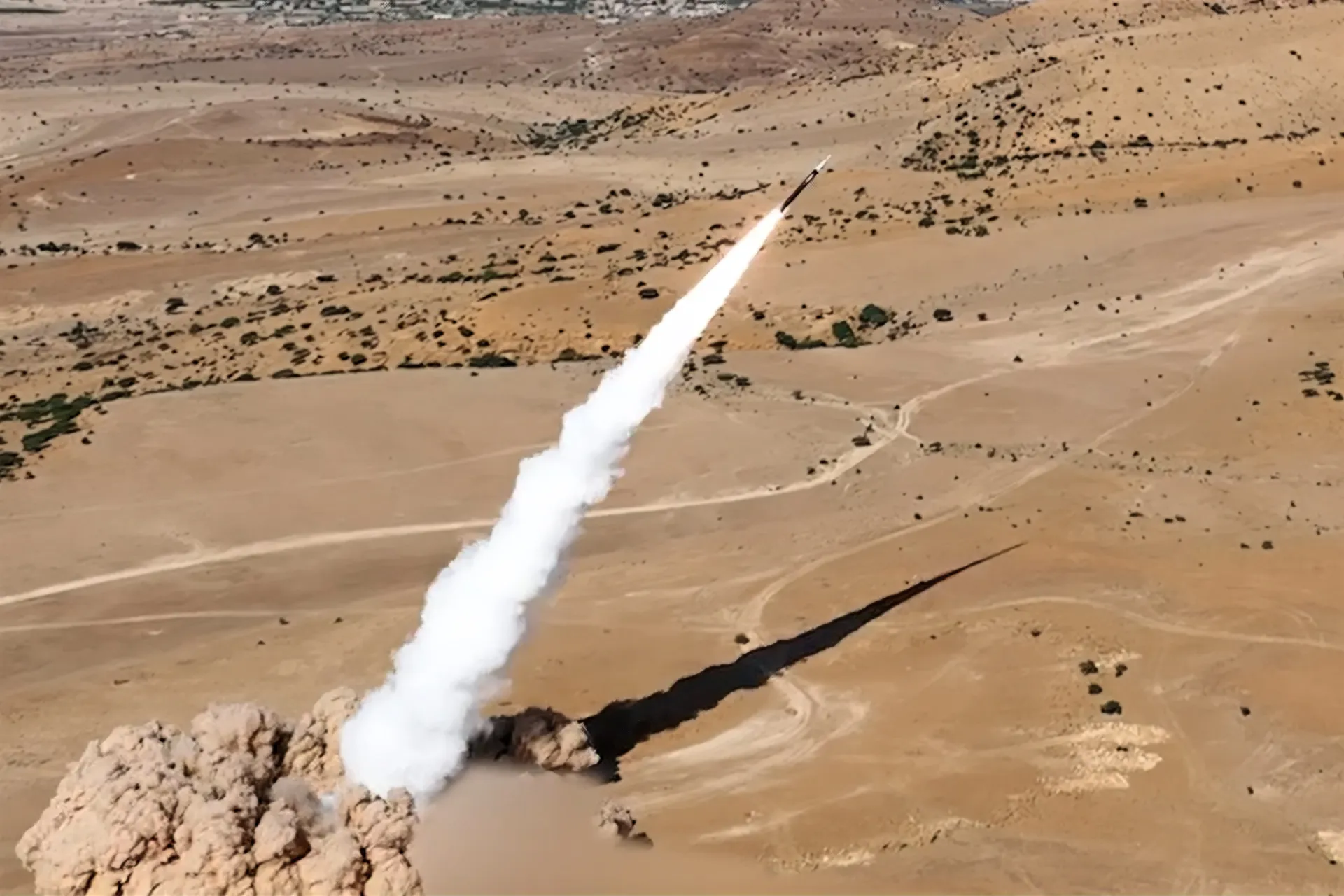
In a move that reflects a significant shift in the trajectory of regional confrontations, the Houthi group, known as "Ansar Allah," has executed its first missile attack towards southern Israel since the outbreak of the war. This attack, occurring at a sensitive time, appears to activate a deterrence card that has long been on hold, raising questions about the timing of its use and the extent of its impact.
Despite Israel's confirmation of intercepting the missile without any casualties, the event itself has imposed itself as a new element in the conflict equation, especially with increasing discussions about the multiplicity of fronts and the potential for the confrontation to escalate to more complex levels.
Details of the Incident
Dr. Walid Habas, a researcher on Israeli affairs, states that the entry of the Houthis into the equation presents two levels of impact. The first relates to opening a new front alongside Iran and Lebanon, placing Israel in a position where it must distribute its military and security resources across multiple theaters. This geographical expansion complicates operational calculations, requiring Israel to reassess its defensive and offensive priorities.
On a strategic level, Habas points out that the essence of the issue lies not merely in the missile launches but in the nature of Houthi engagement. If this engagement remains within the framework of limited strikes or moves towards more impactful tools, such as threatening navigation in the Bab al-Mandab Strait, it could represent a turning point in the course of the war.
Context and Background
Dr. Saleh, a professor of Iranian and Middle Eastern studies at the Australian National University, links the timing of the attack to a broader context of escalation. He notes that the use of this card came after the targeting of sensitive Iranian facilities, reflecting Iran's approach to using indirect pressure tools to enhance its position. In this context, the Houthis represent a deterrent tool rather than a comprehensive escalation instrument.
Security expert Richard White considers that what occurred falls under what is known as horizontal escalation, meaning the geographical expansion of the conflict, as opposed to vertical escalation, which involves intensifying operations and their quality. The entry of the Houthis, despite its current limitations, adds a pressing dimension on Israel, but does not rise to a decisive military threat.
Consequences and Impact
Dr. Salim Zakhour, a researcher specializing in constitutional law and political systems, provides a complex reading of this development. He indicates that the timing of the attack reflects coordination with Iran aimed at increasing the costs on a new front and enhancing negotiating leverage in any potential political process. The nature of Houthi engagement is still taking shape and could range from missile and drone launches to maritime operations targeting vital corridors.
On the ground, Abdul Qader Aradah clarifies that the missiles launched from Yemen traveled approximately 1,700 kilometers towards southern Israel, indicating a development in the ability to target distant areas. Targeting regions like Eilat, where sirens sounded, coincides with Iranian operations and others from Hezbollah, reinforcing the hypothesis of temporal coordination aimed at distracting Israeli defensive efforts.
Impact on the Arab Region
Brigadier General Nidal Abu Zaid, a military and strategic expert, points out that the announcement of the missile launch does not necessarily mean the full entry of the Houthis into the operational theater. The official discourse of the group did not include a clear declaration of comprehensive engagement, reflecting a calculated caution that may relate to internal considerations in Yemen or fears of opening additional fronts.
In conclusion, what has transpired may be a preliminary test of the rules of engagement, rather than a complete strategic shift in the course of the war. Israel had previously announced the interception of a ballistic missile launched from Yemen, while the Houthi group confirmed responsibility for the operation.