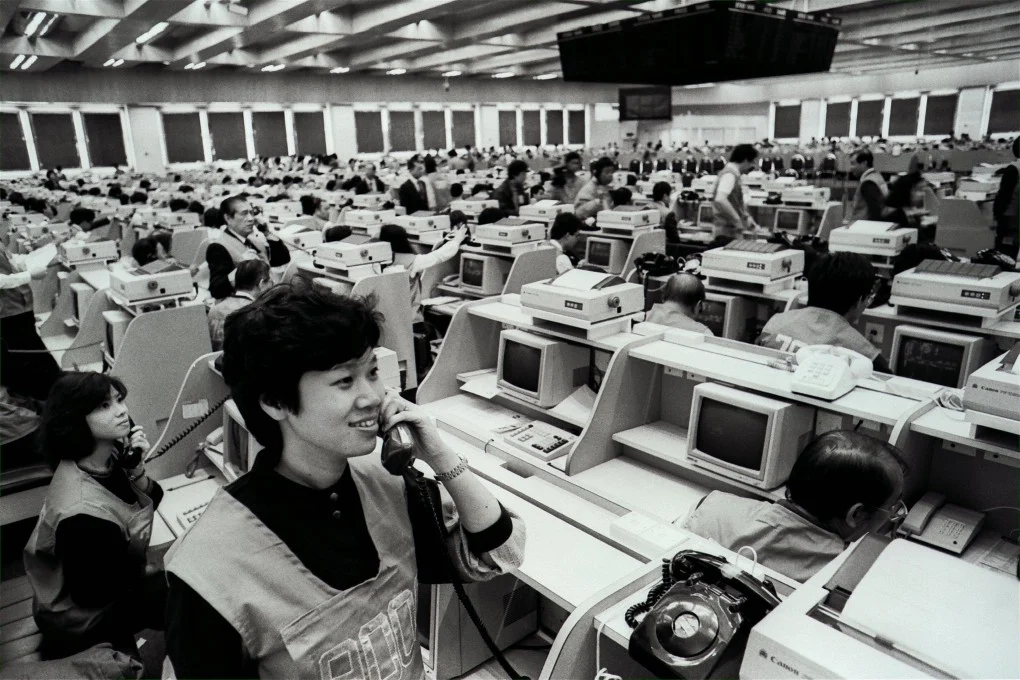
The Unified Stock Market in Hong Kong was inaugurated on April 3, 1986, marking a pivotal moment in financial market history. Despite its historical significance, the first session witnessed a decline in prices, with the Hang Seng Index closing down by 22.67 points compared to the previous Thursday's close.
Despite this decline, many brokers expressed satisfaction with the market's performance, noting that the first session served as a test of the new market's stability. Some expressed optimism about the market's future, asserting that this beginning could be just the start of a new phase of growth.
Event Details
The first trading session in the unified market is considered an important step towards enhancing transparency and efficiency in Hong Kong's financial markets. The merger of the Hong Kong and Kowloon stock exchanges into this new market facilitates investors' access to a wide range of stocks.
Despite the challenges faced by the market at its inception, many analysts believe that this move will improve the investment environment in the region. The market has seen significant interest from investors, reflecting confidence in the new financial system.
Background & Context
The Hong Kong Stock Exchange was established in 1891 and is one of the oldest exchanges in Asia. Over time, the market has undergone numerous changes, including the introduction of new trading systems. In 1986, the decision to merge the two exchanges was part of government efforts to enhance Hong Kong's status as a global financial center.
Hong Kong is considered one of the most dynamic financial markets in the world, attracting many global companies for investment. This dynamism has contributed to boosting the local economy and creating new job opportunities.
Impact & Consequences
The launch of the unified market is seen as a strategic move to enhance Hong Kong's position in global financial markets. This merger is expected to increase trading volumes and attract more foreign investments.
Moreover, this event may contribute to improving economic relations between Hong Kong and the rest of the world, enhancing opportunities for trade and investment cooperation. However, the biggest challenge remains how to manage the risks associated with global economic changes.
Regional Significance
Hong Kong is an important financial center in Asia, and developments in its financial market may impact financial markets in the Arab region. With increasing Arab investments in Asian markets, it may be necessary to monitor the effects of these changes on Arab investments.
Furthermore, this move could encourage Arab investors to explore new opportunities in Asian markets, enhancing diversity in their investment portfolios.