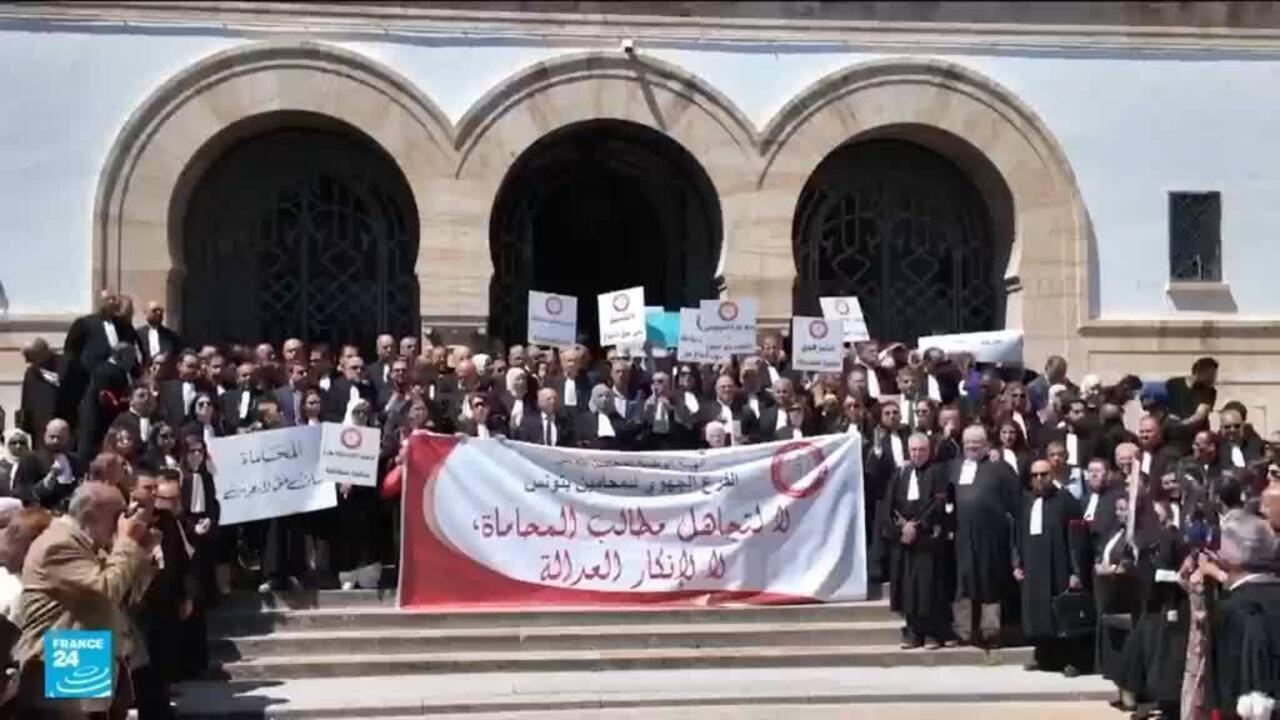
Protests continue in Tunisia as lawyers organize massive demonstrations against the Ministry of Justice, demanding improved working conditions in courts and enhanced judicial independence. These movements come at a time when the country is witnessing increasing tensions surrounding public freedoms and human rights.
Lawyers, who represent a crucial part of the judicial system, express their concerns over the deteriorating legal conditions in the country. They have pointed out that the current circumstances do not guarantee fair trials, negatively impacting the rights of litigants.
Details of the Protests
In recent days, several Tunisian cities have witnessed large demonstrations involving hundreds of lawyers. Participants raised slogans calling for radical reforms in the judicial system, emphasizing the necessity of judicial independence from any political or administrative pressures. Additionally, protests were organized in front of court buildings, where petitions were submitted demanding better working conditions.
These protests come at a sensitive time, as many lawyers seek to strengthen their rights and ensure that the executive authority does not interfere in judicial matters. Some have indicated that these movements are not merely sectoral demands but are a defense of the rights of all citizens to receive fair trials.
Background & Context
Historically, Tunisia has undergone significant transformations in its judicial system, especially following the revolution that ousted the Ben Ali regime in 2011. Despite progress made in some areas, many lawyers believe there is an urgent need for genuine reforms to ensure judicial independence.
In recent years, concerns have grown regarding the decline of public freedoms in Tunisia, with reports of arbitrary arrests and pressure on media outlets. These conditions have prompted lawyers to take a firm stance in defending their rights and the rights of citizens.
Impact & Consequences
The continuation of protests may escalate tensions between lawyers and the Ministry of Justice, potentially affecting the course of justice in the country. If the lawyers' demands are not addressed, we may witness a further decline in confidence in the judicial system.
Moreover, these movements could cast a shadow over the political landscape in Tunisia, leading to greater divisions among various political factions. If the situation continues in this manner, foreign investments and confidence in the Tunisian economy may also be adversely affected.
Regional Significance
Tunisia is considered a model in the Arab region, representing a democratic transition experience. Therefore, any regression in freedoms or judicial independence could impact other countries seeking similar reforms.
The success of lawyers in achieving their demands may encourage similar movements in other nations, thereby enhancing the importance of human rights and public freedoms in the Arab world. Conversely, failure to meet these demands could reflect a setback in the democratic journey within the region.