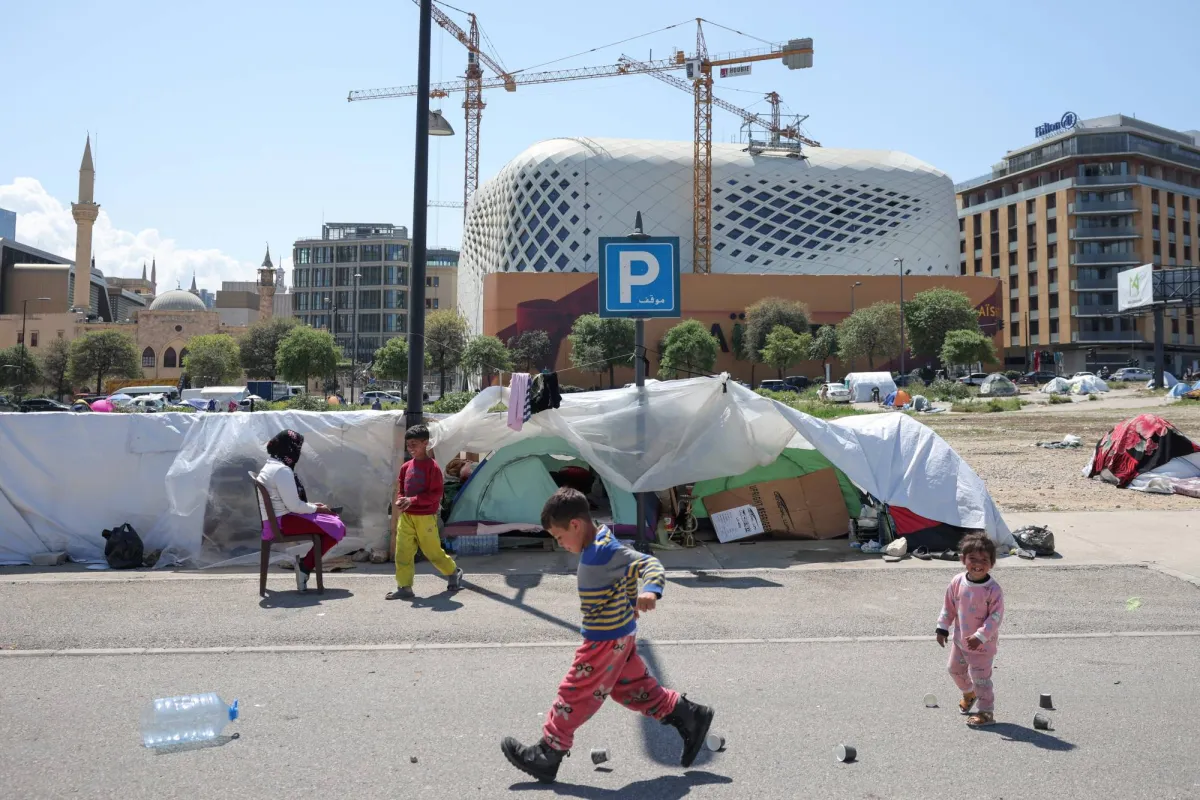
With the first signs of hope for a ceasefire in Lebanon, many Lebanese have begun to prepare for their return home. However, the ground reality imposes significant challenges. These individuals did not wait for any official announcements; the mere whisper of the words "ceasefire" was enough to ignite their longing for home.
Families began packing their bags, cars headed south, and hearts raced towards their homes. Yet, just a few kilometers away, the atmosphere reflected a different reality. Warplanes flew overhead, cars turned back from the roads, and villages seemed as if they had not left the time of war.
Details of the Event
In the southern town of Ansar, Ahmed's journey was cut short. He had to leave his hometown when the war broke out on March 2. Ahmed lived with his family in a rented apartment in Jiyeh, facing the daily pressures of displacement. When he heard about the ceasefire, he decided to head to his hometown with his 14-year-old son to test the reality.
However, the scene at the outskirts of Ansar was enough to resolve his hesitation. Ahmed said, "The warplanes are still in the skies, the town is almost empty, and there is no movement indicating the return of residents. The silence was terrifying." He quickly returned to Jiyeh, carrying with him a clear conviction: "Everything suggested that the war had not actually stopped, despite the circulating talk."
Similarly, Rawan, hailing from the city of Tyre, experienced a comparable situation. She and her husband decided to head south, especially after noticing a slight movement of cars. But at the Qasmiyeh area, everything changed as the region came under shelling, bringing them back to square one.
Background & Context
In Beirut, Mohammed from "Ain al-Rummaneh" shares a different experience, characterized by cautious waiting. His home has turned into a shelter for his family displaced from Nabatieh, where family members gathered in one space, amidst constant worry about the fate of their home and livelihoods in the south. As news of the ceasefire circulated, hope began to transform into practical steps, with the family starting to pack their belongings.
However, this rush collided with an unresolved reality, as the available information was insufficient to confirm the ceasefire's implementation. Mohammed recalls the previous war experience when a ceasefire was announced at five in the morning, saying, "In the last war, there was clarity and commitment, which gave us a sense of security."
Impact & Consequences
In the southern suburbs of Beirut, the return appears more fragile. Fouad, a resident there, describes a scene reflecting a state of ongoing anticipation. He went in the morning to check on his home but was surprised to find the streets nearly empty. With renewed alerts, fear quickly returned, and people withdrew once again. Fouad observes that "the general mood has changed, and there is now greater caution even among those who were accustomed to taking risks in previous stages."
This public hesitation was not isolated from clear positions and warnings, as "Hezbollah" urged residents not to head to villages and towns before the final official announcement of the ceasefire. Similarly, "Amal Movement" circulated a plea urging displaced individuals to remain in safe places.
Regional Significance
At the same time, political disparities have increased the uncertainty. While statements indicated that the agreement between the United States and Iran included Lebanon, Israeli Prime Minister Benjamin Netanyahu quickly denied this, asserting that the agreement does not cover the Lebanese arena. This contradiction, coinciding with ongoing Israeli strikes, made the truce appear incomplete, increasing confusion and fear among the Lebanese.
Palestinian President Mahmoud Abbas also called for a ceasefire in the occupied Palestinian territories, indicating that the ceasefire that occurred between the United States and Iran should include the Palestinian territories subjected to assaults by occupying forces. Abbas welcomed the ceasefire between the United States and Iran, considering it an important step towards achieving stability in the region.