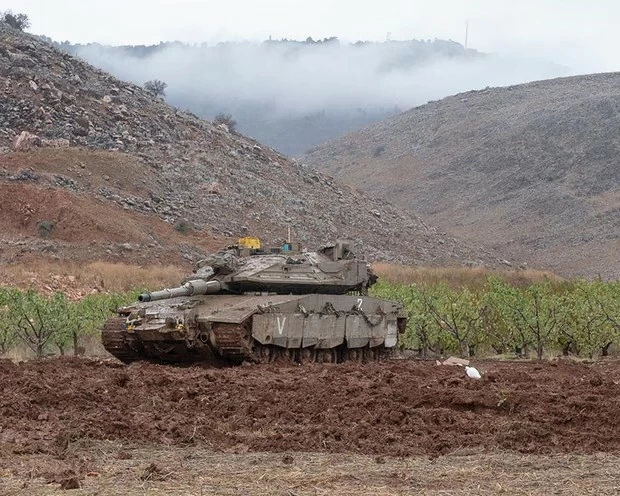
Lebanon's Environment Minister, Tamara Zain, has accused the Israeli army of committing an 'environmental genocide' in a report documenting extensive damage to Lebanon's natural resources during the conflict from 2023 to 2024.
The report, prepared by the National Council for Scientific Research in Lebanon, indicates that Israeli military operations have reshaped the geographic and environmental landscape in southern Lebanon, leading to widespread destruction of ecosystems. Although the report does not include the most recent attacks that occurred during the spring of this year, it comes at a time when the south is experiencing a fragile ceasefire with the return of thousands of displaced individuals to their devastated areas.
Details of the Incident
The report, spanning 106 pages, outlines the extent of the deep environmental losses, including the decline of essential environmental services relied upon by the population. In the introduction, Zain emphasized that the 'systematic' damage inflicted on forests, agricultural lands, water resources, marine environments, and air quality falls under the term 'environmental genocide.' She noted that the repercussions extend beyond nature, impacting public health, food security, livelihoods, and social cohesion.
According to the report, military operations resulted in the destruction of approximately 5,000 hectares of forests, including pine forests and broadleaf trees, leading to a loss of biodiversity and soil degradation. Direct losses in the agricultural sector are estimated at $118 million, encompassing crops, agricultural infrastructure, and livestock, in addition to further losses of about $586 million due to decreased agricultural production and disrupted harvesting.
Background & Context
More than 2,150 hectares of orchards have been destroyed, including olive, citrus, and banana farms. Soil contamination has been observed with elevated levels of phosphorus, particularly in southern Lebanon and the Bekaa Valley, alongside widespread air pollution due to toxic emissions including sulfur and nitrogen oxides and hazardous compounds such as dioxins.
Critics of Israel argue that what is happening in southern Lebanon reflects a pattern similar to that seen during the Gaza conflict, where civilian and environmental infrastructure, including water and health facilities, were targeted. The report noted that military operations in Gaza during 2023 led to the destruction of between 38% and 48% of vegetation cover and agricultural land, along with water and soil contamination.
Impact & Consequences
The report estimates the total cost of damages at around $25 billion, which includes $6.8 billion in direct material losses, $7.2 billion in economic losses, and $11 billion in reconstruction and recovery costs. Zain affirmed that Lebanon is 'unable to bear this burden alone,' calling for extensive international support for environmental rehabilitation and recovery capacity enhancement.
For his part, Doug Weir, director of the Conflict and Environment Observatory, stated that the report highlights the importance of rebuilding better and enhancing environmental monitoring systems, but he noted that some of its findings have become outdated due to ongoing damages.
Regional Significance
In contrast, the Israeli army stated that it considers the environmental impacts of its operations, emphasizing that its actions aim to protect Israel's security while minimizing harm to civilians and the environment. This situation reflects the environmental challenges faced by the region and underscores the need for effective strategies to protect the environment amid ongoing conflicts.
In conclusion, these figures and facts highlight the importance of international cooperation in environmental matters, especially in conflict zones, where environmental damages can have long-lasting effects on local communities.