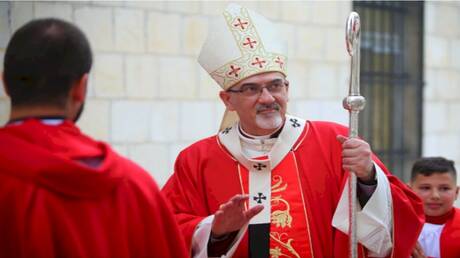
Lebanese President Joseph Aoun has strongly condemned the ban on the Latin Patriarch in Jerusalem from entering the Holy Sepulchre, asserting that this action represents a blatant violation of religious freedom and a gross breach of international humanitarian law. This statement comes at a sensitive time when the region is witnessing increasing tensions related to religious rights.
The Holy Sepulchre is considered one of the holiest Christian sites in the world, believed to be the place where Christ was buried and resurrected. This ban highlights the challenges faced by religious minorities in Jerusalem and reflects the ongoing tensions between Israeli authorities and Christian communities.
Details of the Incident
In recent days, the Latin Patriarch was barred from entering the Holy Sepulchre, sparking strong reactions from religious and political leaders in Lebanon and abroad. President Aoun described this act as unacceptable, calling on the international community to intervene to protect the rights of Christians in Jerusalem.
This ban is not considered an isolated incident but rather part of a series of measures targeting religious freedom in the holy city. In recent years, there has been an increase in restrictions on access to holy sites, raising concerns among Christian communities.
Background & Context
Historically, Jerusalem has been a center of religious and cultural diversity, home to Christian, Jewish, and Islamic communities. However, political conflicts and regional disputes have exacerbated the situation, negatively impacting religious freedom. Recent years have seen a rise in tensions between Israelis and Palestinians, complicating the religious landscape.
The Holy Sepulchre is viewed as a symbol of religious tolerance, yet the restrictions imposed on access to it reflect the challenges faced by Christian communities in Jerusalem. The ban on the Latin Patriarch's entry into the church demonstrates how local policies can affect individuals' rights to practice their religious rituals.
Impact & Consequences
The ban on the Latin Patriarch from entering the Holy Sepulchre could lead to widespread repercussions on the relationships between religious communities in Jerusalem. This incident may stir feelings of resentment and anger among Christians, potentially contributing to escalating tensions between different communities.
Moreover, this incident could impact Israel's image in the international community, where religious freedom is viewed as a fundamental human right. The international reaction may exert pressure on the Israeli government to ease restrictions on access to holy sites.
Regional Significance
This event serves as a wake-up call for Arab countries regarding the importance of protecting the rights of religious minorities. Promoting religious freedom is essential for building cohesive and stable communities. Additionally, this incident illustrates how local policies can influence regional relations.
In the current circumstances, Arab countries must stand in solidarity with Christian communities in Jerusalem and support their rights to practice their religious rituals. Protecting religious diversity is considered a crucial part of promoting peace and stability in the region.
In conclusion, the ban on the Latin Patriarch from entering the Holy Sepulchre is a violation of fundamental human rights, and the international community must take effective steps to ensure religious freedom for all.