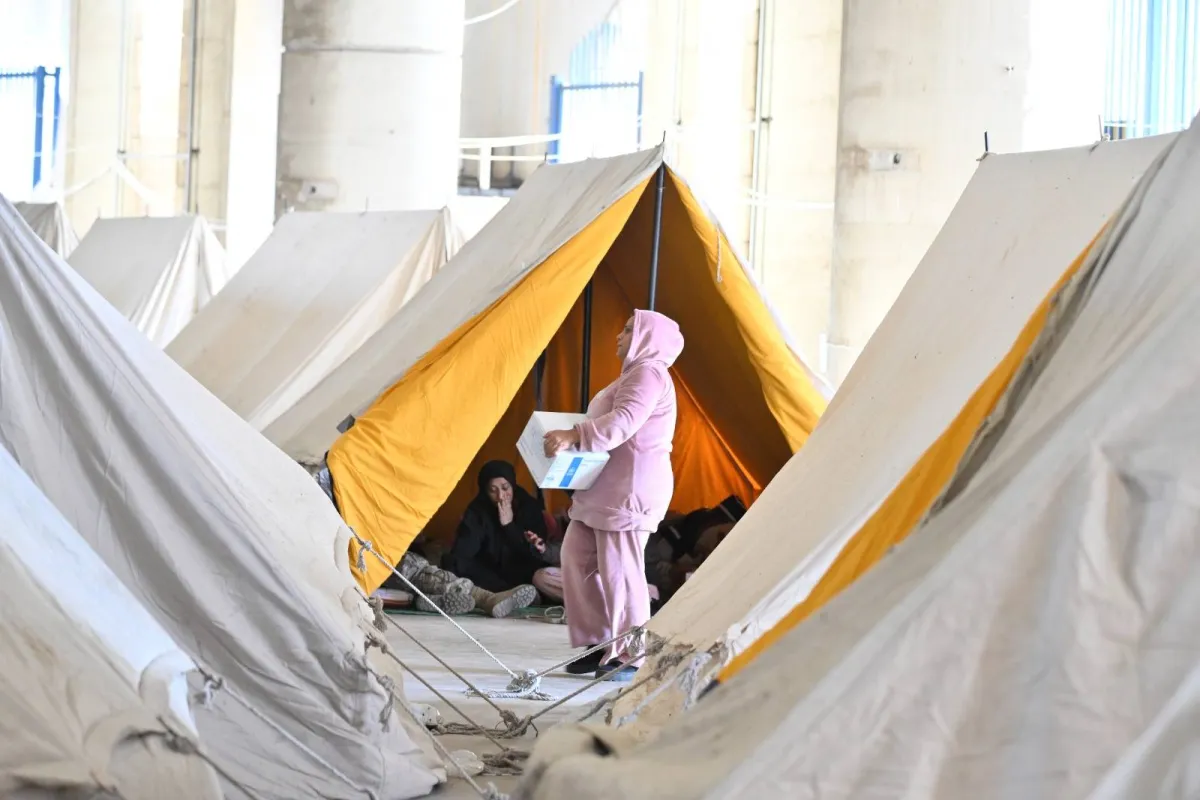
The number of displaced individuals in Lebanon has surpassed one million due to the ongoing conflict between Israel and Hezbollah, presenting unprecedented humanitarian challenges for the government. As humanitarian needs increase, the international response appears significantly below the scale of the disaster, complicating the situation further.
Despite the urgent appeal launched by the Lebanese government, attended by UN Secretary-General Antonio Guterres, to secure approximately $308 million to cover basic humanitarian needs, the value of aid received so far has not exceeded $90 million, which is about 30 percent of the required amount. This severe funding shortfall threatens the state's and stakeholders' ability to support the displaced, especially as the crisis expands.
Details of the Situation
In this context, Minister of Social Affairs Haneen Al-Sayed confirmed that UN agencies are making significant efforts to distribute aid, in coordination with the ministry and governors, through a network of centers spread across various Lebanese regions. She explained that aid is distributed via the Higher Relief Committee, the Southern Council, and local associations, ensuring that support reaches the most vulnerable groups.
Despite the immense financial pressure, the shelter crisis does not seem to be the most pressing challenge at this stage, as the Ministry of Social Affairs reports that the state manages dozens of shelter centers across all provinces and does not suffer from a lack of capacity. According to the latest report from the Disaster Risk Management Unit at the Prime Minister's office, the number of displaced individuals residing in shelters has reached 136,731 people distributed across 674 centers.
Background & Context
Official estimates indicate that these centers are still capable of accommodating more displaced individuals if necessary. However, the figures reveal that the overwhelming majority of the displaced, about 85 percent of the 1.1 million people, live outside shelters, either in rented homes or with relatives. The most vulnerable group is found in the shelters, and government support plans primarily rely on cash assistance programs.
A notable phenomenon is observed in the capital, Beirut, where dozens of families continue to sleep on sidewalks and live in temporary tents along the waterfront. Informed sources indicate that these families refuse to move to shelters, preferring to stay close to their original areas, reflecting additional complexities in managing the crisis.
Impact & Consequences
This data reflects a qualitative shift in the nature of the displacement crisis in Lebanon; the challenge is no longer limited to securing shelter but is fundamentally linked to providing sustainable funding to cover living needs and essential services. Compared to previous experiences, reports from the Ministry of Social Affairs indicate that Lebanon received financial aid exceeding $700 million during the war in 2024, while today's international support appears more cautious and less forthcoming.
Regional complications are increasing, as some supporting countries face security tensions, affecting their ability to provide aid. This situation presents Lebanon with significant challenges amid the multiple crises it is experiencing.
Regional Significance
The displacement crisis in Lebanon serves as a wake-up call for other Arab countries, reflecting the humanitarian and political dimensions of regional crises. These conditions require an urgent response from the international community to ensure the necessary support for the displaced.
In conclusion, the current situation in Lebanon demands a concerted effort from local and international stakeholders to address the growing humanitarian challenges. A failure to respond swiftly could exacerbate conditions, threatening the stability of Lebanon and the entire region.