Leighton House Museum in London celebrates its centenary, regarded as an architectural masterpiece created by Lord Frederick Leighton in the 19th century, expressing his love for Eastern culture. The museum is distinguished by its unique design, featuring the "Arab Hall," which reflects the aesthetics of the Middle East and North Africa.
The "Arab Hall" is one of the museum's most prominent features, adorned with blue ceramic pieces and Arabic decorations, making it an ideal space for contemplating Eastern arts. At the center of the hall, a fountain adds an Eastern character to the space, allowing visitors to feel as though they have stepped into another world.
Event Details
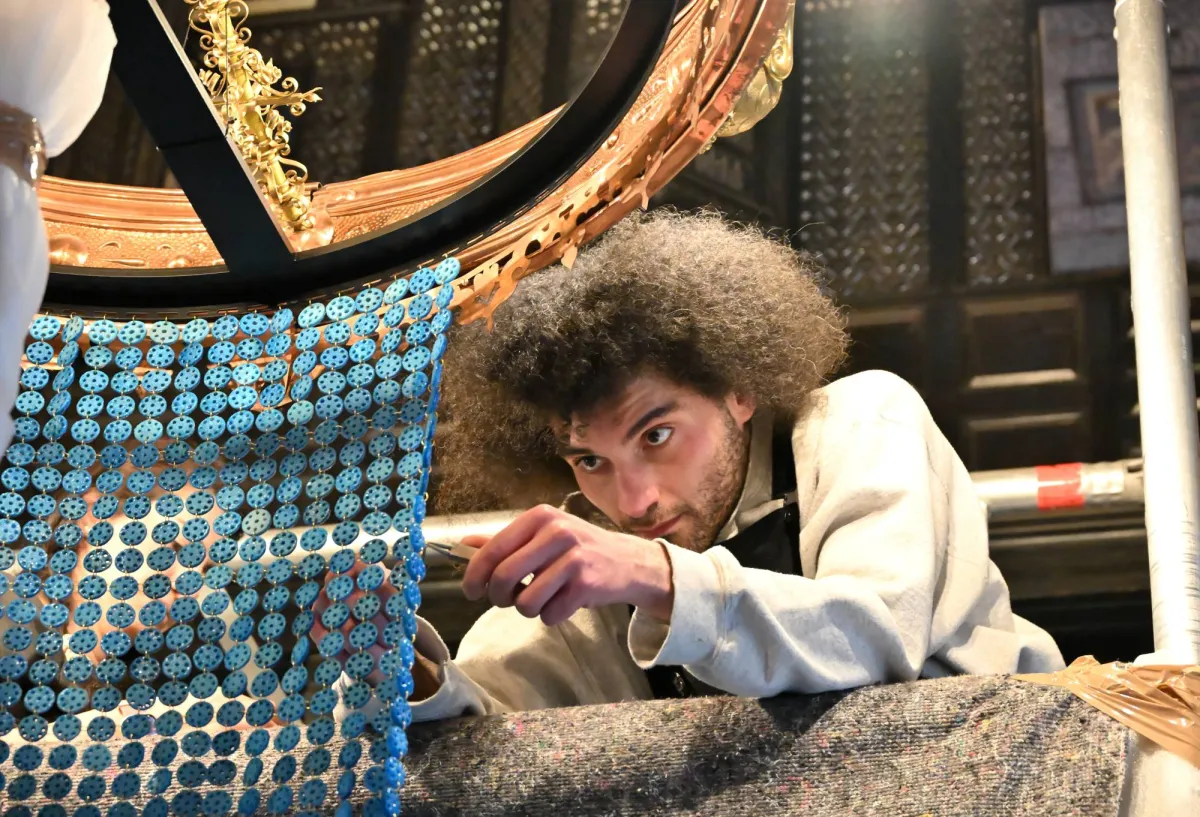
As part of the celebrations, the museum is showcasing a contemporary work by Lebanese artist Ramzi Malat, known for his pieces that blend Shami folklore with Islamic traditions. Malat's new work, titled "Atlas of Interwoven Gazes," includes a distinctive chandelier from which hang chains of blue beads, considered a traditional talisman against envy and the evil eye.
Malat states that the work aims to explore deeper themes related to protection and cultural heritage, drawing inspiration from the various elements present in the Arab Hall. The piece consists of approximately 7,500 blue beads, harmonizing with the colors and other details in the museum, reflecting Leighton's style of integrating diverse cultural elements.
Background & Context
Leighton House Museum was established in 1900 and embodies Lord Leighton's passion for Eastern arts. Leighton was a renowned artist of his time, significantly influenced by the cultures he encountered during his travels to the Middle East. The museum's design reflects this influence, blending Western architectural styles with Eastern elements.
The Arab Hall is an essential part of the museum, designed to be a space celebrating various arts and cultures. By showcasing contemporary works like Malat's, the museum seeks to foster dialogue between different cultures and highlight the importance of the arts in expressing cultural identity.
Impact & Consequences
Malat's work demonstrates how art can serve as a means of expressing contemporary social and cultural issues. By using blue beads as a symbol of protection, the artist addresses themes such as envy and violence, reflecting contemporary concerns in the Arab region.
These artworks act as a bridge between cultures, providing visitors with an opportunity to reflect on shared human issues. They also emphasize the importance of the arts in promoting mutual understanding among different cultures, especially in light of the contemporary challenges facing the region.
Regional Significance
Malat's works express personal and collective experiences that reflect the realities of life in the Arab world, where envy and violence are issues affecting communities. Through his work, the artist aims to convey a message of hope and affirm the importance of cultural heritage in facing challenges.
These artworks serve as a call to reflect on how the arts can be used as a means for social and cultural change. In a world increasingly marked by violence and discrimination, art emerges as a way to express identity and facilitate communication between different cultures.