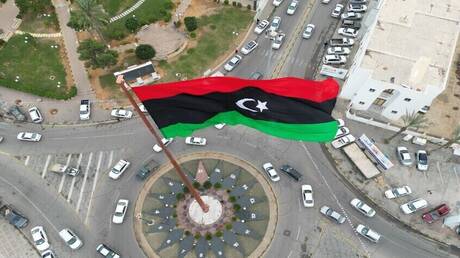
The Libyan Foreign Ministry, under the National Unity Government, has expressed deep concern regarding the escalating tensions in the Arabian Gulf, where regional tensions have notably intensified in recent times. In an official statement, the ministry reiterated its condemnation of all attacks targeting countries in the region, emphasizing the importance of dialogue as a primary means to contain the crisis.
These statements come at a time when the region is witnessing a rise in tensions among several countries, raising concerns about potential negative repercussions that could affect regional stability. The Libyan Foreign Ministry has underscored the necessity of reaching peaceful solutions that ensure security and stability for all concerned nations.
Details of the Situation
Fears are growing regarding the escalation of tensions in the Gulf in light of recent events, as the region has experienced several incidents that have exacerbated the situation. The Libyan government has expressed its readiness to cooperate with all relevant parties to achieve peace and stability.
The ministry also highlighted the importance of enhancing regional and international cooperation to address common challenges, pointing out that dialogue is the optimal way to overcome disputes and achieve mutual interests.
Background & Context
Historically, the Arabian Gulf region has witnessed numerous political and military crises, which have impacted relations between countries. For some time, there have been multiple attempts to reach peaceful solutions, but the recent escalation has returned the situation to square one.
Libya is considered part of this regional context, as the current government seeks to strengthen its position on the international stage by supporting stability in the region. The Libyan Foreign Ministry has emphasized the importance of understanding among Gulf countries to achieve regional security.
Impact & Consequences
The continuation of tensions in the Gulf could lead to negative repercussions on both economic and political levels. These conditions may affect trade and investment flows in the region, which could negatively impact the Libyan economy, already facing significant challenges.
Moreover, military escalation could open the door to external interventions, complicating the situation further and affecting peace efforts. Therefore, calls for dialogue come at a critical time that requires all parties to exercise wisdom and restraint.
Regional Significance
The situation in the Gulf has a direct impact on the rest of the Arab countries, as any escalation could destabilize neighboring nations. Additionally, crises in the Gulf may affect relations among Arab states, necessitating joint efforts to avoid slipping into further tensions.
In light of these circumstances, hope remains pinned on diplomacy and dialogue as a means to overcome crises, as cooperation among Arab countries is the only way to achieve security and stability in the region.
In conclusion, calls for dialogue and understanding remain essential amid rising tensions, as all parties must work towards achieving peace and stability in the Gulf region.