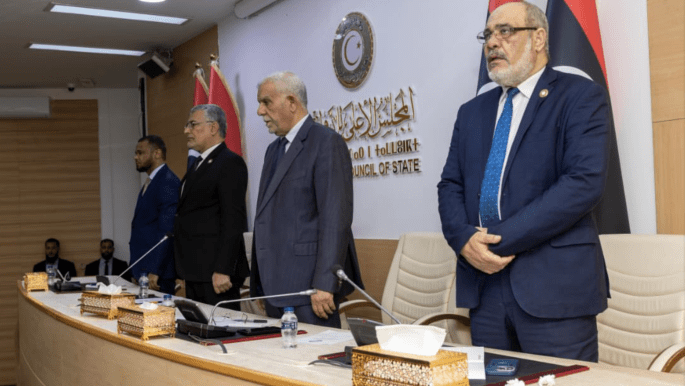
The State Council of Libya has firmly rejected any political settlement outside the approved political agreement, emphasizing that it does not recognize any representation in negotiations without prior official authorization. This statement comes at a critical time for the country amid increasing international and local pressures to resolve the ongoing political crisis.
The State Council is one of the main political bodies in Libya, established under the political agreement reached in 2015. This agreement aimed to end the armed conflict that has plagued the country since the overthrow of Muammar Gaddafi in 2011. However, Libya continues to face significant challenges regarding political and security stability.
Details of the Announcement
In an official statement, the State Council confirmed that it would not accept any talks or negotiations that do not include all relevant parties, stating that any attempt to bypass this framework would be met with rejection. It also highlighted the importance of maintaining the unity of Libyan institutions and preventing any entity from monopolizing political decisions.
These statements follow a series of meetings held in the capital, Tripoli, where some political factions attempted to reach bilateral agreements without involving the State Council. The Council viewed these steps as a violation of the political legitimacy it represents.
Background & Context
Historically, Libya has suffered from severe political divisions, with several competing governments emerging since 2011. External interventions have complicated the situation, exacerbating the conflict among various factions. The political agreement reached in 2015 was seen as a glimmer of hope for ending the conflict, but it has not achieved the desired stability.
Over the years, Libya has witnessed numerous attempts to reach political settlements, most of which have failed due to a lack of consensus among the involved parties. In this context, the State Council remains one of the bodies striving to maintain political balance in the country.
Impact & Consequences
Observers believe that the State Council's rejection of any settlements outside the political agreement could worsen the situation in Libya, potentially escalating the conflict among various factions. This rejection may also negatively impact international efforts aimed at achieving peace and stability in the country.
On the other hand, this stance could strengthen the State Council's position as a key player in any future negotiations, potentially contributing to a reshaping of the political landscape in Libya. However, at the same time, the Council may face increasing pressure from certain parties seeking to bypass its role.
Regional Significance
The situation in Libya serves as an indicator of the challenges faced by many Arab countries regarding political stability. The political crises in Libya could affect regional security, especially with external powers seeking to advance their interests in the area.
Moreover, the ongoing conflict in Libya may lead to an increased flow of migrants towards European countries, heightening the pressures on European governments to address this phenomenon. Thus, the situation in Libya is not merely a local issue but has extensive regional and international implications.
In conclusion, the State Council in Libya faces significant challenges as it must balance the preservation of its political rights with achieving stability in the country. The current stance may determine Libya's future in the coming years.