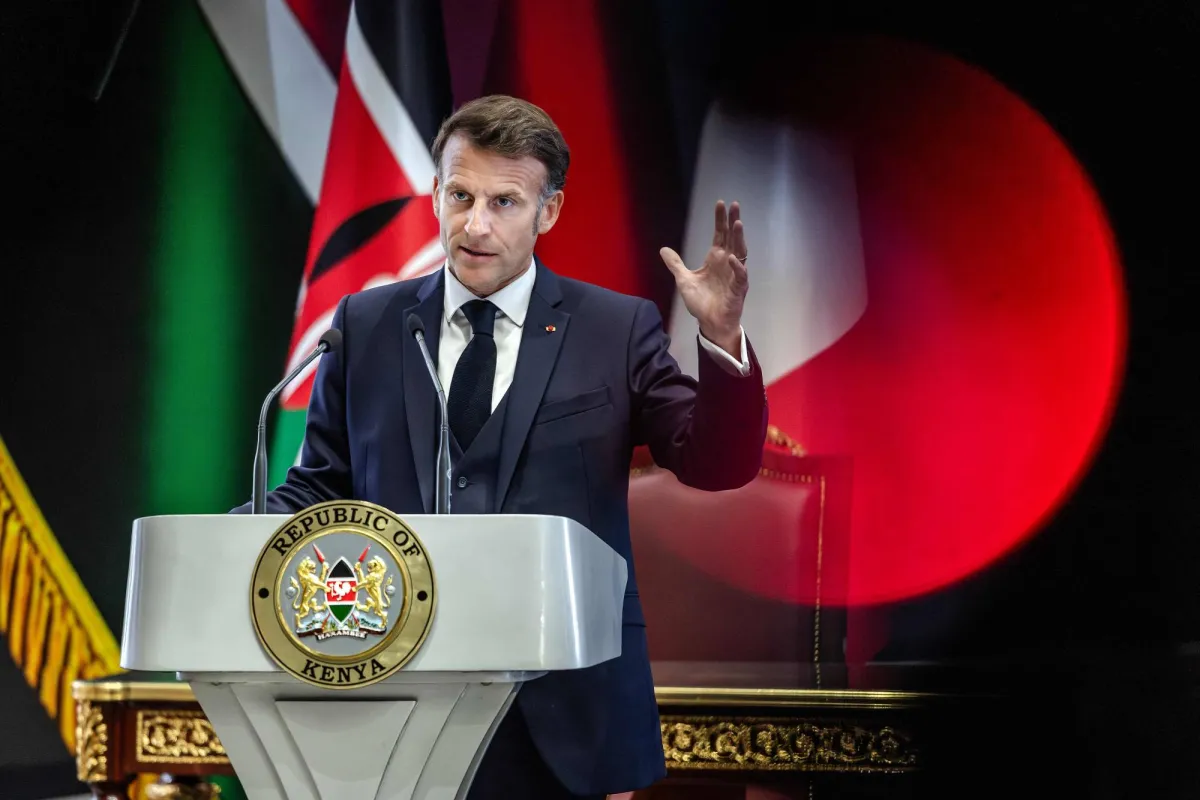
French President Emmanuel Macron, during a press conference in Nairobi, confirmed that France has "never considered" deploying warships in the Strait of Hormuz. Macron explained that the goal is to secure maritime navigation in coordination with Iran amid rising tensions in the region.
Macron's statements came after warnings from Tehran, which cautioned of a "decisive and immediate" response to any deployment of French or British forces in the strait. These warnings have raised international concerns about the potential escalation of tensions in the Arabian Gulf, a vital route for global oil trade.
Details of the Situation
In a related context, Iranian Deputy Foreign Minister Kazem Gharib Abadi announced via the platform "X" that Iran is the only country capable of securing the Strait of Hormuz, stressing that no foreign country will be allowed to interfere in its affairs. He indicated that any foreign military presence in the region would be considered an escalation of the crisis.
These statements come at a time when both London and Paris are working to lead a multinational mission to secure navigation in the strait. The UK has announced the deployment of a destroyer in the area, while the French aircraft carrier Charles de Gaulle has transited the Suez Canal heading towards the Gulf.
Background & Context
The Strait of Hormuz is one of the most important waterways in the world, through which approximately 20% of the world's total oil passes. In recent years, the strait has witnessed escalating tensions between Iran and Western countries, particularly following the United States withdrawal from the Iranian nuclear deal.
Historically, there have been several incidents in the strait, where commercial vessels have been attacked, leading to increased tensions between Iran and Western nations. The presence of foreign naval forces in the region is seen as a challenge to Iran, which considers the strait part of its national sovereignty.
Impact & Consequences
Concerns are growing that any military escalation in the Strait of Hormuz could lead to rising global oil prices, affecting the world economy. Additionally, any military intervention could open the door to a wider conflict in the region, complicating political and economic situations further.
The French stance is seen as an attempt to avoid escalation, but at the same time, it highlights the challenges European countries face in dealing with Iran, especially under increasing American pressure.
Regional Significance
The situation in the Strait of Hormuz directly affects Arab countries, particularly those that rely on oil as a primary source of revenue. Any escalation in the region could destabilize Gulf states, negatively impacting regional security.
In conclusion, the situation in the Strait of Hormuz remains under close observation, as major powers seek diplomatic solutions to avoid any military escalation that could have dire consequences for the region and the world.