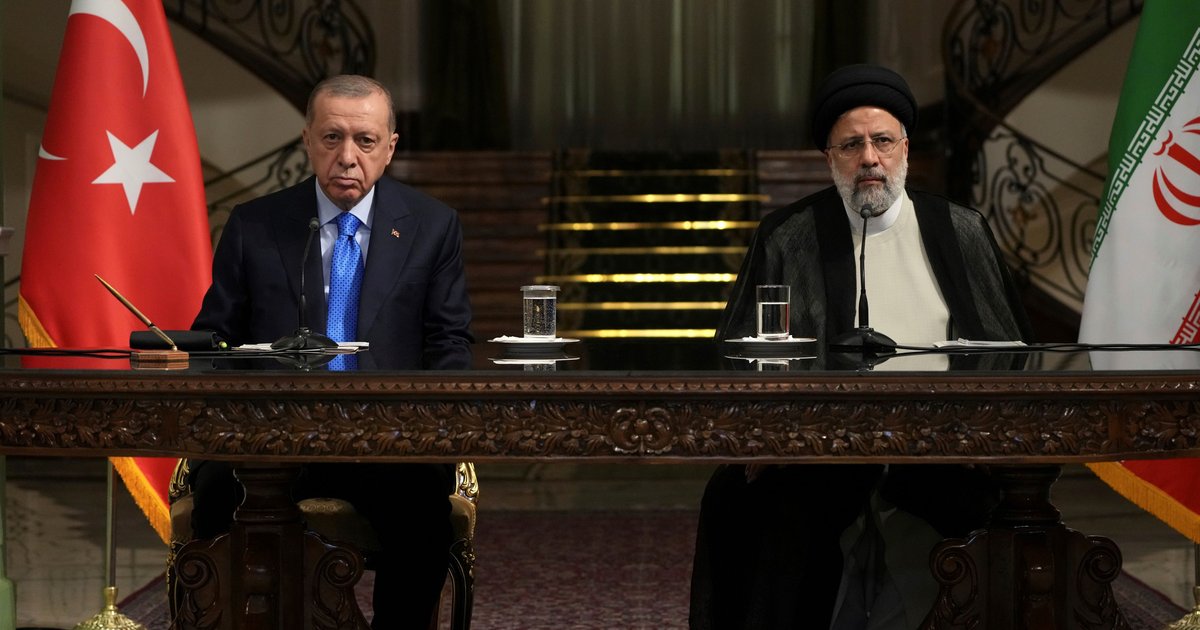
Turkish academic Nabi Mish asserts that Ankara's neutral stance regarding the war on Iran and its active mediation efforts reflect a long-term strategy, not merely a circumstantial choice. He considers this policy a result of the vision of Turkish President Recep Tayyip Erdogan, which is based on rationality and awareness.
Mish, the general coordinator of the SETAA Center for Political, Economic, and Social Research, explained in his article in the Turkish newspaper Sabah that Turkey continues to engage in active diplomacy despite its decision to stay out of the war. He noted that this approach reflects Ankara's ability to communicate with all concerned parties.
Details of the Situation
The Turkish academic criticized comparisons of Turkey's current position with that of the second president of the Turkish Republic, Ismet Inönü, during World War II, arguing that Inönü's foreign policy was more passive, while Ankara today pursues an active and effective policy. He emphasized that Ankara's decision to remain outside the war is not an exception but part of a continuous approach in foreign policy.
Mish pointed out that the primary goal of Turkey's internal and external policies under Erdogan is to maintain the country's stability and enhance its political and administrative capacity in the face of crises. Turkey also aims to strengthen its capabilities and deepen its strategic independence to solidify its position as an influential actor in global politics.
Background & Context
Since 2010, Turkey has faced numerous crises but has sought to maintain its stability and derive strategic lessons during those periods. In the context of the ongoing war in its neighborhood, Ankara adopts the same approach, striving to maintain its balance and independence.
The academic also highlighted Turkey's efforts during the Russia-Ukraine war, where it communicated with all parties and engaged in active mediation to protect its interests. It appears that Ankara continues this approach in a more developed manner in the context of the war on Iran.
Impact & Consequences
Mish believes that Turkey's policy in the context of the war on Iran represents an extension of the strategic accumulation built over the years. President Erdogan and his team recognized early on the challenges facing Turkey, including competition among major powers and their objectives in the region.
He stressed that Turkey does not view this war as a transient crisis but as a new phase of regional destabilization waves, requiring it to adopt an approach that preserves its independence and diplomatic mobility.
Regional Significance
Turkey's position during the war on Iran exemplifies an active foreign policy that could influence regional balances. As tensions in the region escalate, Arab countries may seek to benefit from the Turkish experience in crisis management.
In conclusion, Mish affirmed that Turkey's stance represents a consistent extension of the strategic mindset that has developed over the years under the rule of the Justice and Development Party, noting that analyses that overlook this continuity fail to consider the interventions Turkey has faced during Erdogan's tenure.