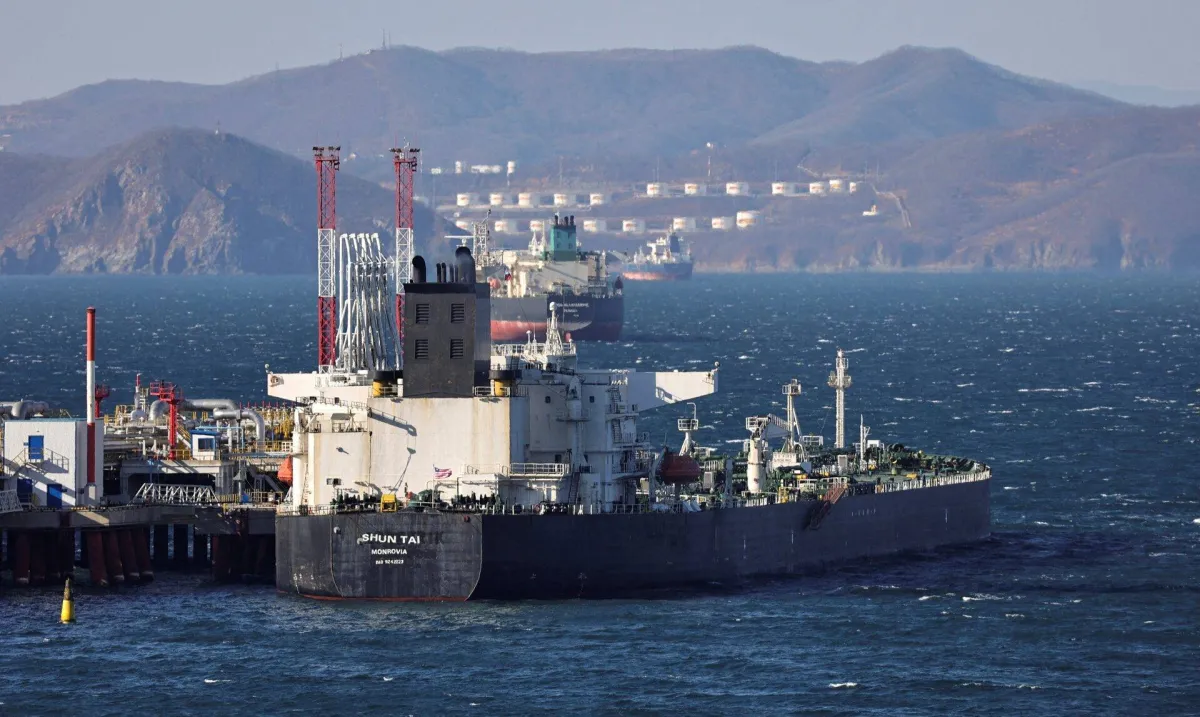
Russia has successfully maintained its crude oil shipment levels at its major western ports throughout April, with shipments remaining consistent with March levels, despite a rise in drone attacks. Estimates indicate that May may witness an increase in shipments, according to trade and industry sources.
Despite the attacks targeting ports and pipelines, which restricted crude oil shipments in late March and early April, these assaults did not significantly impact the volume of shipments. Exports and transit shipments of Urals, Siberian Light, and Kepco crude from the ports of Primorsk, Ust-Luga, and Novorossiysk in April are estimated at around 2.2 million barrels per day.
Details of the Situation
The data indicates that this figure aligns closely with the revised number for March. Crude oil exports from the Ust-Luga port halted on March 25 following a series of attacks and did not resume until April 7. Traders reported that loading operations from the port were at their lowest at the beginning of the month.
Simultaneously, Novorossiysk port partially resumed operations for crude oil and petroleum product transit on April 9 after a four-day halt due to a drone attack. Market traders expect Russia to increase its shipments in May, supported by improved seasonal weather conditions and a surplus of domestic oil.
Background & Context
Russia faces increasing challenges in oil exports, particularly amid ongoing geopolitical conflicts. Western sanctions imposed on Russia due to its war in Ukraine have affected its ability to access global markets. Nevertheless, Russia is striving to boost its exports by enhancing infrastructure and increasing shipping efficiency.
The resumption of crude oil supplies to Slovakia and Hungary via the southern section of the Druzhba pipeline may alleviate pressure on Russian ports, with shipments to these countries expected to reach around 200,000 barrels per day.
Impact & Consequences
These developments demonstrate Russia's ability to adapt to challenging conditions, reflecting the resilience of the Russian oil sector. However, the continued drone attacks may hinder plans to increase exports, necessitating additional security measures to protect the ports.
At the same time, the halt of Kazakh crude oil transit to Germany could lead to additional quantities of oil transiting from Kazakh producers through Russian ports, further complicating the oil landscape in the region.
Regional Significance
Arab oil-producing countries are directly affected by developments in the global oil market, as any changes in Russian exports can influence global oil prices. Under current circumstances, Arab nations may seek to enhance their cooperation in the energy sector to ensure price stability.
In conclusion, Russian oil exports remain under scrutiny amid changing conditions, prompting other producing countries to take proactive steps to ensure the stability of their markets.