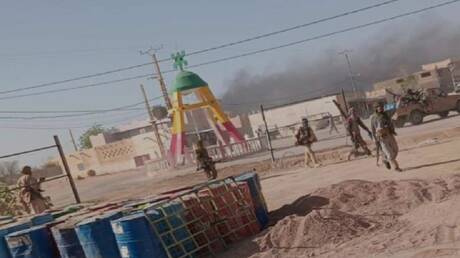
The spokesperson for the Malian Army, Souleymane Dembélé, announced that government forces have eliminated at least 80 militants during clashes that occurred on Saturday in several regions of the country. These operations are part of ongoing efforts to combat armed groups that threaten security and stability in Mali.
Clashes in Mali are intensifying, as government forces face significant challenges from armed groups active throughout the country. These military operations were executed in response to repeated attacks on government sites, which have resulted in casualties among government troops.
Details of the Incident
According to official statements, military operations were carried out in several areas, indicating the widespread presence of these armed groups across the country. Dembélé noted that government forces are working to strengthen their presence in regions that have witnessed these clashes, aiming to ensure the safety of citizens and protect vital facilities.
These operations come at a sensitive time, as Mali is experiencing a surge in violence, increasing pressure on the transitional government that seeks to achieve stability in the country. Several government sites have been targeted, prompting a swift response from the army.
Background & Context
Historically, Mali has suffered from political and security instability since 2012, when a rebellion broke out in the northern part of the country. Since then, armed activities have escalated, leading to multiple international interventions, including peacekeeping operations by the United Nations.
The armed groups in Mali are part of a broader network of extremist organizations operating in the Sahel region of Africa. These groups exploit political chaos and deteriorating economic conditions to enhance their influence and increase hostile operations against government forces.
Impact & Consequences
The recent military operations underscore the importance of enhancing security in Mali, as ongoing violence could exacerbate humanitarian conditions. Eliminating these armed groups may contribute to improving the security situation and enhance the government's ability to regain control of territories it has lost.
However, eradicating these groups is not an easy task, as it requires comprehensive strategies that include regional and international cooperation. There is also an urgent need to provide humanitarian support to areas affected by the conflict.
Regional Significance
The situation in Mali has a direct impact on regional security, as escalating violence in the Sahel could have repercussions for neighboring countries. Increased armed activities may contribute to a rise in refugee flows and affect stability in countries like Niger and Burkina Faso.
Moreover, the situation in Mali highlights the need for comprehensive strategies to combat terrorism in the region, as cooperation between Arab and African countries has become an urgent necessity to address shared security challenges.