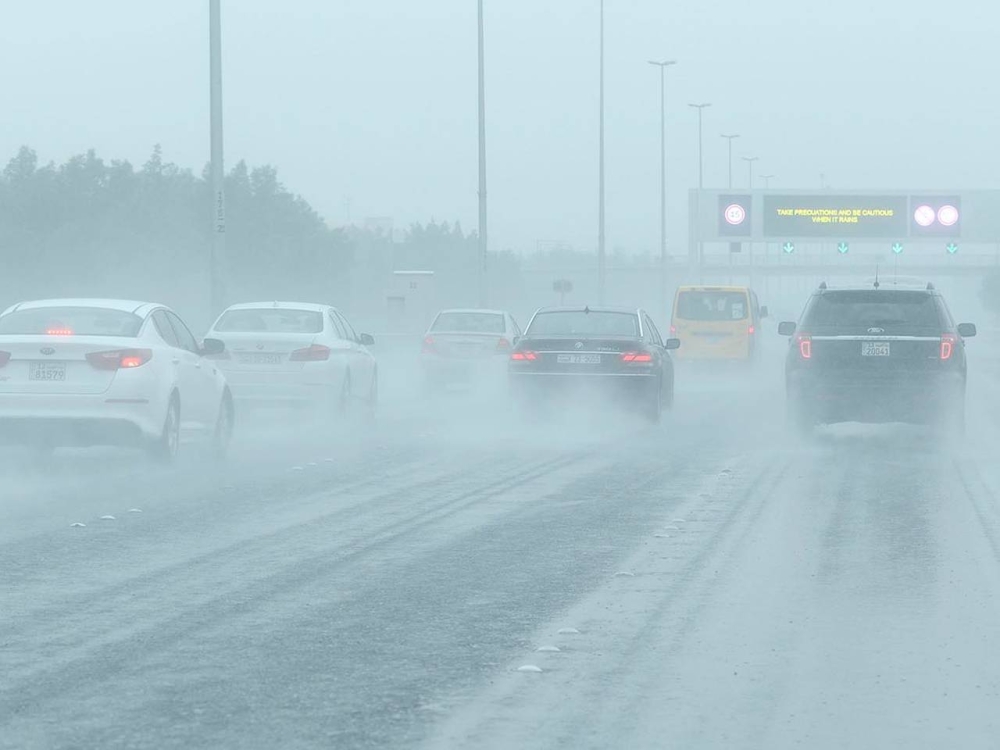
As rain falls, roads can become hazardous surfaces, making driving a challenge that requires a precise understanding of natural forces. With the region entering the "season of showers," where cumulonimbus clouds form and sudden rains occur, driving becomes increasingly difficult, necessitating drivers to take extra precautions to ensure their safety.
The Qatar Meteorological Department predicts continued chances of thunderstorms and strong winds, prompting the Ministry of Interior to issue warnings to road users to exercise caution and adhere to safety guidelines. With reduced horizontal visibility due to rain, it becomes essential to understand how to navigate these harsh conditions.
Details of the Event
Driving in rainy weather requires a deep knowledge of the physics of driving on wet surfaces. Reports indicate that most accidents occurring in these conditions are not solely due to bad weather but result from "misjudgments" by drivers. In an interview with Al Jazeera Net, engineer Omar Abdeen, a vehicle maintenance official in Qatar, explained that "hydroplaning" is one of the main risks drivers must be aware of.
This phenomenon occurs when tires lose traction with the road due to water accumulation, leading to a loss of vehicle control. According to the U.S. National Safety Council, hydroplaning can begin at speeds as low as 50 kilometers per hour, while the risk significantly increases when exceeding 88 kilometers per hour.
Background & Context
Driving in the rain is a challenge that requires special preparation. Drivers should conduct regular tire checks and ensure that tread depth is no less than 4 mm, which is the minimum safe level for water drainage. Additionally, tire pressure should be checked monthly, and the efficiency of wipers and lights should be ensured.
When driving in the rain, it is advisable to reduce speed to allow tires to drain water more effectively, and to increase the safety distance to between 4 and 5 seconds instead of two seconds under normal conditions. Drivers should also grip the steering wheel with both hands to avoid losing control due to sudden winds.
Impact & Consequences
Abdeen emphasizes that if a driver feels the vehicle "floating" on water, they should not panic and should gradually lift their foot off the accelerator while avoiding pressing the brakes. The steering wheel should be gently directed in the direction of the skid until traction is regained.
High-profile vehicles such as SUVs and trucks are more affected by winds, increasing the risk of losing control. Therefore, it is crucial to maintain a firm grip on the steering wheel to counter sudden gusts.
Regional Significance
Driving in harsh weather conditions requires awareness that goes beyond merely seeing the road; it extends to the concept of "seeing others see you." Drivers should avoid using "hazard lights" while driving in the rain, as this action deprives them of the ability to use turn signals, increasing the likelihood of collisions.
Headlights and rear fog lights should be turned on to ensure vehicle visibility. The use of "high beams" in these conditions should be avoided, as it causes a state of "temporary blindness" for the driver, posing a danger to traffic.
In some situations, stopping driving may be the safest option, especially when feeling a lack of control or visibility. A safe location away from the main road should be chosen to avoid hazards.
Ultimately, the golden rule remains that "arriving late is better than not arriving at all." Adhering to lower speeds, regular vehicle maintenance, and awareness of their limits are the only guarantees for safe arrival.