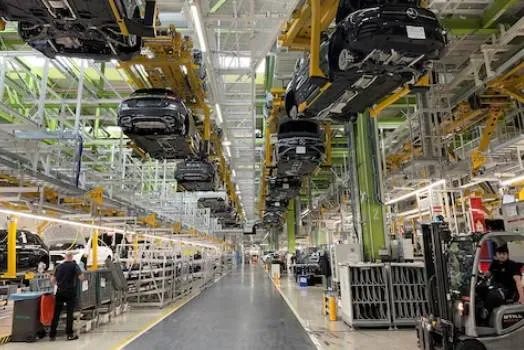
The manufacturing sector in the Eurozone witnessed a remarkable recovery in March, as the Purchasing Managers' Index (PMI) reached 51.6 points, the highest level in four years. This recovery occurs despite the challenges facing the sector, including rising input costs and weak underlying demand, raising questions about the sustainability of this growth.
The conflict in the Middle East, particularly the Iranian war, has disrupted global supply chains, artificially inflating growth figures. Nevertheless, the underlying demand for goods and services remains weak, threatening the fragile recovery of the sector.
Details of the Event
The Eurozone manufacturing PMI, released by Standard & Poor's, rose to 51.6 points in March, compared to 50.8 points in February, surpassing the initial estimate of 51.4 points. Any figure above 50 points indicates growth in economic activity, reflecting an improvement in the sector's performance.
According to Joe Hayes, chief economist at Standard & Poor's Global Market Intelligence, the war in the Middle East has left its mark on the Eurozone manufacturing sector, with supplier delivery times experiencing a sharp increase. Additionally, rising oil and energy prices have inflated input costs to their highest level since late 2022.
Background & Context
The manufacturing sector is considered one of the cornerstones of the European economy, significantly contributing to GDP. However, the challenges facing this sector, such as rising input costs and weak demand, reflect a state of economic uncertainty. Several European countries, such as Germany and Italy, have seen improvements in manufacturing indicators, while others like France have suffered from stagnation.
It is noteworthy that the conflict in the Middle East has impacted global supply chains, leading to delivery delays and increased production costs. This situation reflects the challenges facing the global economy amid ongoing geopolitical crises.
Impact & Consequences
The recovery in the manufacturing sector in the Eurozone shows some positive signs, but ongoing challenges threaten the sustainability of this growth. Rising input costs may lead to increased prices for goods, negatively impacting consumers' purchasing power. Additionally, weak underlying demand may hinder companies' ability to achieve sustainable profits.
Furthermore, the decline in business confidence to its lowest level in five months indicates that companies remain apprehensive about the future. This situation could lead to reduced investments and job cuts, increasing pressure on the European economy.
Regional Significance
The Arab region is directly affected by economic developments in the Eurozone, as many Arab countries are key trading partners with European nations. Any decline in European economic growth could impact exports and imports, increasing pressures on the region's economies.
Moreover, rising oil and energy prices due to the conflict in the Middle East may affect the economies of oil-importing Arab countries, exacerbating the economic challenges they face.
In conclusion, the recovery in the manufacturing sector in the Eurozone is a positive indicator, but it comes with a set of challenges that require close monitoring by economists and decision-makers.