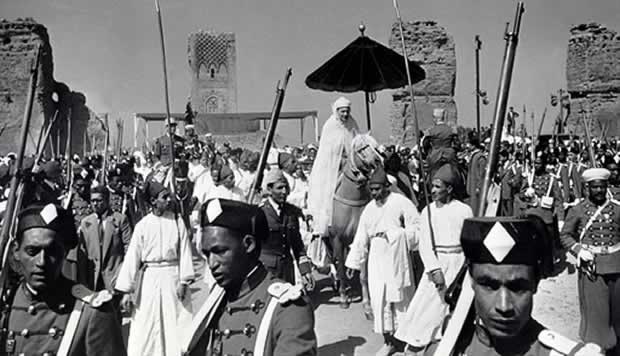
On April 7, 1956, Morocco announced its independence from French colonial rule, thus beginning a new chapter in the country's history. This historic day embodies the Moroccan people's struggle for freedom and dignity, showcasing a powerful will to rid themselves of colonial shackles.
The French colonization of Morocco began in 1912, during which France imposed its control over the country, leading to a deterioration of economic and social conditions. However, the Moroccan people did not surrender; instead, strong popular resistance movements emerged, contributing to a heightened national consciousness.
Details of the Event
In 1956, pressure mounted on the French government due to the increasing popular resistance, prompting negotiations with Moroccan leaders. An agreement was reached to end French colonization, culminating in the declaration of independence on April 7. This day became a symbol of freedom, celebrated by Moroccans across the nation.
The period following independence was fraught with challenges, as Morocco had to build new state institutions and strengthen national identity. King Mohammed V led the country during this critical phase, working to unite the people and achieve development.
Background & Context
The history of colonization in Morocco dates back to the early 20th century, when the country was divided between France and Spain. This period witnessed numerous revolts and resistances, such as the Rif War led by Abdelkrim El Khattabi, which demonstrated the Moroccan willpower in facing occupation.
Moreover, Moroccan independence occurred at a time when many Arab nations were striving for their freedom, making Morocco's experience a model for the region. This coincided with liberation movements in Algeria and Tunisia, further enhancing the national spirit across the Arab world.
Impact & Consequences
Morocco's independence had a significant impact on the region, inspiring many other Arab countries in their quest for liberation. It also contributed to the formation of the Non-Aligned Movement, which sought to promote cooperation among newly independent nations.
Internally, independence led to radical changes in the political and social system. Education and economic development were prioritized, improving the living standards of citizens. However, Morocco faced ongoing economic and political challenges, including the need to achieve sustainable development.
Regional Significance
Morocco's independence profoundly influenced other Arab nations, becoming a symbol of hope for liberation. The Moroccan experience helped bolster national spirit in neighboring countries, raising awareness of the importance of sovereignty and independence.
Additionally, Morocco emerged as a key player in Arab politics, participating in numerous Arab summits and contributing to enhanced cooperation among Arab states. This regional role reflects Morocco's significance as an independent nation striving for stability and development in the area.
In conclusion, April 7, 1956, stands as a historic day in the memory of the Moroccan people, embodying their struggle for freedom. Morocco's independence is not merely a historical event; it symbolizes hope and change in the Arab world.