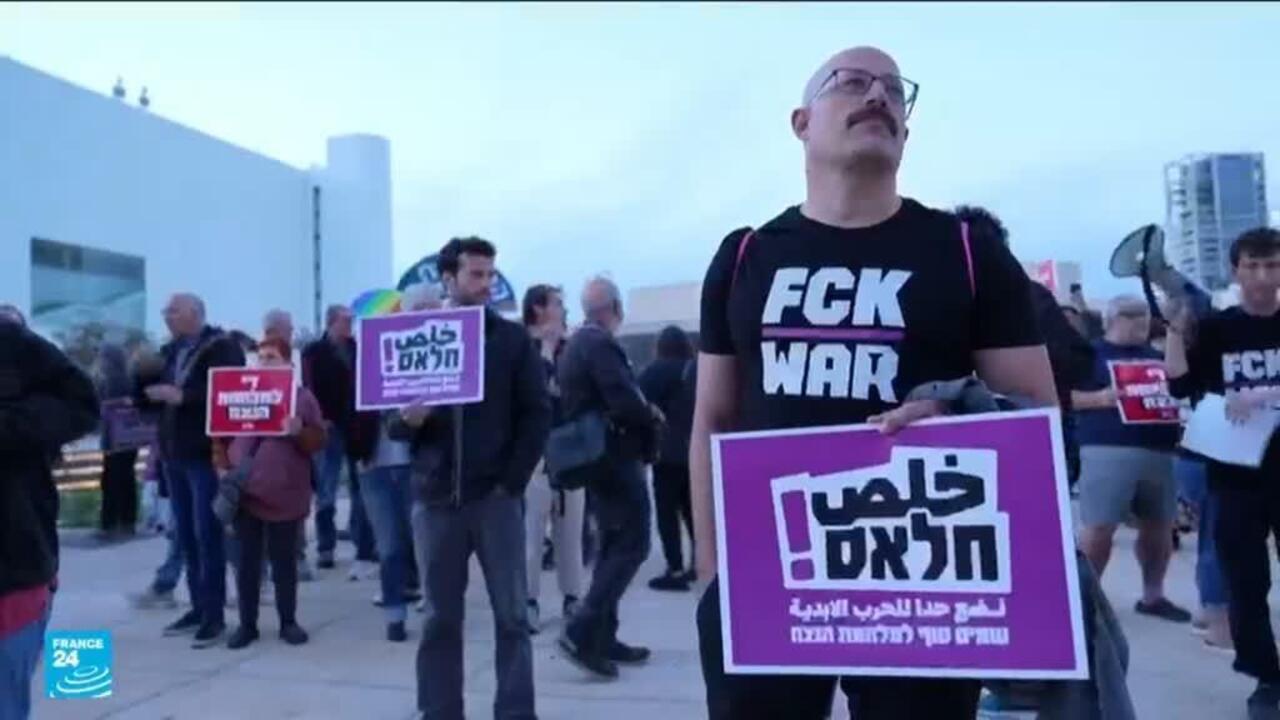
Hundreds of demonstrators gathered in the city of Tel Aviv to protest against the US-Israel war on Iran, in the latest episode of weekly protests that have been ongoing since the outbreak of the conflict about a month ago. As the number of participants in these protests has increased, Israeli authorities have taken harsher measures, attempting to disperse the protesters by force, which has sparked mixed reactions among political and social circles.
These demonstrations come at a sensitive time, as tensions in the region escalate, and many Israelis are concerned about the implications of this war on national security. Protesters expressed their rejection of government policies, calling for an end to military operations and the opening of dialogue channels with Iran.
Event Details
The protesters gathered in Rabin Square, holding signs expressing their opposition to the war and chanting slogans calling for peace. The demonstrations saw wide participation from various age groups, including youth and women, reflecting a growing public awareness of the potential risks of the conflict.
At the same time, Israeli police used tear gas and water cannons to disperse the protesters, resulting in injuries among demonstrators. These actions have drawn widespread criticism from human rights organizations, which consider the use of excessive force against protesters a violation of their fundamental rights.
Background & Context
The roots of the current conflict between the United States and Iran trace back many years of political and military tensions. Since the US withdrawal from the Iranian nuclear deal in 2018, tensions have escalated, leading to a series of military and economic events that have complicated the situation in the region.
Iran is considered a key player in the Middle East, seeking to enhance its influence in neighboring countries, which has raised concerns among many nations, including Israel. In this context, many Israelis view the war against Iran as a security necessity, while others oppose this idea, believing that war will only lead to further instability.
Impact & Consequences
The ongoing protests indicate a sharp division within Israeli society regarding the issue of war on Iran. While some support military operations as a means to protect national security, others see this war as likely to have dire consequences for civilians and exacerbate conflict in the region.
These protests may influence government policies, as the Israeli government may be compelled to reconsider its military and diplomatic strategies. Furthermore, the continuation of these protests could open the door for broader dialogue on security and peace issues in the region.
Regional Significance
The US-Israel war against Iran is a sensitive topic in the Arab world, raising fears of escalating conflict and its impact on neighboring countries. Many Arab nations are closely monitoring the situation, as any escalation could lead to negative repercussions for security and stability in the region.
Additionally, the protests in Israel may inspire similar movements in Arab countries, where citizens express their rejection of wars and conflicts that affect their daily lives. Promoting a culture of protest and demanding rights could lead to positive changes in Arab societies.
In conclusion, the protests in Tel Aviv remain an indicator of the division of public opinion regarding the war on Iran, reflecting the challenges faced by the Israeli government in managing this conflict. With increasing internal and external pressures, the question of the future of Israeli-Iranian relations remains open amid rising tensions in the region.