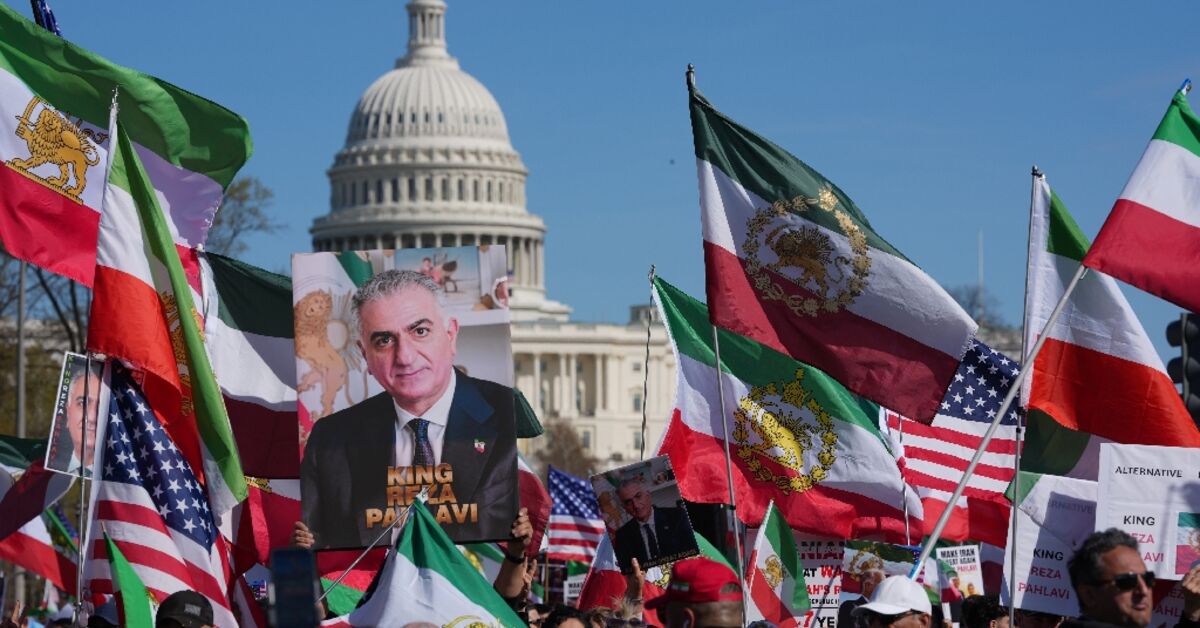
A massive gathering of over 1,000 individuals of Iranian descent took place in Washington, D.C., on Sunday, where they expressed support for the ongoing war and called for the return of former Iranian Crown Prince Reza Pahlavi. This gathering occurs at a sensitive time, as calls for Pahlavi's return have intensified, with many viewing him as a symbol of change in Iran, following the killing of Tehran's top commander in U.S.-Israeli strikes last month.
Participants gathered in Washington Square, waving old Iranian flags and holding images of Reza Pahlavi, emphasizing the importance of his return as a potential leader during a transitional phase. Many speakers at the gathering noted that Pahlavi's presence could represent a glimmer of hope for Iran under the current circumstances.
Event Details
The gathering featured speeches from prominent figures within the Iranian community, emphasizing the need for unity among Iranians in the diaspora to support change in their homeland. Speakers pointed out that recent events in Iran necessitate swift action from the international community to support human rights and democracy in the country.
Flyers were distributed calling for support of the popular movement in Iran, with participants affirming that a return to monarchy could be a solution to the political and economic crises that have plagued the country for decades.
Background & Context
Historically, Iran has witnessed radical changes since the Islamic Revolution of 1979, which led to the overthrow of Shah Mohammad Reza Pahlavi and the establishment of the Islamic Republic. Since then, the country has suffered from internal and external conflicts, resulting in a deterioration of economic and social conditions.
In recent years, protests in Iran against the current regime have escalated, with citizens demanding radical reforms. These protests have heightened tensions between Iran and the United States, especially following the killing of Tehran's top commander, prompting the Iranian diaspora to reconsider its role in supporting change.
Impact & Consequences
The emergence of Reza Pahlavi as a potential leader at this juncture represents a significant shift in Iranian politics, which could lead to a reshaping of the political landscape in the country. If both international and domestic support for him continues, it may enhance his prospects as an alternative to the current regime.
The potential repercussions of this gathering could extend into Iran itself, encouraging more Iranians to engage in the popular movement. Additionally, international support for Pahlavi could increase pressure on the Iranian government to make political concessions.
Regional Significance
Arab nations are directly affected by events in Iran, as Iran is a key player in regional politics. Any change in the Iranian regime could impact the political balances in the region, especially amid ongoing conflicts in Iraq, Syria, and Lebanon.
The return of Reza Pahlavi could also reopen discussions regarding Iranian-Arab relations, potentially leading to closer ties between Iran and Arab countries if more moderate policies are adopted.
In conclusion, this gathering in Washington marks a significant milestone in the history of the Iranian community and reflects their aspirations for a better future for their homeland. Given the current circumstances, the question remains whether these calls will resonate within Iran or remain mere echoes in the void.