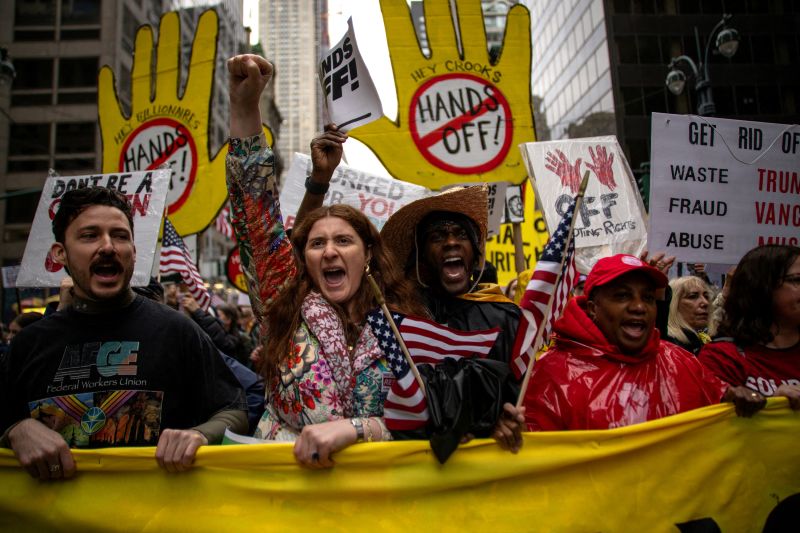
The United States has experienced a wave of massive protests demanding the ousting of President Donald Trump, with thousands of demonstrators gathering in major cities such as New York, Los Angeles, and Chicago. These protests reflect a growing public discontent with the policies implemented by Trump, which many consider incompatible with the country's interests.
Protesters raised slogans calling for an end to Trump's rule, expressing their concerns about the impact of his policies on the American economy and international relations. They pointed to issues such as climate change, racial discrimination, and civil rights, which they believe the Trump administration has mishandled.
Details of the Protests
The protests began last weekend, originating from several central points in major cities. Protesters utilized social media to organize their events, which helped attract large numbers of participants. Some protests witnessed confrontations with the police, who used tear gas to disperse crowds in certain areas.
These protests coincided with the approach of the upcoming U.S. presidential elections, heightening political tensions. Recent polls have shown a decline in Trump's popularity, reflecting a general sense of dissatisfaction with his administration.
Background & Context
These protests occur within a complex historical context, as the United States has experienced deep political divisions in recent years. Since Trump took office in 2016, his administration has faced widespread criticism for its controversial policies, including immigration policy, handling of human rights issues, and climate change.
Recent events, such as the death of George Floyd, have sparked a wave of protests against racism and discrimination, contributing to increased tensions within American society. Many believe that the Trump administration has not taken these issues seriously, leading to a rise in public discontent.
Impact & Consequences
These protests are expected to significantly impact the political landscape in the United States, potentially prompting political parties to reevaluate their strategies. Furthermore, these protests may lead to increased voter turnout in the upcoming elections, as voters seek to express their opinions through the ballot box.
Additionally, these events may affect the United States' international relations, as they could project a negative image of the country in the eyes of the international community. The protests may increase pressure on Trump to change his policies, especially in light of growing criticism from traditional U.S. allies.
Regional Significance
These protests are significant for the Arab region, as they reflect a state of public discontent that may be similar to what is occurring in some Arab countries. These events could stimulate protest movements in the region, as citizens seek to express their political and social demands.
Moreover, the impact of U.S. policies on the Arab region cannot be overlooked, as the United States plays a key role in many regional issues. Therefore, the outcomes of the U.S. elections could directly affect the future of relations between the United States and Arab countries.
In conclusion, the current protests in the United States reflect a growing state of public discontent and may have far-reaching effects on both the local and international political landscape.