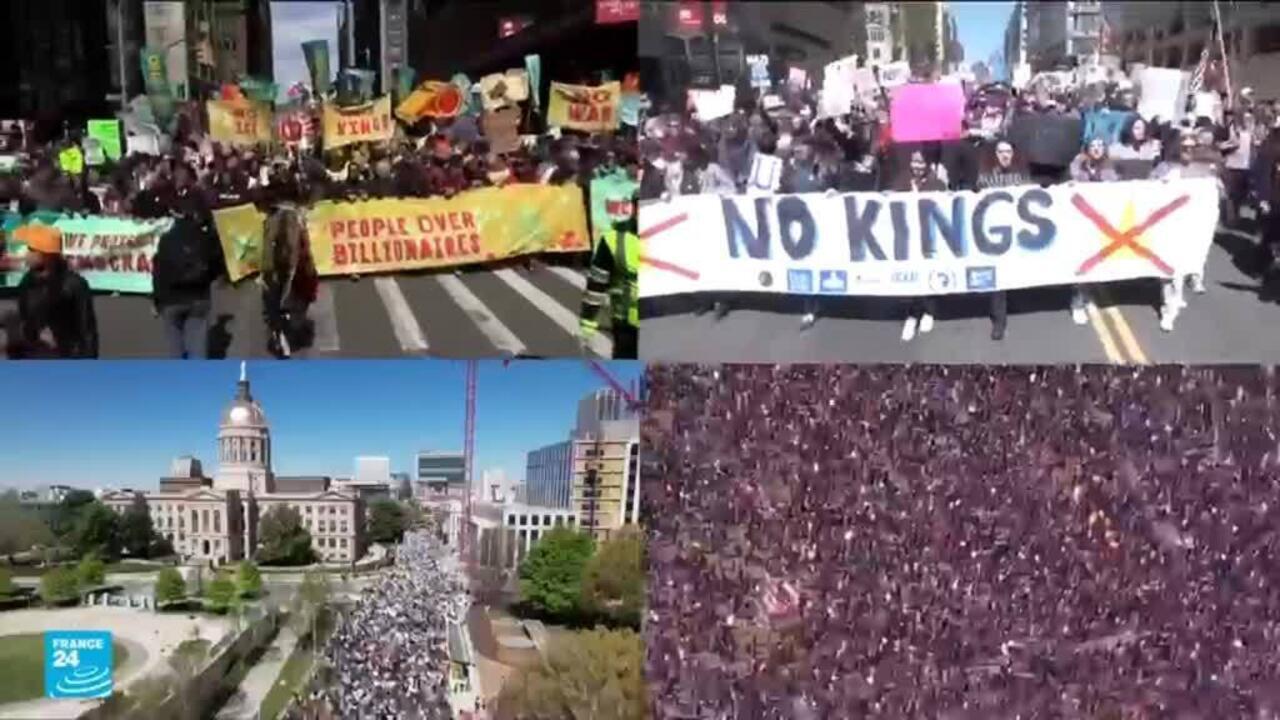
The United States saw massive protests on Saturday, with millions of demonstrators participating to express their opposition to the policies of President Donald Trump. The reasons for the protests varied, including Trump's authoritarian tendencies, his harsh campaign against immigrants, and U.S. military interventions in the Middle East.
The 'No Kings' movement, which organized these protests, announced that it managed to rally around eight million demonstrators across the country, a record number reflecting the public's discontent with current policies. Major cities such as New York, Washington, and Los Angeles witnessed large gatherings, where protesters held signs expressing their demands and political orientations.
Details of the Event
The protests were spread across many states, starting early in the morning and continuing into the evening. Various segments of American society participated in the demonstrations, including youth, women, and immigrants, adding a diverse character to the events. The protests featured speeches from civil society leaders who called for unity and solidarity against policies they believe undermine democratic principles.
There was also significant coverage from local and international media, which captured the enthusiastic atmosphere of the protesters. Many participants expressed their concerns about the rise of authoritarianism, asserting that these protests represent the voice of the people rejecting current trends.
Background & Context
These protests come at a sensitive time for the United States, as Trump faces increasing criticism for his domestic and foreign policies. Recent years have seen a rise in political and social tensions, leading to a sharp division within American society. Issues related to immigration and the war in the Middle East have become major points of contention between Trump's supporters and opponents.
Historically, the United States has seen similar protests against previous presidents, but this time it seems that the demonstrations have taken on a more inclusive character, with protesters gathering from various social and political backgrounds. Many view these crowds as a collective response against policies they perceive as threatening democratic values.
Impact & Consequences
The protests witnessed in the United States could significantly impact the political landscape of the country. As the presidential elections approach, these demonstrations may serve as evidence of voter dissatisfaction with Trump's policies. Furthermore, these crowds could prompt some politicians to reassess their positions on the issues at hand, especially amid growing public pressure.
Moreover, these protests may influence the United States' international relations, as they could be used as leverage on the U.S. administration to change its policies in areas such as immigration and warfare. These demonstrations might also contribute to enhancing dialogue around social and economic issues that concern citizens.
Regional Significance
These protests hold particular importance for the Arab region, as they reflect political and social trends in the United States and their impact on foreign policies. The war in the Middle East, which is one of the main issues raised by the protesters, has direct repercussions on Arab countries.
The rise of authoritarianism in the United States may also raise concerns among many Arab nations facing similar issues. These protests could inspire protest movements in the region, as citizens seek to express their demands and rights.
In conclusion, these protests stand as a testament to the power of democracy in the United States, where citizens express their opinions and call for change. As elections approach, it remains to be seen how these crowds will affect the future of American politics.