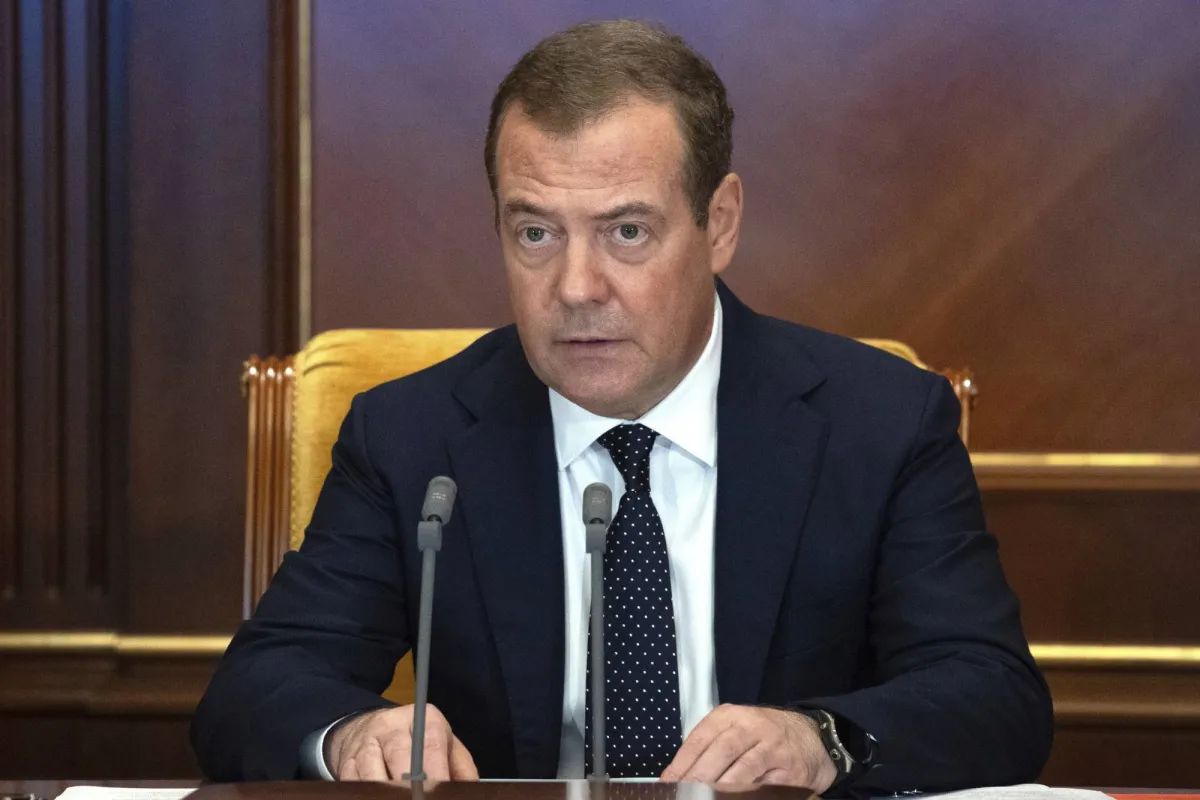
Dmitry Medvedev, Deputy Chairman of the Russian Security Council, called on Friday for Russia to abandon its "tolerant stance" towards Ukraine's efforts to join the European Union. Medvedev emphasized that the EU is no longer just an economic bloc but could quickly transform into a military alliance adopting an antagonistic position towards Russia.
In his remarks, Medvedev stated that it is time to change this stance, indicating that neighboring countries seeking EU membership should face harsher reactions from Moscow. He argued that the EU could become worse than NATO in some respects, necessitating more cautious steps from Russia.
Details of the Statement
Medvedev ruled out the possibility of the United States withdrawing from NATO but anticipated that Washington might take symbolic steps, such as reducing the number of American troops stationed in NATO countries. He noted that the evident divisions within the alliance could push the EU to exceed its role as an economic bloc, reflecting a shift in the political and military dynamics in the region.
Medvedev's statements come at a sensitive time as tensions between Russia and Ukraine escalate amidst ongoing armed conflict in the region. These remarks reflect Russia's growing concern over Ukraine's westward moves, especially in light of the military and political support Kyiv receives from Western nations.
Context and Background
Historically, relations between Russia and Ukraine have been strained, particularly following Russia's annexation of Crimea in 2014, which led to the outbreak of conflict in Eastern Ukraine. Since then, Ukraine has sought to strengthen its ties with the West, including joining the EU and NATO. These moves have raised alarms in Moscow, which considers them a direct threat to its national security.
In recent years, Ukraine has witnessed an escalation in Western support, intensifying tensions with Russia. Additionally, political changes in Ukraine, including the election of pro-Western governments, have exacerbated the situation, prompting Russia to adopt more hardline positions.
Implications and Effects
The implications of Medvedev's statements could be significant, potentially leading to heightened tensions between Russia and the West. If Ukraine continues its pursuit of EU membership, it may face military reactions from Russia, increasing the likelihood of escalation in the armed conflict in the region.
Moreover, any Russian action against Ukraine could bolster Western support for Kyiv, reflecting a growing divide between Russia and Western nations. This situation could complicate peace efforts in the region and impact overall security stability in Europe.
Impact on the Arab Region
For the Arab region, the escalating tensions between Russia and Ukraine could influence regional policies, especially given the intertwined relationships between Arab states and Russia. Many Arab countries rely on Russia in various fields, including energy and trade.
Any escalation in the conflict could affect global energy prices, impacting Arab economies that heavily depend on oil and gas exports. Furthermore, the continuation of the conflict could hinder peace and stability efforts in other parts of the world, including the Middle East.
In conclusion, Medvedev's statements reflect a shift in the political dynamics in the region, necessitating close monitoring by Arab states and the international community.