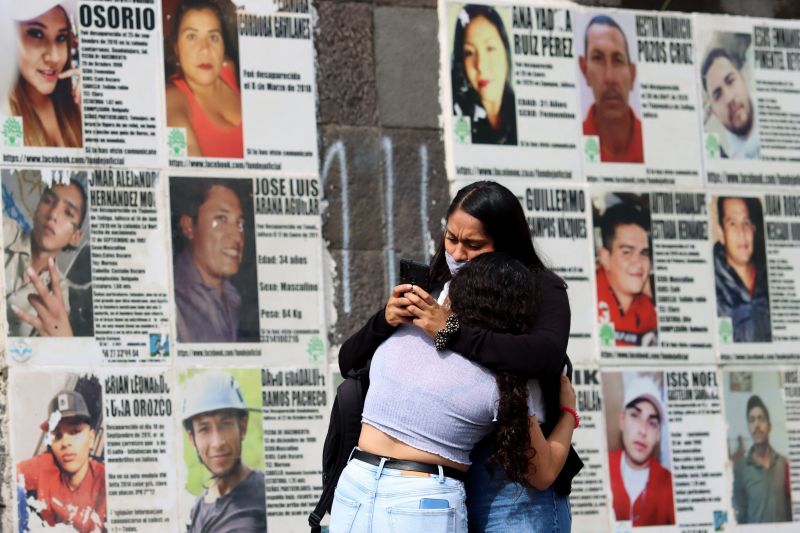
The Mexican government announced that approximately one-third of the missing persons, estimated at around 130,000, may still be alive. This announcement has triggered a wave of criticism from the families of the missing, who feel disheartened by the stagnation in investigations concerning the disappearances of their loved ones.
In a press conference, Alejandro Ingrande, the Mexican Interior Minister, clarified that the data indicates a significant likelihood that some of the missing individuals are still alive, raising questions about how these cases are being handled. He affirmed that the government is working to improve search and investigation mechanisms, yet many families still feel that the government's efforts are insufficient.
Details of the Announcement
The issue of missing persons in Mexico is considered one of the largest humanitarian crises in the country, with cases of enforced disappearances rising sharply in recent years. According to reports, a large part of these cases is attributed to the conflict between drug cartels, which has led to a surge of violence in many regions.
Pressure is mounting on the Mexican government from human rights organizations and affected families, who are demanding more effective measures to locate the missing. Numerous protests have been organized in the streets, where demonstrators are calling for justice for their missing loved ones.
Background & Context
Historically, Mexico has experienced waves of drug-related violence, with killings and kidnappings increasing since the beginning of the last decade. According to United Nations reports, Mexico is considered one of the most dangerous countries in the world for human rights, with families suffering due to the loss of their loved ones without any information or progress in investigations.
In recent years, the Mexican government has enacted several laws aimed at improving human rights and enhancing mechanisms for searching for the missing. However, these efforts continue to face significant challenges, including rampant corruption within security agencies and a lack of resources.
Impact & Consequences
These government statements could increase pressure on the Mexican government to improve its response to the issue of the missing. They may also affect the relationship between the government and civil society, as dissatisfaction grows over the lack of justice.
The issue of the missing in Mexico exemplifies the humanitarian crises faced by many countries in the region, where cases of enforced disappearances are on the rise due to armed conflicts and violence. This issue requires greater international attention, as it can impact the stability of the entire region.
Regional Significance
The issue of the missing in Mexico is similar to many cases in the Arab world, where some countries suffer from enforced disappearances due to political or military conflicts. This phenomenon raises significant concern in Arab communities, where calls for justice and accountability are increasing.
In conclusion, the issue of the missing in Mexico serves as an example of the humanitarian challenges faced by communities worldwide, necessitating a concerted effort from both international and local stakeholders to find effective solutions.