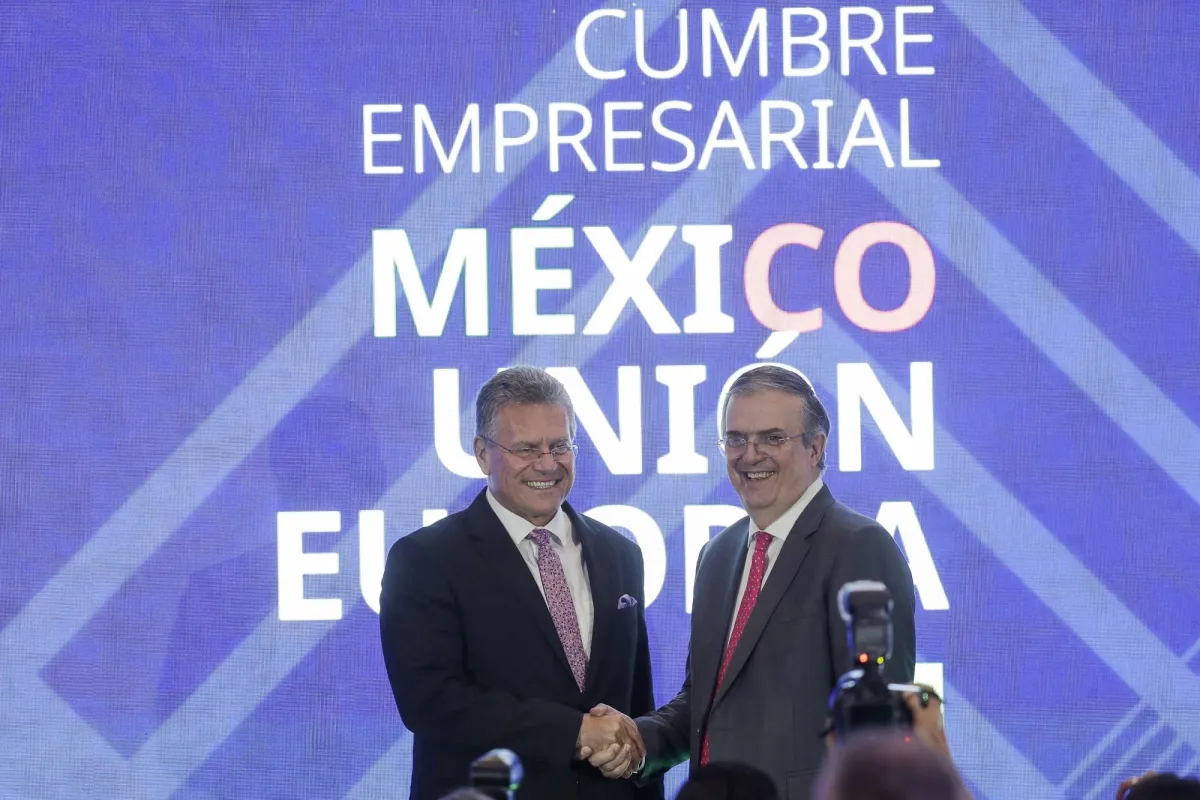
Mexico and the European Union are preparing to sign a new free trade agreement designed to decrease dependence on the American market and mitigate the impact of tariffs imposed by former President Donald Trump's administration. This long-awaited agreement comes at a time when both parties are seeking to diversify their trading partners.
The signing is scheduled to take place in Mexico City by Mexican President Claudia Sheinbaum, European Commission President Ursula von der Leyen, and European Council President Antonio Costa, during the first summit between the two sides in over a decade.
Details of the Agreement
The new agreement expands the scope of the trade deal established in 2000, which primarily focused on industrial goods, to now include new areas such as services, government procurement, digital trade, investments, and agricultural products. EU foreign policy chief, Kaja Kallas, emphasized that the summit represents more than just a trade agreement; it carries a geopolitical message amid global economic shifts.
This agreement comes at a time when both the EU and Mexico are striving to lessen their reliance on the United States, following years of trade tensions that intensified during the Trump administration. The EU faced extensive tariffs, while Mexico encountered high duties on its exports, particularly in the automotive, steel, and aluminum sectors.
Background & Context
Although a final agreement was reached back in 2025, its signing was delayed for over a year due to the Mexican government's cautious approach to avoid provoking the Trump administration, coinciding with sensitive negotiations to renew the trade agreement between the United States, Mexico, and Canada. Meanwhile, the EU prioritized other agreements, such as the Mercosur deal with South American countries.
The Mexican Ministry of Economy anticipates that the agreement will increase the country's exports to the EU from approximately $24 billion annually to over $36 billion by 2030. In return, the EU exports goods worth nearly $65 billion annually to Mexico, reflecting a significant increase in trade volume between the two parties.
Impact & Consequences
The goal of this agreement is to achieve near-complete tariff exemptions for most goods, including agricultural products. Mexican products such as chicken and asparagus are expected to gain broader access to European markets, while European products like cheese, milk powder, and pork will receive facilitation, albeit with some restrictions and quotas.
This agreement represents an opportunity for Mexico to reduce its heavy reliance on the United States, which currently receives more than 80% of its exports. This trend reflects a growing global movement towards reshaping trade alliances and reducing dependence on the American market, especially in light of rising protectionist sentiments and geopolitical tensions in recent years.
Regional Significance
This agreement underscores the importance of enhancing trade relations between nations and reflects new trends in global economic policy. For Arab countries, this agreement may impact trade and investment strategies, particularly amidst the geopolitical and economic changes occurring in the region.
In conclusion, this agreement marks a significant step towards strengthening economic cooperation between Mexico and the EU, reflecting global trends towards diversifying trading partners and reducing reliance on traditional markets.