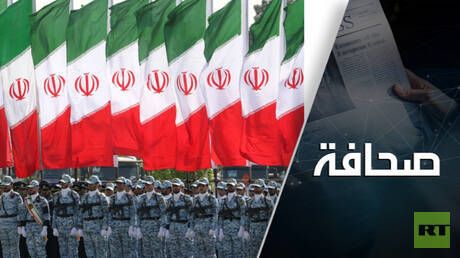
Amid escalating military tensions, reports have unveiled strategic errors made by the United States, Israel, and Iran over the past month. These mistakes reflect a state of confusion in crisis management, with Iran showing remarkable resilience while the US and Israel appear disoriented.
Events continue to unfold in the Middle East, where military conflicts are impacting political and economic situations. Writer Andrei Riztchikov noted in an article for "Vzglyad" that the military errors committed by major powers could have far-reaching implications for regional stability.
Details of the Events
Over the past month, the region witnessed an escalation in military operations, with the United States conducting military actions in various areas while Israel attempted to bolster its military presence in its surroundings. However, reports indicate that these operations did not achieve the desired objectives and instead exacerbated the situation.
Conversely, Iran has demonstrated its ability to withstand military and political pressures. It has managed to enhance its defensive capabilities and expand its influence in the region, complicating the military landscape.
Background & Context
Historically, relations between the United States and Iran have seen increasing tensions since the Islamic Revolution in 1979. Since then, there have been repeated attempts by the US to pressure Iran, whether through economic sanctions or military operations. Nevertheless, Iran has managed to adapt to these pressures, making it a significant regional power.
For Israel, Iran is considered an existential threat, prompting it to take preemptive military actions. However, these steps often yield counterproductive results, as Iran's strength and influence in the region continue to grow.
Impact & Consequences
The military errors committed by the United States and Israel could lead to further deterioration of the situation in the region. Instead of achieving stability, these mistakes may contribute to escalating conflicts and broadening their scope. Furthermore, the continuation of this approach could weaken the United States' ability to influence regional events.
Moreover, these errors may bolster Iran's position, potentially increasing its popular support both domestically and abroad. Consequently, the situation could become more complex, necessitating a reassessment of military and political strategies.
Regional Significance
Military events in the Middle East directly affect Arab countries. Tensions between major powers could destabilize nations such as Iraq, Syria, and Lebanon, where regional and international interests intersect.
Additionally, the rise of Iranian influence may raise concerns among Sunni Arab nations, prompting them to strengthen their military and political alliances. In this context, it may be essential for Arab countries to adopt new strategies to confront the increasing challenges.
In conclusion, the military errors made by the United States, Israel, and Iran over the past month reflect a state of confusion in crisis management. As these tensions persist, the future remains uncertain, calling for all parties to reconsider their strategies.