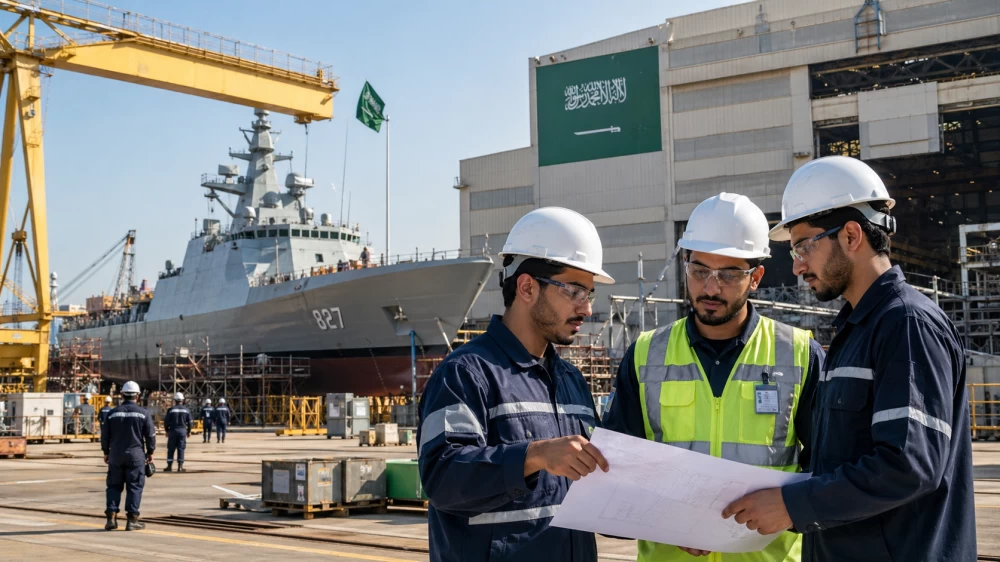
A recent report from the Vision 2025 annual review has highlighted significant progress in the localization of military industries in the Kingdom of Saudi Arabia, with the rate increasing to 24.89% in 2024, exceeding the annual target set at 16.5%. This achievement is part of an ambitious plan aimed at reaching 50% localization by 2030.
According to the report, the index started from a baseline of 7.7% and has recorded consecutive increases from 2022 to 2024, achieving its annual targets and surpassing the 2025 target of 20%. This progress reflects a notable acceleration in building local capabilities within the military industries sector.
Event Details
This index is one of the indicators of the promises outlined in the Saudi Vision 2030 document, directly linked to the goal of increasing local content and reducing dependence on foreign sources. It also aims to establish a defense industrial base capable of supporting national security, stimulating the economy, and creating quality opportunities in manufacturing, services, and supply chains.
The report indicated that this increase resulted from the development of a comprehensive system of policies, governance, and regulatory and legislative incentives, bolstered by the efforts of the General Authority for Military Industries, which was established in 2017 to lead the regulation of the sector, empower it, and enhance its efficiency.
Background & Context
The figures show significant growth in the number of establishments operating in the sector, with the number of small and medium enterprises in military industries rising from 5 to 311. Additionally, 572 foundational permits and military licenses were issued by the end of 2024, covering military manufacturing, service provision, and military product supply.
Supportive initiatives have contributed to accelerating the localization pace, including framework purchase agreements, the application of local added value maps, signing local deals, and supporting human capital, which are tools that have enhanced the presence of local content in military supply chains.
Impact & Consequences
Surpassing the 2024 target reflects the transition of the military industries sector in the Kingdom from a phase of establishment and regulation to one of empowerment and expansion, through building local and international partnerships and stimulating investors. It also contributes to enhancing the readiness of national establishments to participate in a more independent and sustainable defense system.
Reaching a localization rate of 24.89% is a significant step towards the 50% target by 2030, conveying an economic and industrial message that the Kingdom is moving forward in transforming military spending into a lever for local manufacturing, technology transfer, and the development of national competencies, while enhancing the sovereignty of industrial and defense decision-making.
Regional Significance
These steps are part of a broader strategy aimed at enhancing defense and industrial capabilities in the region, which could positively impact regional security and stability. Furthermore, these initiatives open the door for regional and international cooperation in military manufacturing.
In conclusion, this progress in the localization of military industries represents an important step towards achieving the Kingdom's strategic objectives and reflects its commitment to enhancing its defense and industrial capabilities.