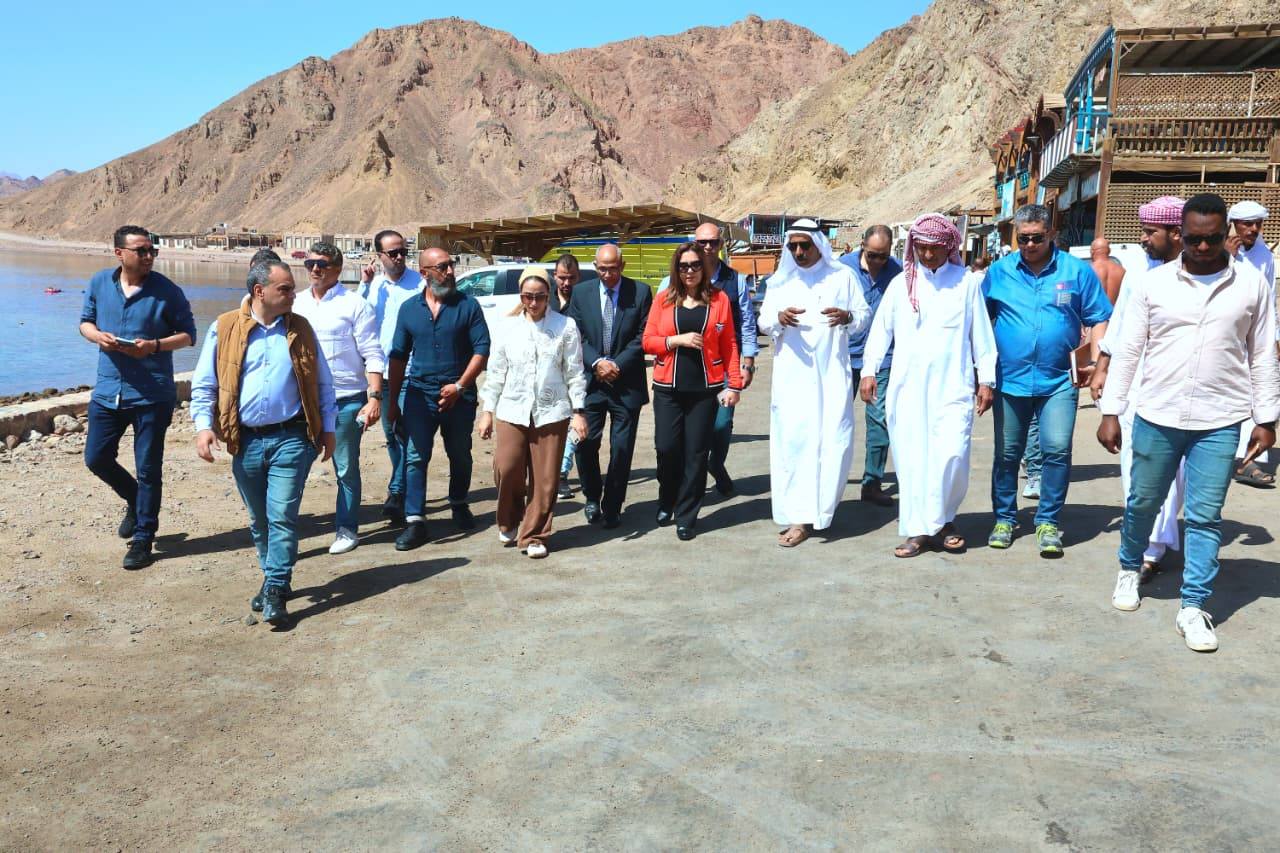
Dr. Manal Awad, Minister of Local Development and Environment, inspected the Blue Hole area within the Abu Galum Protected Area in Dahab, South Sinai, as part of the government's efforts to develop natural reserves and enhance environmental and tourism sustainability. The visit was attended by several leaders from the ministry, South Sinai Governorate, and representatives from environmental development projects.
During the tour, the minister reviewed the tourist area, which is considered one of the most prominent environmental and diving sites globally. She met with several representatives from environmental associations, café and restaurant owners, and local community members, where she listened to the main challenges they face and discussed ways to improve services and manage the tourist site in line with its unique environmental value.
Details of the Event
During the meeting, the minister emphasized the need to prepare a comprehensive plan for developing the Blue Hole area, aiming to enhance the efficiency of tourism services and infrastructure while preserving the sensitive environmental nature of the reserve. She stressed the importance of implementing a unified visual identity for the area that reflects its global status as one of the premier diving sites in the Red Sea.
She also highlighted that the development process must be fully coordinated with the South Sinai Governorate and involve active participation from the local community, ensuring a balance between economic development and the protection of natural resources, while improving the experience for visitors, both Egyptian and foreign tourists.
Background & Context
The Blue Hole area is one of the most attractive sites for tourists in Egypt, known for its biodiversity and coral reefs. With the increasing number of visitors, there is an urgent need to develop infrastructure and tourism services to ensure the preservation of the natural environment and enhance the visitor experience.
This visit comes at a critical time as the Egyptian government seeks to promote sustainable tourism, especially in natural areas. Studies have shown that eco-tourism can play a pivotal role in supporting the local economy and achieving sustainable development.
Impact & Consequences
Developing the Blue Hole area will positively impact the local economy by increasing visitor numbers and improving services provided. Additionally, raising environmental awareness among visitors and the local community will contribute to the protection of the marine environment and coral reefs.
These steps are part of a broader strategy aimed at achieving sustainable development in Egypt, where the government seeks to balance economic growth with the preservation of natural resources. The success of these initiatives heavily relies on cooperation between the government and the local community.
Regional Significance
The Blue Hole experience serves as a model for Arab countries seeking to develop eco-tourism. These initiatives can inspire other nations to adopt similar strategies that enhance sustainable tourism and protect the environment.
Amid the environmental challenges facing the region, promoting sustainable tourism can have positive effects on local communities, improving living standards and increasing environmental awareness.
In conclusion, the minister emphasized that the local community is a key partner in efforts to protect and develop natural reserves, and the success of any development plan greatly depends on integrating local populations into the management and preservation of natural resources.