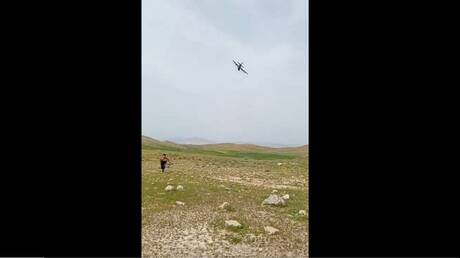
In a striking statement, Iranian Parliament Speaker Mohammad Baqer Qalibaf mocked former U.S. President Donald Trump, suggesting that U.S. war ambitions against Iran have significantly diminished. Qalibaf noted that Trump, who once sought to overthrow the Iranian regime, is now begging for the return of the American pilot whose plane crashed in Iranian territory.
This statement comes at a time of increasing tension in U.S.-Iran relations, with both countries exchanging accusations and ongoing political and military crises in the region. Qalibaf, a prominent political figure in Iran, used this comment to highlight what he perceives as a decline in U.S. power and influence in the region.
Details of the Incident
In his remarks, Qalibaf pointed out that the United States previously aimed to change the regime in Iran, but now finds itself in a weak position, focusing on less significant matters such as recovering the lost pilot. According to Qalibaf, this shift in U.S. rhetoric reflects the failure of American policies in the region.
It is worth mentioning that the incident involving the American pilot dates back to an earlier period when an American aircraft crashed in Iranian airspace, leading to heightened tensions between the two countries. This incident has sparked varied reactions in political and media circles.
Background & Context
Historically, U.S.-Iranian relations have been marked by ongoing tensions since the Islamic Revolution in 1979. These tensions have led to a series of crises, including economic sanctions and proxy wars in the region. In recent years, these tensions have escalated further, especially after the United States withdrew from the Iranian nuclear deal in 2018.
Iran views the United States as a primary adversary in its foreign policy, accusing it of interfering in its internal affairs and supporting hostile groups. On the other hand, the United States seeks to reduce Iran's influence in the region, exacerbating the conflict between the two sides.
Impact & Consequences
Analysts expect Qalibaf's statements to escalate tensions between Iran and the United States, as they may be interpreted as a direct challenge to U.S. policies. Furthermore, these remarks could impact future negotiations regarding the Iranian nuclear program, as major powers seek diplomatic solutions to the crisis.
At the same time, these events may bolster the internal position of the Iranian regime, as they can be used as a means to unify ranks against what is perceived as an external threat. Additionally, these statements may affect Iran's relations with other countries in the region, where positions on U.S. and Iranian policies vary.
Regional Significance
U.S.-Iranian relations are a central focus in Middle Eastern politics, influencing many Arab countries. The tensions between Iran and the United States could lead to an escalation of conflicts in the region, particularly in Iraq, Syria, and Lebanon, where Iran plays a significant role.
Moreover, these events may impact relations between Arab countries and Iran, as these countries have differing stances on Iranian policies. Under these circumstances, Arab nations may find themselves facing new challenges related to security and stability in the region.
In conclusion, Qalibaf's statements reflect a shift in Iranian rhetoric towards the United States, which may complicate relations between the two countries and affect the overall situation in the region.