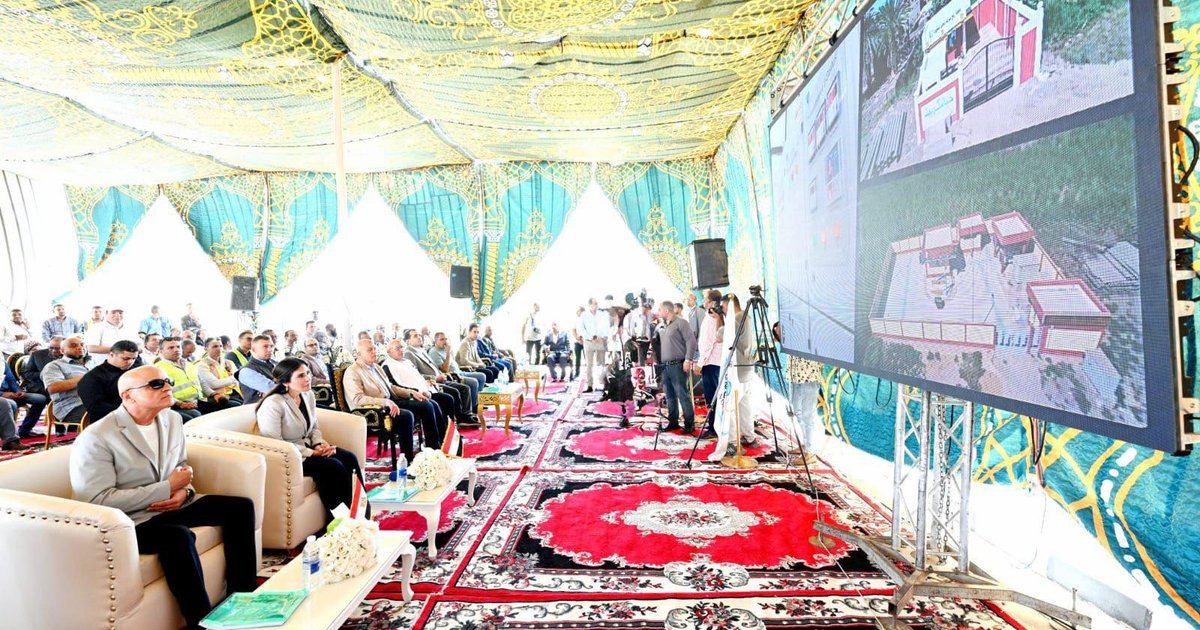
In line with the state's efforts to enhance infrastructure and provide better services to citizens, Minister of Housing and Urban Communities Randa El-Manshawi concluded her tour in Luxor by monitoring drinking water and sewage projects. This visit was attended by Luxor Governor Abdel-Motleb Amara and several leaders from the ministry and executive bodies.
The Minister listened to a detailed presentation regarding the status of drinking water and sewage services in the governorate, where current performance indicators and the implementation status of the first phase of the presidential initiative 'Decent Life' were reviewed. The cost of these projects reached approximately 650 million Egyptian pounds, which included expansions in networks, household connections, and improvements in the efficiency of existing stations.
Details of the Event
During the meeting, the development of sewage service coverage rates was discussed, which increased from about 45% before the initiative's implementation to 65% after the completion of the first phase, with a target of reaching 79% upon completion of ongoing projects. Regarding drinking water services, the presentation clarified that the system serves approximately 1.5 million people with a coverage rate of 99.5%, reflecting the state's efforts to provide sustainable basic services to citizens.
The minister and the governor also followed up on the status of projects by the National Authority for Drinking Water and Sewage within the first phase of the initiative, which includes the implementation of 32 pumping stations and discharge lines with a total length of 125.3 km, in addition to drainage networks spanning 385 km and two treatment plants with a total capacity of 25 and 55 thousand cubic meters per day, serving 26 villages in the centers of Esna and Armant.
Background & Context
These efforts are part of the presidential initiative 'Decent Life', which aims to improve living standards in the most needy villages and areas. This initiative is considered one of the most important programs launched by the Egyptian state in recent years, as it seeks to develop infrastructure and provide essential services to citizens.
The initiative includes a range of vital projects in the fields of water and sewage, contributing to improving the quality of life in targeted areas. Substantial budgets have been allocated for these projects, reflecting the state's commitment to achieving sustainable development.
Impact & Consequences
These projects are expected to enhance the level of services provided to citizens in Luxor, thereby improving quality of life and reducing issues related to water and sewage shortages. Additionally, these projects will help create new job opportunities and boost the local economy.
These initiatives represent a positive step towards achieving sustainable development in Upper Egypt, where many areas suffer from a lack of basic services. By improving these services, social and economic stability in the region can be enhanced.
Regional Significance
Egypt's experience in implementing the 'Decent Life' initiative serves as a model for other Arab countries, as it can contribute to improving the quality of life in rural areas. This initiative may inspire other countries to adopt similar strategies to enhance infrastructure and provide better services to their citizens.
In conclusion, these efforts reflect the Egyptian state's commitment to achieving sustainable development and improving the level of services provided to citizens, contributing to building a better future for upcoming generations.