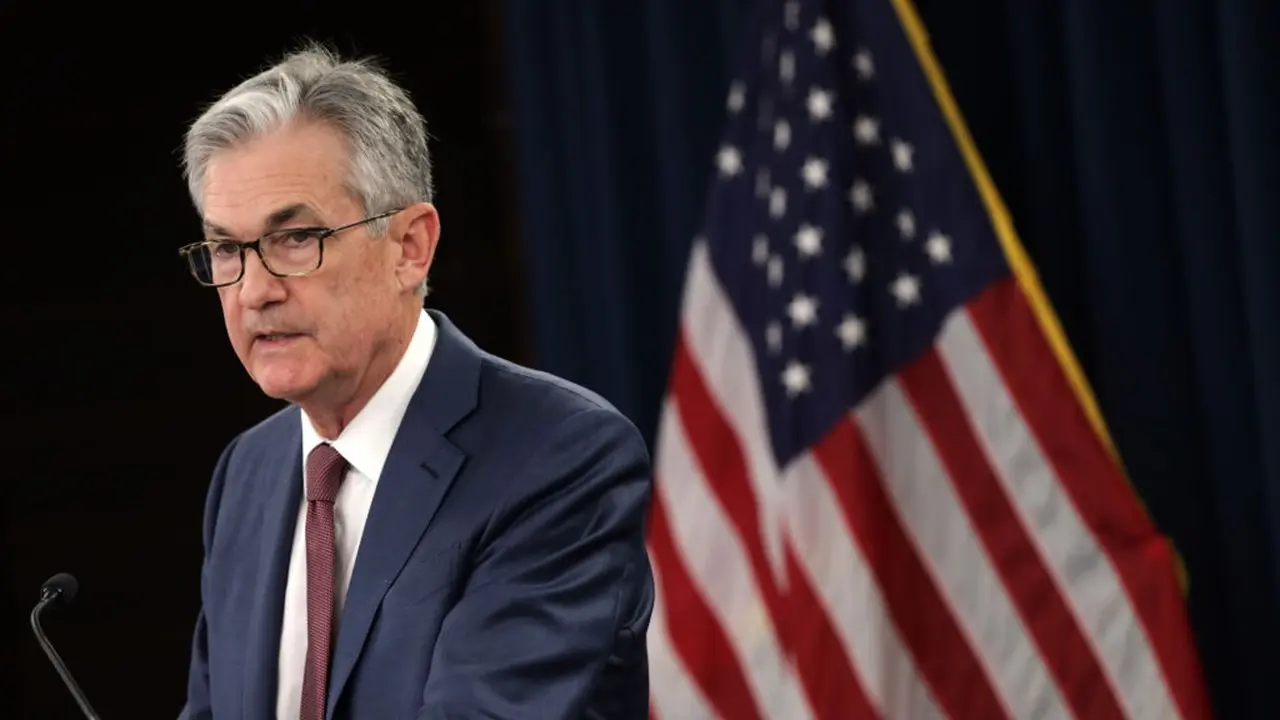
Federal Reserve Chair Jerome Powell stated that the central bank can afford to wait and observe how the Iranian war impacts the economy and inflation. His comments, made during a Q&A session at Harvard University, clarified that policymakers typically overlook shocks such as rising oil prices.
Powell noted that the current monetary policy is well-positioned, allowing them to monitor the situation before taking any action. These remarks contributed to calming financial markets, which had seen heightened expectations for interest rate increases.
Details of the Event
As the Iranian war enters its fifth week and gasoline prices in the United States rise to around $4 per gallon, Powell acknowledged the potential pressure between two main goals of the Federal Reserve: achieving full employment and price stability. He explained that there are negative risks to the labor market, indicating the need to keep interest rates low, while there are positive risks to inflation, which may necessitate not keeping interest rates low.
However, Powell emphasized that the Federal Reserve is not required to act at this time, despite closely monitoring any signs of deteriorating inflation expectations that might indicate a need for response. He pointed out that long-term inflation expectations appear stable.
Background & Context
Historically, the Federal Reserve has faced significant challenges in managing inflation, especially following major economic crises. For about five years, inflation has exceeded the central bank's target of 2%, driven by a series of shocks, including strong demand and constrained supply after the economy reopened following the COVID-19 pandemic lockdown.
Recently, we have witnessed a new shock in energy prices due to the Iranian war, with uncertainty about its impact. Oil prices have shown significant volatility, with Brent crude prices falling by 0.7% to $111.81 per barrel, while West Texas Intermediate prices rose by 2.7% to $102.36 per barrel.
Impact & Consequences
An analysis of the current situation indicates that the Federal Reserve is in a wait-and-see mode until the implications of the energy price shock become clearer. Powell noted that there is a need to monitor the situation closely before making any decisions regarding interest rate hikes, as any uncalculated move could negatively impact the labor market.
Inflation expectations may change based on developments in the Iranian war, potentially affecting the Federal Reserve's future decisions. A recent study from the University of Michigan showed an increase in households' expectations for prices of goods over the next year, reflecting growing concerns about inflation.
Regional Significance
The Iranian war is considered an event that directly affects oil prices, which in turn impacts Arab economies that heavily rely on oil revenues. Any increase in oil prices could lead to rising inflation in Arab countries, affecting citizens' purchasing power.
At the same time, the U.S. response to the crisis could lead to changes in economic policies in the region, as Arab countries seek to achieve economic stability amid these challenges.