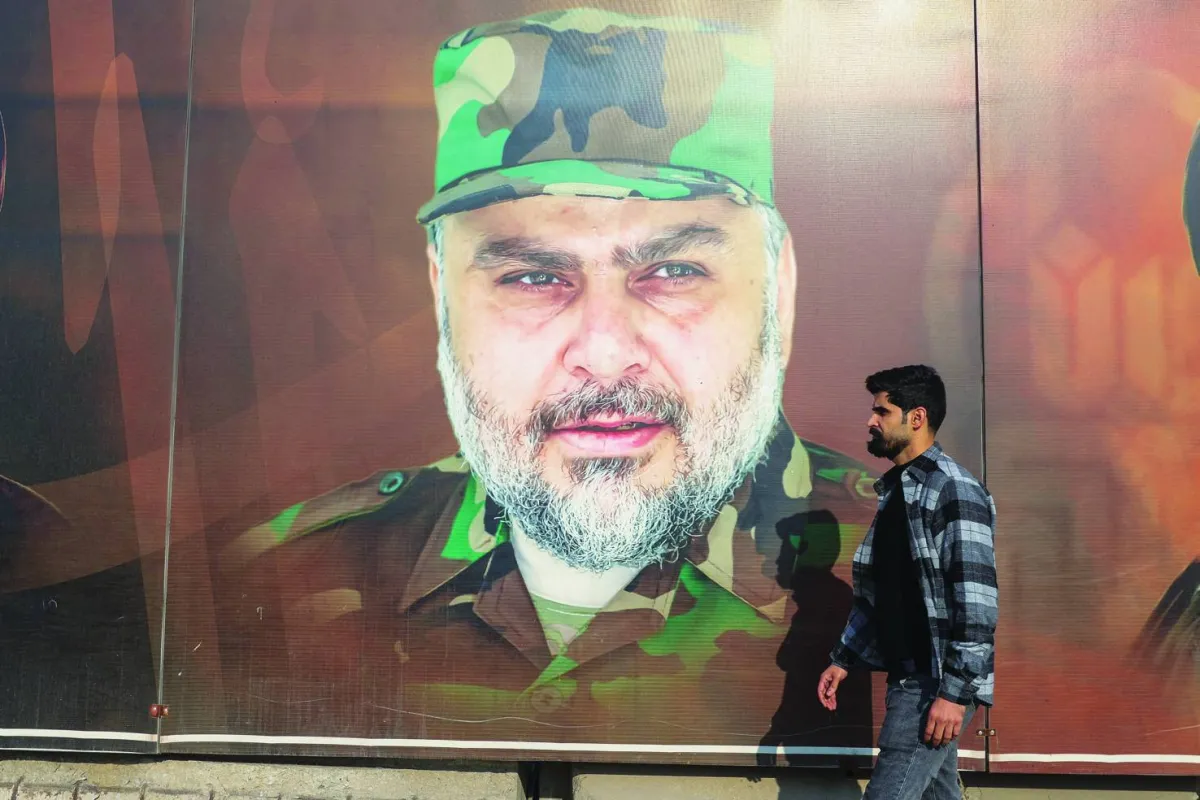
Iraqi leader Moqtada Al-Sadr announced yesterday (Wednesday) the integration of his military wing, 'Saraya Al-Salam', into the Iraqi state, calling on all factions of the Popular Mobilization Forces to surrender their weapons. This move is considered crucial for enhancing internal stability in the country, with Al-Sadr affirming that this integration is part of the commitment to confine arms to the state.
In an official statement, Al-Sadr said, "It has become imperative to announce the complete disassociation of (Saraya Al-Salam) from the movement and their full alignment with the state, without any headquarters, weapons, or titles." These remarks reflect Al-Sadr's desire to strengthen the role of the state as the sole institution authorized to bear arms.
Details of the Announcement
The Iraqi Prime Minister, Ali Al-Zaydi, welcomed Al-Sadr's move, considering it an important step towards enhancing internal stability in the country. Al-Zaydi emphasized the necessity for all factions to operate under the umbrella of the state and its official institutions, noting that the state is the only entity authorized to carry arms and enforce the law.
Former Prime Minister Mustafa Al-Kadhimi described Al-Sadr's decision as stemming from a profound understanding of the need to push towards strengthening the state's trajectory and bolstering its institutions. These statements reflect a consensus among various political parties regarding the importance of confining arms to the state.
Background & Context
This step comes amid complex political and security conditions in Iraq, where the government is striving to achieve stability after years of conflict and strife. The Popular Mobilization Forces are considered part of the Iraqi security apparatus, yet they face challenges related to legitimacy and loyalty, making the integration of its factions into the state a necessary step.
Moreover, this move occurs at a sensitive time, as pressures on the Iraqi government increase to improve security and economic conditions. Integrating armed factions into the state could help reduce chaos and enhance security.
Impact & Consequences
This step is expected to have significant effects on the political and security landscape in Iraq. If the government successfully integrates the armed factions effectively, it could lead to improved security conditions and reduced internal conflicts.
However, the biggest challenge remains how to deal with factions that may refuse to surrender their weapons. The continued existence of these factions outside the framework of the state could exacerbate security conditions, necessitating effective mechanisms to address these challenges.
Regional Significance
Al-Sadr's move is significant not only for Iraq but for the Arab region as a whole. Strengthening the role of the state in confining arms could serve as a model for other countries suffering from arms chaos and armed conflicts.
Furthermore, the success of this step could contribute to enhancing stability in Iraq, which may positively reflect on relations with neighboring countries and help improve economic and social conditions in the region.
In conclusion, the integration of Al-Sadr's military wing into the state represents a bold step towards achieving stability in Iraq, but it requires genuine commitment from all parties involved to ensure its success.